Best Cajun Jambalaya is the kind of recipe that hugs you from the inside out. “Is this as good as it smells?” you ask, fogging the window with excitement. “It is,” I reply, stirring the pot and smiling. This jambalaya blends succulent shrimp, tender chicken, and smoky turkey-andouille-style sausage with fragrant long-grain rice and classic Cajun seasonings for a dinner that’s both nostalgic and energizing. It’s a cozy one-pot meal built for cool evenings, family gatherings, and any night you want big, soulful flavor without fuss. Expect bright tomatoes, savory broth, and that hallmark Creole heat—balanced, comforting, and ready to become a weeknight favorite.
Why You’ll Love This Recipe
- Quick and easy to prepare for a weeknight one-pot dinner.
- Uses accessible pantry ingredients and fresh proteins.
- Ideal for cooler months, family dinners, or feeding a crowd.
- Comforting, impressive, and perfect for leftovers that taste even better the next day.
What makes this version unique is the combination of textures and flavors: tender diced chicken, plump shrimp folded in at the end, and a smoky, poultry-based andouille-style sausage that gives authentic depth without pork. The rice cooks in the flavorful broth so every grain soaks up Cajun-spiced goodness. Emotionally, this recipe is about shared bowls and laughter around the table—comfort food that builds confidence in the kitchen, teaching you how to layer flavors so your jambalaya always sings.
Ingredients Needed
For the base (soffritto and aromatics)
- 1 medium yellow onion, finely chopped (about 1 cup) — use a sharp knife for even pieces.
- 1 bell pepper, any color, diced (about 1 cup) — red or green are classic.
- 2 celery stalks, diced — part of the traditional “holy trinity” of Cajun cooking.
- 3 cloves garlic, minced — fresh, not jarred, for best aroma.
- 2 tablespoons olive oil — or a neutral oil if you prefer.
For the proteins and primary components
- 1 pound boneless, skinless chicken breast, cut into bite-sized cubes — room temperature pieces brown better.
- 1 pound shrimp, peeled and deveined — medium or large; thaw fully if frozen.
- 1 pound smoked andouille-style sausage (turkey or chicken-based), cut into 1/4-inch slices — look for a poultry-based smoked sausage labeled “andouille-style” if avoiding pork.
For the rice and liquids
- 2 cups long-grain rice, rinsed until water runs clear — rinsing removes excess starch.
- 4 cups low-sodium chicken broth — warm before adding for a better simmer.
- 1 can (14.5 ounces) diced tomatoes, with juices — fire-roasted optional for extra depth.
For the seasoning and finishing touches
- 2 teaspoons Cajun seasoning — homemade or store-bought, but check salt level.
- 1 teaspoon dried thyme — or 1 tablespoon fresh thyme leaves.
- 2 bay leaves — remove before serving.
- Salt and freshly ground black pepper, to taste.
- Chopped green onions (scallions) for garnish — thinly sliced on the bias.
Notes and substitutions
- If you prefer a gluten-free jambalaya, confirm your sausage and Cajun seasoning are gluten-free.
- Swap long-grain rice for parboiled/conventional jasmine in a pinch, but adjust liquid slightly; see notes section for details.
- For a spicier jambalaya, add 1/2 teaspoon cayenne or a few dashes of hot sauce when seasoning.
Ingredients & Equipment Notes
Useful tools
- A large, heavy-bottomed pot or Dutch oven (6–7 quarts) — even heat distribution prevents burning and gives rice space to expand.
- A sharp chef’s knife and cutting board — consistent pieces cook evenly.
- Wooden spoon or heatproof spatula — useful to deglaze and stir without scraping.
- Measuring cups and spoons for accuracy.
How they help
- A Dutch oven keeps temperature steady and helps the rice absorb liquid slowly.
- A sharp knife speeds prep and reduces risk of uneven cooking.
- A warm broth helps maintain a simmer so rice cooks evenly without shocking the pot.
Instructions – How to Make “Best Cajun Jambalaya”
- Prepare your mise en place.
- Chop the onion, bell pepper, celery, and garlic first. Cube the chicken, slice the smoked turkey/chicken andouille-style sausage, and rinse the long-grain rice until the water runs clear. Pat the shrimp dry with paper towels.
- Why this matters: having everything ready keeps the cooking flow smooth and prevents overcooking delicate shrimp later.
- Heat the pot and soften the aromatics.
- In a large Dutch oven or heavy-bottomed pot, warm 2 tablespoons of olive oil over medium heat until shimmering. Add the chopped onion, bell pepper, and celery. Sauté until softened and translucent, about 6–8 minutes.
- Visual cue: the vegetables will reduce slightly, the onion will turn glossy, and the aroma will become sweet and savory.
- Mini-tip: don’t rush this step; the sweet base is the backbone of your jambalaya.
- Add the garlic and build flavor.
- Stir in the minced garlic and cook for about 30–60 seconds until fragrant—don’t let it brown.
- Why it matters: garlic releases aromatic oils quickly; a short cook develops flavor without bitterness.
- Brown the chicken and sausage.
- Increase heat to medium-high. Add the diced chicken and sliced smoked poultry andouille-style sausage to the pot. Cook until the chicken is lightly browned on the outside—about 4–6 minutes—stirring to prevent sticking.
- Visual cue: chicken will develop small golden edges; sausage will render some fat and become aromatic.
- Mini-tip: if your sausage is very lean, add a touch more oil; if it’s oily, spoon off excess fat to avoid greasy jambalaya.
- Stir in rice and seasonings.
- Add the rinsed rice to the pot, followed by 2 teaspoons Cajun seasoning, 1 teaspoon dried thyme, and the bay leaves. Stir for 1–2 minutes to toast the rice lightly and coat it in the aromatics and spices.
- Why it matters: toasting the rice briefly helps it separate and absorb flavors rather than clump.
- Add liquids and tomatoes; bring to a boil.
- Pour in 4 cups of warm chicken broth and the entire can of diced tomatoes (including juices). Give everything a good stir, scraping any flavorful brown bits from the bottom of the pot. Increase heat to high until the mixture reaches a gentle boil.
- Visual cue: the broth will bubble and steam, and you’ll see the rice moving within the liquid.
- Simmer covered for even cooking.
- Once boiling, reduce heat to low so the pot maintains a gentle simmer. Cover and cook undisturbed for 20–25 minutes, or until the rice is tender and most of the liquid is absorbed.
- Why it matters: lifting the lid too often releases steam and alters the cook time. The rice needs steady simmering to cook through evenly.
- Mini-tip: around 15 minutes, peek quickly; if the rice looks nearly done but still has a touch of liquid, leave it—carryover will finish the job.
- Fold in the shrimp at the end.
- When the rice is cooked and the liquid absorbed, gently fold in the peeled and deveined shrimp. Cook uncovered for an additional 4–6 minutes, until the shrimp turn opaque and pink and curl slightly.
- Visual cue: shrimp should be firm and just opaque; overcooking makes them rubbery.
- Why it matters: shrimp cook fast, so adding them last keeps them tender and juicy.
- Finish and season.
- Remove the pot from heat. Discard the bay leaves. Taste and season with salt and freshly ground black pepper as needed. Let the jambalaya rest, covered, for 5 minutes—this helps the flavors settle and rice finish steaming.
- Mini-tip: if the mixture seems dry after resting, stir in a splash of warm chicken broth to revive it.
- Garnish and serve.
- Fluff the rice gently with a fork, transfer to bowls or a large serving dish, and sprinkle generously with chopped green onions. Serve hot with complementary sides (see suggestions below).
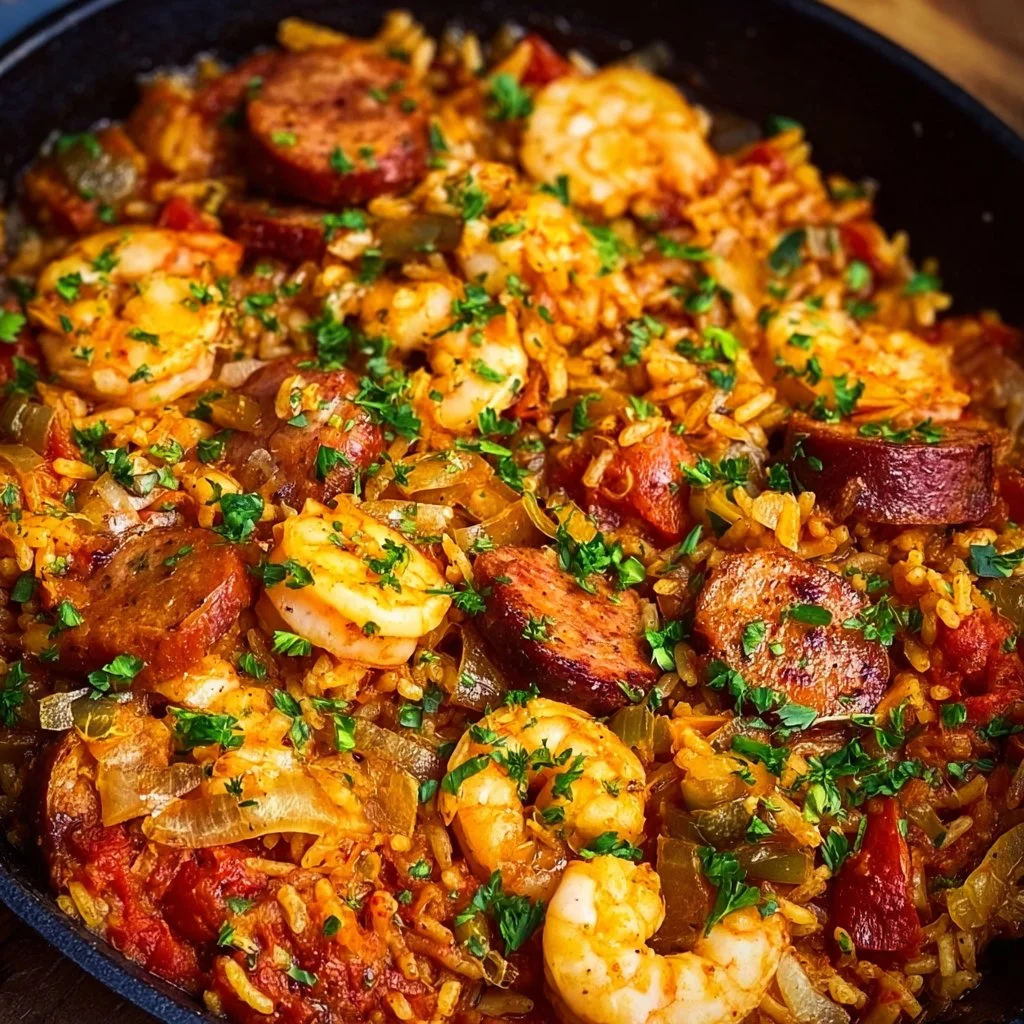
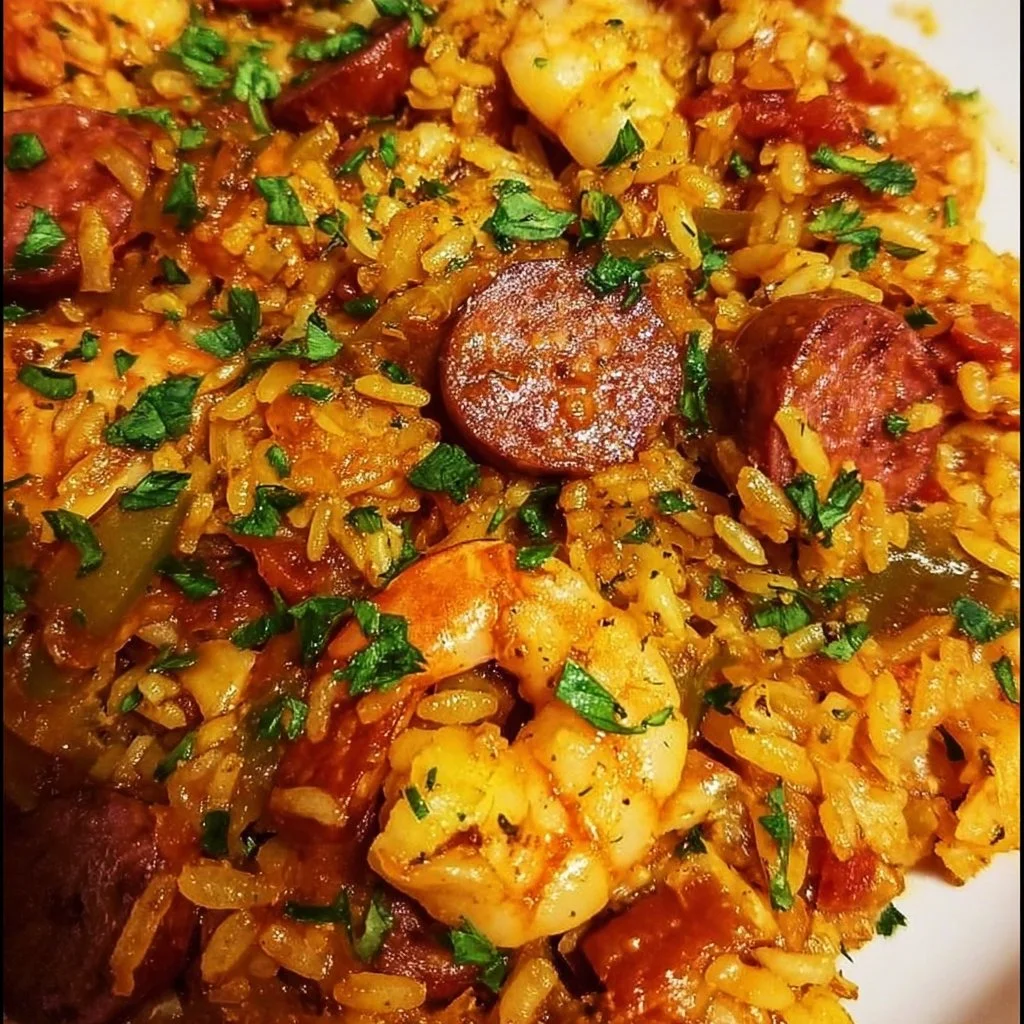
- Visual cue: a glossy, tomato-speckled bed of rice studded with shrimp, chicken, and slices of smoky sausage—full of color and aroma.
Serving Suggestions & Storage Tips
Serving ideas and presentation
- Family-style: Spoon jambalaya into a large shallow bowl or cast-iron skillet for a communal feel. Sprinkle with chopped green onions and offer lemon wedges for bright acidity.
- Individual bowls: Serve in warm bowls with a dollop of cool, crisp coleslaw or a simple green salad to contrast the smoky heat.
- Garnishes: Fresh parsley or cilantro (if you like a fresh herb contrast), thinly sliced green onions, or a few extra dashes of Cajun seasoning at the table.
Pairings and accompaniments
- Side salads: A crisp, tangy cucumber-and-tomato salad or a simple mixed-green salad with a vinaigrette cuts through richness.
- Bread: Warm crusty bread or garlic toast soaks up the flavorful juices—avoid buttery breads if you prefer lighter sides.
- Vegetables: Roasted okra, sautéed garlicky greens (kale or collard greens), or grilled corn complement the bold flavors.
- Beverages: Serve with iced tea, lemon water, or a sparkling non-alcoholic beverage—no alcohol included in this recipe.
Creative serving variations
- Stuffed peppers: Hollow out roasted bell peppers and fill them with jambalaya for a festive presentation.
- Jambalaya bowls: Layer on brown rice or cauliflower rice for a different texture or to lighten the dish (see substitutions).
- Sheet-pan twist: For an easy party version, finish the cooked jambalaya on a sheet pan under a hot broiler for a few minutes to crisp up the top—watch carefully to avoid burning.
Storage and reheating
- Refrigerator: Store leftovers in an airtight container for up to 3–4 days. Cool to room temperature within two hours before refrigerating.
- Freezing: Freeze in meal-sized portions for up to 2 months. Use freezer-safe containers or heavy-duty zip-top bags; press out excess air.
- Reheating (from fridge): Reheat gently on the stovetop over low heat with a splash of chicken broth or water to loosen the rice, stirring occasionally until heated through. Alternatively, microwave individual portions, adding a tablespoon of broth and covering loosely to steam for even reheating.
- Reheating (from frozen): Thaw overnight in the refrigerator, then reheat as above. If reheating directly from frozen, add to a pot with a cup of broth, cover, and warm slowly over low heat until fully hot.
- Texture tips: Jambalaya absorbs liquid over time, so always add a splash of broth when reheating to restore texture and prevent dryness. The shrimp will be firmer after reheating; if you plan to freeze, consider storing shrimp separately if you prefer them very tender on reheating.
Helpful Notes & Variations
Ingredient swaps and substitutions
- Sausage: Use a turkey or chicken andouille-style sausage to keep the dish pork-free. Vegetarian options include a smoked vegan sausage or smoked tempeh strips for similar smokiness.
- Rice: Long-grain white rice gives the classic texture. If using brown rice, parboiled brown, or converted rice, increase liquid by 1/2 cup and extend cook time—check manufacturer instructions. Note: brown rice will yield a firmer grain.
- Shrimp: If shell-on shrimp are used, adjust cooking times slightly and consider using the shells to make a quick shrimp stock for extra depth.
- Tomatoes: Use crushed tomatoes for a smoother texture, or fresh diced tomatoes in season for brightness.
Dietary adaptations
- Gluten-free: Confirm Cajun seasoning and sausage are gluten-free. Substitute tamari for soy-based condiments if added in any variation.
- Lower-sodium: Use low-sodium chicken broth and reduce added salt; allow diners to season at the table.
- Vegetarian: Replace chicken and shrimp with hearty mushrooms (cremini or portobello) and smoked plant-based sausage or roasted chickpeas. Use vegetable broth instead of chicken broth.
Flavor enhancements and add-ins
- Smoked paprika: Add 1/2 teaspoon for deeper smoky notes.
- Bay leaf swap: Use a fresh sprig of thyme and parsley bouquet tied together if you prefer herbal aromatics.
- Heat: Add chopped jalapeño or 1/2 teaspoon cayenne when sautéing the vegetables to infuse heat early.
- Citrus: A squeeze of lemon or lime when serving brightens the dish and balances richness.
Common mistakes to avoid
- Rinsing rice is skipped: Unrinsed rice can become gummy. Rinse until water runs mostly clear.
- Overcrowding the pot when browning: If you add too much chicken at once, it steams instead of browning. Brown in batches if needed.
- Cooking shrimp too early: Shrimp cook fast; add them at the end to avoid rubbery texture.
- Lifting the lid too often during simmer: Releasing steam disrupts the rice’s cooking environment and extends cooking time.
- Using the wrong rice-to-liquid ratio: Follow the liquid measurements; if using a different rice type, adjust accordingly.
Pro tips from experience
- For maximum flavor, toast the spices (Cajun seasoning and thyme) for 30 seconds with the rice before adding liquid.
- If your broth lacks depth, dissolve a low-sodium bouillon cube into warm water to boost savory notes without excess salt.
- Let the jambalaya rest for 5–10 minutes off heat before serving—this helps flavors meld and rice firm up slightly for better texture.
Conclusion
Best Cajun Jambalaya brings the warmth and soul of Southern cooking to your table with wholesome ingredients, bold cajun rice flavors, and simple one-pot steps. It’s easy enough for weeknights, cozy enough for weekends, and flexible enough to adapt to dietary needs while staying pork- and alcohol-free. If you love layers of savory, smoky, and bright flavors—this jambalaya will become a rotating favorite. For ideas that riff on classic techniques or to compare seasoning methods, check out this helpful version that emphasizes tradition and testing: The BEST Jambalaya Recipe, and for more on authentic New Orleans-style approaches and background, read this thoughtful guide: Authentic Jambalaya Recipe – New Orleans Cajun Cooking At Its Best. Try the recipe, leave a comment and star rating to let me know how it turned out, and share a photo on Pinterest or social media so others can join the flavor-filled fun.
Frequently Asked Questions
Can I make jambalaya ahead of time?
Yes. Jambalaya actually deepens in flavor after sitting overnight as the spices and aromatics meld. Store in an airtight container in the refrigerator for 3–4 days. Reheat on the stovetop with a splash of broth to restore moisture, or microwave covered with a tablespoon or two of warm broth added.
Can I use brown rice instead of long-grain rice?
You can, but brown rice requires more liquid and a longer cook time. Increase the broth by about 1/2 cup to 3/4 cup and simmer for an extra 15–20 minutes, checking for doneness. Texture will be firmer and nuttier. Alternatively, cook brown rice separately and fold into the finished jambalaya to control texture.
Is jambalaya gluten-free?
Jambalaya can be gluten-free if all components are checked. Use a gluten-free Cajun seasoning and confirm that the andouille-style sausage is gluten-free (some sausages contain fillers or binders with gluten). Choose gluten-free broth or make your own to be certain.
How do I prevent my rice from getting mushy?
Rinse the rice until the water runs mostly clear to remove surface starch. Use the correct rice-to-liquid ratio, maintain a gentle simmer without aggressive boiling, and avoid lifting the lid frequently while the rice cooks. Toasting the rice briefly before adding liquid can also help keep grains separate.
Can I make this in a slow cooker?
Yes, with tweaks. Brown the chicken and sausage and sauté the aromatics first for depth of flavor, then transfer to a slow cooker. Add rice, tomatoes, and broth and cook on low for 2–3 hours, checking for doneness—rice times can vary. Add shrimp in the last 20–30 minutes to prevent overcooking. Be prepared to adjust liquid, as slow cookers vary in moisture retention.
What if my jambalaya is too salty?
If the dish tastes too salty, add unsalted broth, a bit of water, or a peeled, cut potato simmered briefly to absorb some salt (remove potato before serving). Adding acidity—like a few squeezes of lemon juice—can also balance perceived saltiness. For future batches, reduce added salt and use low-sodium broth.
Cajun Jambalaya
Ingredients
Method
- Chop the onion, bell pepper, celery, and garlic first. Cube the chicken, slice the andouille-style sausage, and rinse the long-grain rice until the water runs clear. Pat the shrimp dry with paper towels.
- In a large Dutch oven or heavy-bottomed pot, warm 2 tablespoons of olive oil over medium heat until shimmering. Add the chopped onion, bell pepper, and celery. Sauté until softened and translucent, about 6–8 minutes.
- Add the minced garlic and cook for about 30–60 seconds until fragrant; don’t let it brown.
- Increase heat to medium-high. Add the diced chicken and sausage to the pot. Cook until chicken is lightly browned on the outside, about 4–6 minutes.
- Add the rinsed rice to the pot, followed by Cajun seasoning, thyme, and bay leaves. Stir for 1–2 minutes to toast the rice lightly and coat it in the spices.
- Pour in warm chicken broth and the can of diced tomatoes (including juices). Stir well and bring to a gentle boil.
- Once boiling, reduce heat to low, cover, and cook undisturbed for 20–25 minutes, or until rice is tender and most liquid is absorbed.
- When rice is cooked, gently fold in the shrimp. Cook uncovered for an additional 4–6 minutes, until shrimp are opaque.
- Remove the pot from heat, discard bay leaves, and season to taste with salt and pepper. Let sit, covered, for 5 minutes.
- Fluff rice with a fork, transfer to bowls or a serving dish, and sprinkle with green onions. Serve hot.