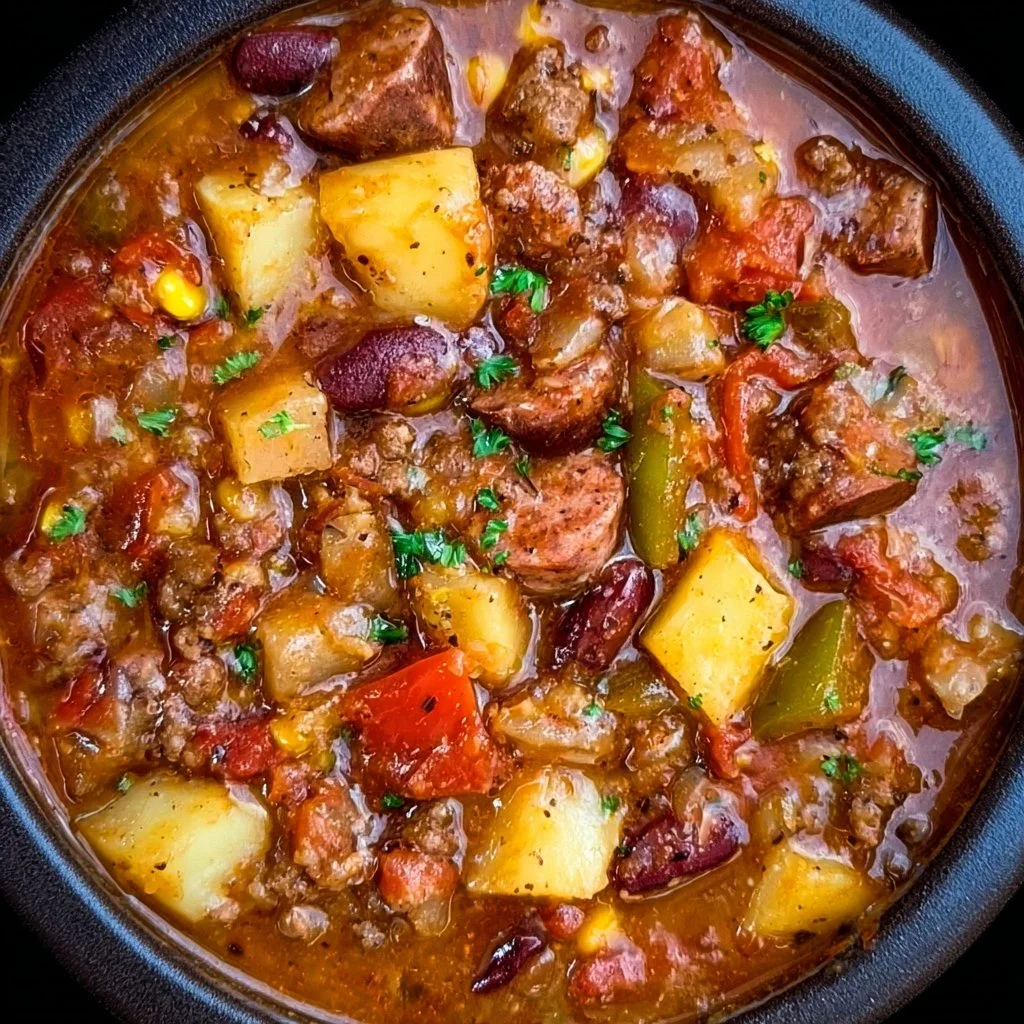
Cowboy Stew — hey, you, come closer. Cowboy Stew is the kind of bowl I make when I want to wrap my hands around something warm, honest, and a little bit nostalgic. I remember the first time I ladled this into a dented bowl in a chilly kitchen and felt the steam carry the scent of browned beef, tender potatoes, sweet carrots, bell pepper, tomatoes, and beans right to my face. This recipe uses ground beef, a savory turkey-style sausage swap, and diced cooked beef (instead of pork) with plenty of beans, diced potatoes, diced carrots, chopped bell peppers, onion, beef broth, and diced tomatoes, all seasoned with chili powder and garlic powder for that cozy, smoky warmth. If you love a big one-pot supper that feeds a crowd and leaves the house smelling like comfort, we are in the right place. For another hearty twist on cowboy-style meals, check out this tasty cowboy casserole, and when you want something a little brothy with the same spirit, this cowboy soup has some great inspiration.
Why You’ll Love This Recipe
- Quick and easy to prepare
- Simple, accessible ingredients you probably have on hand
- Perfect for chilly evenings, weeknight dinners, and casual gatherings
- Comforting, hearty, and impressive without fuss
What makes this version unique is the careful balance of rich beef flavor paired with a lighter, savory turkey-style sausage alternative so we steer clear of pork while keeping a deep, homey taste. I’ve dialed in the texture — browned meat with soft yet intact potatoes and beans — and the seasoning so the stew tastes layered, not just spicy. Cooking this stew gave me confidence when feeding family: it stretches well, freezes beautifully, and makes everyone feel cozy. You’ll find clear steps and tips here so you can make it with calm, not chaos.
Ingredients Needed
Below are the ingredients rewritten for clarity and to avoid pork while keeping the classic cowboy stew character. Quantities are adapted from a trusted base but adjusted for clarity and helpful substitution notes.
Main protein and swaps:
- 1 pound ground beef (use 80/20 for flavor; leaner if you prefer less fat)
- 1 pound ground turkey sausage or chicken sausage (pre-seasoned, uncooked) — this replaces traditional pork sausage to keep the dish pork-free
- 1 pound diced cooked beef or smoked turkey breast (cubed, about 1-inch pieces) — substitutes for diced ham
Vegetables and legumes:
- 1 can (15 oz) kidney beans, drained and rinsed (or use low-sodium canned beans)
- 1 can (15 oz) black beans, drained and rinsed
- 2 cups diced potatoes (use red potatoes or Yukon gold; skin on or off as preferred; dice into 1/2 to 3/4-inch cubes for even cooking)
- 1 cup diced carrots (fresh; if using frozen, no need to thaw fully)
- 1 cup diced bell peppers (a mix of red and green adds color and sweetness)
- 1 medium onion, chopped (yellow or sweet onion works best)
Liquids and tomatoes:
- 4 cups beef broth (use low-sodium if you plan to control salt; vegetable broth is an acceptable swap)
- 1 can (14.5 oz) diced tomatoes (with juices; fire-roasted works nicely for extra depth)
Spices and seasoning:
- 1 tablespoon chili powder (adjust to taste)
- 1 teaspoon garlic powder (or 2 cloves fresh garlic, minced)
- Salt and freshly ground black pepper to taste
Flavor and texture tips:
- If you prefer a thicker stew, reserve a half-cup of the beans and mash them slightly before stirring in to help thicken naturally.
- For a smokier note without pork, add 1 teaspoon smoked paprika or a dash of liquid smoke (optional).
- If you want more heat, include 1/2 teaspoon crushed red pepper flakes or a chopped jalapeño with the peppers.
Ingredient clarifications and swaps:
- Fresh vs frozen: Fresh vegetables deliver the best texture; frozen carrots or bell pepper are fine but may release more water. If using frozen, reduce broth by 1/4 cup.
- Beans: Canned beans save time; if using dried beans, soak and cook them first, and add more broth as needed.
- Sausage: Use turkey or chicken sausage that is seasoned. If you cannot find pre-seasoned, add 1 teaspoon smoked paprika and 1/2 teaspoon fennel seed to the ground turkey to mimic sausage flavors.
- Ham replacement: Choose diced cooked beef roast, leftover roast beef, or smoked turkey for a non-pork option that still gives a chewy, hearty texture.
Ingredients & Equipment Notes (Optional)
Helpful tools and why they matter:
- Large heavy-bottomed pot or Dutch oven: Holds heat evenly and prevents sticking during browning and simmering.
- Heatproof spatula or wooden spoon: Ideal for breaking up ground meat and stirring without scratching cookware.
- Chef’s knife and cutting board: Sharp tools save time and reduce bruising to vegetables.
- Colander: For draining canned beans and excess fat after browning.
- Ladle and large measuring cups: For serving and measuring broth accurately.
Practical tips:
- Use a pot with a tight-fitting lid to keep moisture in while simmering.
- A slotted spoon helps lift out larger pieces when checking for doneness without taking too much broth.
- If you plan to freeze, prepare freezer-safe containers or heavy-duty freezer bags in advance.
Instructions – How to Make “Cowboy Stew”
Below are numbered, clear steps rewritten from the classic method and expanded with why each step matters, what to look for, and mini tips to ensure the best results.
- Prep your ingredients first.
- Why this matters: Having everything chopped and measured before you turn on the heat keeps the cooking flow smooth and prevents overcooking.
- Visual cue: Vegetables should be roughly uniform — dice potatoes into 1/2 to 3/4-inch cubes, carrots similarly sized, and peppers in bite-sized pieces. Drain and rinse beans, and set canned tomatoes nearby.
- Brown the ground beef and turkey-style sausage in a large pot over medium heat.
- Why: Browning creates Maillard flavor, the savory crust that deepens the stew’s overall taste.
- How: Add a splash of neutral oil if using lean beef. Break the meat into small pieces with your spoon. Cook until no pink remains and bits are golden brown.
- Visual cue: Look for small caramelized brown bits on the bottom and around the edges; this is flavor. If there is a lot of fat, carefully spoon or pour off excess, leaving a tablespoon or so for flavor.
- Stir in the diced cooked beef or smoked turkey.
- Why: These diced pieces add chewy texture and pockets of concentrated flavor. They do not need to cook long, just to warm and gain some color from the pot.
- Mini tip: If your diced beef is from leftover roast and a bit dry, add it now to let it rehydrate slightly in the cooking liquids later.
- Add the chopped onion, bell peppers, and carrots; cook until softened.
- Why: Sweating vegetables releases their natural sugars and builds the stew’s aromatic base.
- How long: 4 to 6 minutes over medium heat.
- Visual cue: Onions become translucent, bell peppers soften and brighten, and carrots turn slightly tender at the edges.
- Mini tip: If you like a more pronounced onion flavor, let them brown a touch longer for extra depth.
- Stir in the diced potatoes, drained beans, and diced tomatoes (including juices).
- Why: Potatoes and beans are hearty anchors in cowboy stew. Tomatoes add acidity to balance richness.
- How: Mix everything thoroughly so flavors begin to meld before adding liquid.
- Pour in the beef broth and add the chili powder, garlic powder, salt, and pepper.
- Why: The broth provides simmering liquid so the vegetables can soften; spices bring the stew’s signature warmth.
- How: Start with the listed amounts; you can adjust salt later after simmering. Stir to combine and scrape any browned bits from the bottom of the pot — that is flavor you want in the stew.
- Bring the mixture to a gentle boil, then reduce heat to maintain a simmer. Cover and let it cook for 30 minutes, stirring occasionally.
- Why: Simmering tenderizes the potatoes and melds the flavors without breaking down ingredients into mush.
- Visual cue: You should see a slow ripple on the surface, bubbles occasionally breaking. The potatoes will become fork-tender but still hold shape.
- Mini tip: If the stew looks too thick, add up to 1/2 cup more broth; if it is too thin, simmer uncovered for 10 minutes to reduce slightly.
- Taste and adjust seasoning.
- Why: Flavors deepen during simmering, so you might need a touch more salt, pepper, or chili powder.
- How: Add small amounts, taste after a minute or two, and consider a splash of acidity like a teaspoon of apple cider vinegar or a squeeze of lemon if it tastes flat.
- Serve hot with your favorite toppings.
- Why: Toppings (like chopped fresh cilantro, shredded cheddar, or a dollop of sour cream) add texture, color, and contrast.
- Visual cue: The finished stew should be a rich, hearty mix of browned meat, soft but intact potatoes, bright peppers and carrots, beans that hold their shape, and threads of tomato in the broth.
- Cool and store any leftovers promptly.
- Why: Proper cooling and storage keep the stew safe and maintain quality.
- Mini tip: When cooling for storage, transfer to shallow containers to cool quickly in the refrigerator.
Serving Suggestions & Storage Tips
Serving ideas:
- Classic bowl: Ladle hot stew into deep bowls and garnish with shredded cheddar, chopped green onions, and a spoonful of sour cream. A sprinkle of fresh cilantro or parsley brightens the dish.
- Bread on the side: Serve with crusty bread, biscuit halves, or cornbread for sopping up the broth.
- Over grains: For a heartier meal, spoon the stew over cooked rice or mashed potatoes.
- Tex-Mex twist: Top with sliced avocado, a squeeze of lime, and crushed tortilla chips for crunch.
Presentation tips:
- Color contrast: Use a mix of red, yellow, and green bell peppers to make the stew visually inviting.
- Garnish thoughtfully: A small pile of bright green herbs or a thin wedge of lime adds a friendly pop.
- Family-style: Serve the pot at the table with bowls, letting everyone add their favorite toppings.
Pairings:
- Drinks: Serve with iced tea, sparkling water with lemon, or a robust non-alcoholic ginger beer.
- Salads: A crisp green salad with a tangy vinaigrette cuts through the stew’s richness.
- Sides: Roasted green beans, simple coleslaw, or a warm baked potato complement the stew nicely.
Storage:
- Refrigerator: Transfer cooled stew into airtight containers and refrigerate up to 4 days.
- Freezer: Portion into freezer-safe containers or heavy-duty freezer bags. Freeze for up to 3 months. Leave 1 inch headspace in containers to allow for expansion.
- Thawing: Thaw overnight in the refrigerator or reheat from frozen as described below.
Best reheating methods:
- Stovetop: Thaw if possible; heat on medium-low, stirring occasionally until warmed through. Add a splash of broth if it has thickened.
- Microwave: Reheat individual portions in a microwave-safe bowl for 2 to 3 minutes, stirring halfway through.
- Oven: Place stew in an oven-safe dish, cover, and heat at 325 F until warmed through — about 20 to 30 minutes depending on portion size.
Creative make-ahead tips:
- Prep the night before by browning the meats and chopping the vegetables. Store separately in the refrigerator, then finish the stew quickly the next day.
- For freezer meals, assemble the stew (uncooked) in a freezer bag: meats, chopped vegetables, and spices. When ready, thaw and add broth and canned goods, then cook according to instructions.
Helpful Notes & Variations
Ingredient substitutions:
- Meat swaps: If you prefer less beef, use 2 pounds of turkey sausage and omit ground beef entirely for a lighter stew. For a richer flavor, use all ground beef and omit turkey sausage.
- Vegetarian version: Replace the meats with 1.5 to 2 cups of cubed extra-firm tofu or a package of meatless crumbles, and use vegetable broth in place of beef broth.
- Bean variations: Use pinto beans or cannellini beans instead of kidney or black beans for a change in texture.
Dietary adaptations:
- Gluten-free: This recipe is naturally gluten-free if using certified gluten-free broth and sausage.
- Low-sodium: Use low-sodium broth and canned beans, then season to taste.
- Dairy-free: Serve with dairy-free sour cream or skip dairy toppings.
Flavor add-ins:
- For smokiness: Add 1 teaspoon smoked paprika or a small pinch of chipotle powder.
- Herbaceous lift: Stir in a handful of chopped cilantro or parsley just before serving.
- Umami boost: A splash of Worcestershire sauce or a teaspoon of soy sauce can deepen flavor without changing the profile drastically.
Common mistakes and fixes:
- Mistake: Overcooking and turning potatoes to mush.
- Fix: Dice potatoes uniformly and check for doneness at 20-minute mark. Reduce simmer time if potatoes are very small.
- Mistake: Bland stew after simmering.
- Fix: Always taste and adjust seasoning at the end. A small splash of vinegar or squeeze of lemon can brighten flavors.
- Mistake: Too thin.
- Fix: Simmer uncovered for a bit to reduce, or mash some beans/potatoes into the broth to thicken naturally.
Experience-based tips:
- Browning properly: Don’t rush the browning stage. Longer color development equals more depth in the final stew.
- Layering flavor: Add spices in stages — some during the browning step and a bit more when adding broth — so the flavors bake into the meat and vegetables.
- Texture balance: Aim to let vegetables soften but not disintegrate. The contrast between tender and slightly firm is part of the appeal.
Conclusion
Cowboy Stew stands out because it is both nostalgic and practical — a dinner that fills bowls and hearts without complicated technique. It is sturdy enough to feed a crowd yet adaptable for weeknights, and the pork-free swaps keep the dish aligned with a variety of dietary needs while preserving that hearty, campfire-friendly profile. If you love one-pot meals that deepen in flavor the next day and freeze well for busy weeks, this recipe will be your new go-to. For more versions and inspiration that keep the cowboy spirit alive, explore an easy take on the classic with a Cowboy Stew Recipe – The Pioneer Woman, a comforting family-style approach at Cowboy Stew {Hearty!} Gonna Want Seconds, or a look at campfire and slow-cooker methods with Cowboy Stew – Campfire, Stovetop, Oven and Slow Cooker Method!. Try this recipe tonight, leave a comment and star rating to tell me how it turned out, and share a picture on Pinterest or social media so we can all be inspired.
9. Frequently Asked Questions
Can I make this recipe ahead of time?
Yes. You can complete the stew up to two days ahead and refrigerate it. In fact, flavors often improve after a day. For longer storage, freeze individual portions and thaw in the refrigerator before reheating.
How should I store leftovers and how long do they last?
Store leftover Cowboy Stew in airtight containers in the refrigerator for up to 4 days. For freezing, transfer cooled stew to freezer-safe containers or bags and freeze for up to 3 months.
What is the best way to reheat or serve this recipe after storage?
Reheat gently on the stovetop over medium-low heat until warmed through, adding a splash of broth if it has thickened. Microwave individual portions in a microwave-safe bowl, stirring halfway through.
Can I adjust or substitute ingredients to fit my preferences?
Absolutely. You can swap meats, make a vegetarian version, use different beans, or adjust spices. The recipe is forgiving and meant to be adapted based on what you have and your dietary needs.
Do you have tips to ensure the best texture and flavor every time?
Brown the meat well for deep flavor, dice vegetables uniformly, and simmer gently to allow flavors to meld without breaking down ingredients. Taste and adjust seasoning at the end, and consider a small acidic splash to brighten the stew if it tastes flat.

Cowboy Stew
Ingredients
Method
- Prep your ingredients first, chopping and measuring before cooking.
- Brown the ground beef and turkey-style sausage in a large pot over medium heat until no pink remains.
- Stir in the diced cooked beef or smoked turkey and warm through.
- Add chopped onion, bell peppers, and carrots; cook until softened.
- Stir in diced potatoes, drained beans, and diced tomatoes.
- Pour in the beef broth and add chili powder, garlic powder, salt, and pepper.
- Bring to a gentle boil, then reduce heat and simmer for 30 minutes.
- Taste and adjust seasoning before serving.
- Serve hot with toppings of choice.
- Cool and store any leftovers promptly in airtight containers.