Fluffy Japanese Soufflé Pancakes: Irresistible Cloud-Like Morning Treat
You: "Fluffy Japanese Soufflé Pancakes?" I grinned and said, "Yes — that is exactly what I make when I want a feel-good breakfast." Fluffy Japanese Soufflé Pancakes are a light, airy, almost cloud-like stack that begin with simple pantry staples like eggs, flour, a touch of milk and sugar, and finish with cold heavy cream whipped into sweet clouds and bright berries for freshness. I still remember the first time I coaxed those egg whites into glossy peaks on a rainy morning and how the warm, pillowy pancakes felt like a comforting hug. Let me walk you through every step so you can recreate that small magic at home.
Why You’ll Love This Recipe
- Light, airy texture that feels like biting into a cloud, yet still satisfyingly cake-like.
- Uses simple, familiar ingredients — eggs, flour, sugar, milk, and a bit of vinegar — nothing fussy.
- Creates a memorable breakfast or brunch moment that looks as pretty as it tastes.
- Perfect for sharing: pancakes are elevated with whipped cream, berries, and a dusting of powdered sugar.
- Emotional connection: it’s a recipe that turns ordinary mornings into special occasions without complicated technique.
- Flexible presentation: stack them tall, make them single-serve, or add seasonal toppings for variety.
Ingredients Needed
- 2 large eggs, separated into yolks and whites — yolks add richness; whites give the soufflé lift.
- 2 tablespoons milk — helps loosen the batter so the pancakes stay tender.
- 1/2 teaspoon vanilla extract — adds gentle warmth and aroma.
- 1 teaspoon lemon zest (optional) — brightens the batter with a hint of citrus if you like.
- 1/4 cup all-purpose flour, fluffed, spooned, and leveled — measure gently for the lightest pancakes.
- 1/4 teaspoon baking powder — gives just a little lift and helps structure.
- 1/2 teaspoon white vinegar or lemon juice — stabilizes the egg whites and improves meringue volume.
- 2 tablespoons granulated sugar (for the batter) — sweetness balanced for toppings.
- Oil for cooking (any neutral oil) — a little in the pan to prevent sticking; use a light-tasting oil like vegetable or canola.
- Sweetened whipped cream (optional topping) — see below for homemade version using cold heavy cream, sugar, and vanilla.
- Assorted berries — strawberries, blueberries, raspberries or a mix for color and acidity.
- Powdered sugar — a light dusting for presentation and a touch of extra sweetness.
- Maple syrup — for drizzling, if you want syrup with your stack.
- 1/2 cup cold heavy cream — for whipping into sweetened whipped cream topping.
- 1 tablespoon granulated sugar (adjust to taste) — to sweeten the whipped cream.
- 1/2 teaspoon vanilla — for the whipped cream, matching the batter’s flavor.
Ingredients & Equipment Notes (Optional)
- Use room-temperature eggs for easier separation and better volume in whites.
- Measure the flour by fluffing, spooning into the cup, then leveling off with the back of a knife to avoid dense batter.
- A nonstick skillet with a lid, a ring mold or oatmeal cookie cutter (optional), a hand mixer or whisk, and spatula are helpful.
- If you have an instant-read thermometer, aim for a medium-low pan temperature around 275 to 300 F surface equivalent; the pancakes cook gently to rise without burning.
Instructions – How to Make "Fluffy Japanese Soufflé Pancakes"
-
Separate the eggs carefully into two clean bowls.
- Why it matters: Clean separation prevents yolk fat from deflating the whites and helps create a stable meringue.
- Visual cue: Egg yolks should be bright and intact, while whites should be clear and a bit gelatinous.
- Mini tip: If a tiny bit of yolk gets into the whites, fish it out with a clean half shell or small spoon.
-
Make the yolk mixture: Whisk the egg yolks with 2 tablespoons milk, 1/2 teaspoon vanilla extract, and 1 teaspoon lemon zest if using.
- Why it matters: This builds the batter’s base — the yolks add richness and help with structure.
- Visual cue: The mixture becomes pale and slightly frothy.
- Mini tip: Sift the 1/4 cup all-purpose flour and 1/4 teaspoon baking powder into the yolk mixture in two additions, folding gently until smooth. A few small lumps are fine; do not overmix.
-
Prepare the egg whites and meringue: Add 1/2 teaspoon white vinegar to the whites, then begin whisking at medium speed. When the whites are foamy, start adding the 2 tablespoons granulated sugar a little at a time, whisking to glossy, stiff peaks.
- Why it matters: Vinegar stabilizes the foam; sugar strengthens it while adding sweetness.
- Visual cue: From foamy to glossy peaks that hold shape — when you lift the whisk, the peaks should stand upright without collapsing.
- Mini tip: Whites should not be overbeaten; glossy peaks mean they are just right. Underbeaten whites will deflate quickly while overbeaten can become dry.
-
Fold the meringue into the yolk-flour mixture in three additions.
- Why it matters: Gentle folding keeps the air bubbles intact, which is what makes these pancakes float.
- Visual cue: The batter will lighten and become fluffy and billowy.
- Mini tip: Use a rubber spatula, cut through the center, scoop under, and fold over. Rotate the bowl as you fold. Stop as soon as the streaks disappear; a few small white streaks are okay.
-
Heat your nonstick skillet over very low heat and oil lightly.
- Why it matters: Low, steady heat cooks the pancakes through without browning too fast or collapsing.
- Visual cue: A gentle shimmer on the oil; no smoke.
- Mini tip: If you’re using ring molds, lightly oil them and warm them in the pan first so batter slides in and rises evenly.
-
Spoon batter into the pan, making tall mounds rather than wide circles.
- Why it matters: Tall mounds encourage vertical rise for the soufflé effect.
- Visual cue: Batter should sit like a puffed peak. Use two spoons or a piping bag for neater shapes.
- Mini tip: If batter spreads too much, the pan is too hot. Turn heat down and try again.
-
Cover the pan with a lid and cook gently for about 3 to 4 minutes on the first side.
- Why it matters: The trapped steam under the lid helps cook the interior without needing high heat.
- Visual cue: Edges will look set and slightly firm while the surface may still jiggle a bit.
- Mini tip: Peek once or twice; you should see the pancakes rise close to double their starting height.
-
Very gently flip each pancake and cover again, cooking for another 2 to 3 minutes.
- Why it matters: Quick, careful flipping preserves the airy structure.
- Visual cue: The cooked side will be a light golden brown.
- Mini tip: Use a thin spatula and spoon some hot pan oil under the pancake if it sticks slightly. Work slowly and confidently.
-
Check doneness by gentle touch: pancakes should spring back slightly but still feel soft.
- Why it matters: Under-cooked pancakes feel underdone and collapse; overcooked ones dry out.
- Visual cue: A slight jiggle remains; no raw batter visible when cut with a small knife.
- Mini tip: If unsure, cook a few extra minutes covered on very low heat rather than risk a burnt exterior.
-
Keep finished pancakes warm on a plate under a loose towel while you cook the rest.
- Why it matters: Maintaining gentle warmth preserves the texture and makes stacking easier.
- Visual cue: Not steaming heavily; just cozy warm.
- Mini tip: Stack plates and serve quickly for the best visual and textural effect.
-
Optional sweetened whipped cream: Chill a bowl and beat 1/2 cup cold heavy cream with 1 tablespoon granulated sugar and 1/2 teaspoon vanilla until soft peaks form, then taste and adjust sweetness.
- Why it matters: Cold cream whips to a stable, airy texture that complements the pancakes’ fluff.
- Visual cue: Soft peaks that hold shape but fold over slightly.
- Mini tip: Don’t overwhip — stop at soft to medium peaks for the creamiest mouthfeel.
-
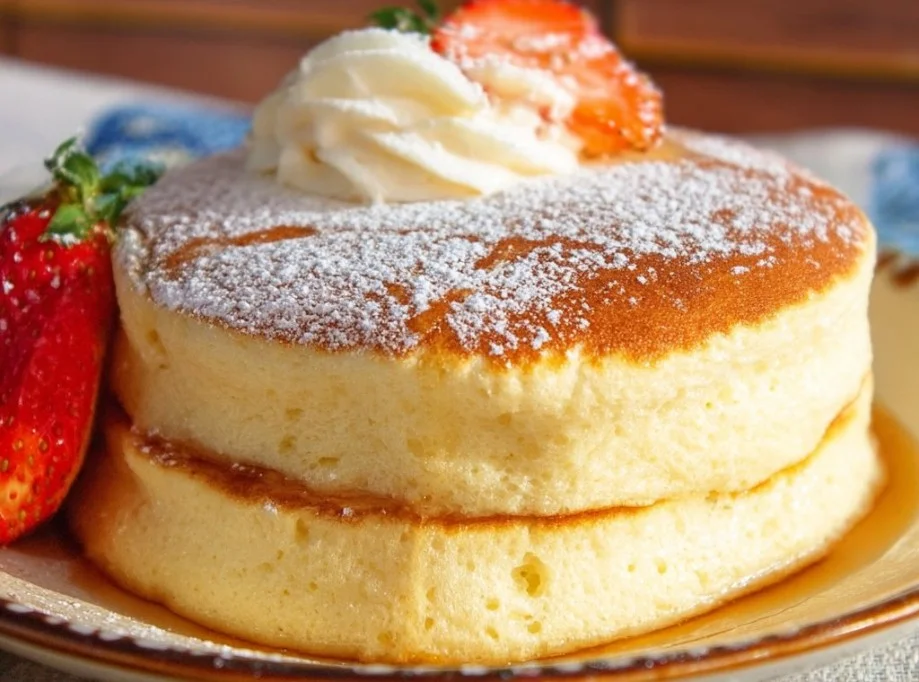
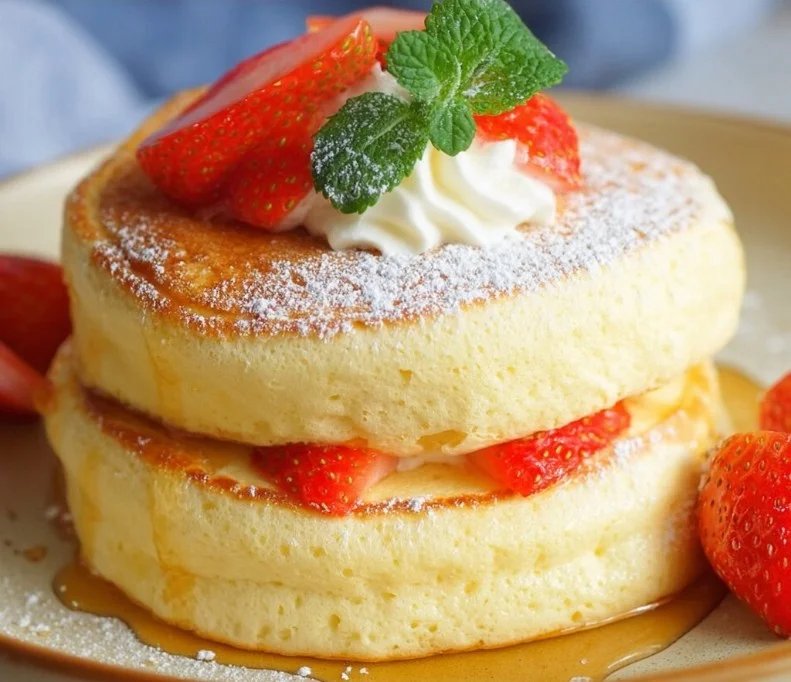
Plate and dress: stack the pancakes two or three high, add a dollop of whipped cream, scatter assorted berries, dust with powdered sugar, and drizzle maple syrup if desired.
- Why it matters: The contrasting textures and acidity from berries balance sweet richness.
- Visual cue: Tall, pillowy stack with glossy cream and jewel-like berries.
- Mini tip: For extra visual flair, add a tiny extra pinch of lemon zest on top or a few edible flowers for a brunch-worthy presentation.
-
Serve immediately and enjoy the little moment.
- Why it matters: These pancakes taste best warm, when the interior is tender and the whipped cream still soft.
- Visual cue: The first forkful should yield a gentle, cloud-like nap of batter.
- Mini tip: Encourage guests to press into the stack so layers mix with cream and syrup.
Serving Suggestions & Storage Tips
Serving ideas
- Keep it simple: a single stack per person, topped with a scoop of sweetened whipped cream, a handful of berries, and a light dusting of powdered sugar.
- For an indulgent brunch: serve with extra maple syrup, sliced bananas, and a sprinkle of toasted nuts or coconut flakes.
- Make a parfait-style plate: layer one small pancake, whipped cream, and berries repeatedly for a beautiful tower.
Pairings
- Freshly brewed coffee, a mild black tea, or a fruity herbal tea make excellent companions.
- If you want something creamy without alcohol, a glass of cold milk or a non-alcoholic vanilla almond drink is cozy.
Storage
- These pancakes are best eaten the day they are made. If you must store leftovers, cool completely and keep in an airtight container in the refrigerator for up to 2 days.
- Store whipped cream separately in the fridge in a covered bowl for up to 24 hours; re-whip briefly if it loses volume.
Reheating
- Oven method: Preheat to 300 F, place pancakes on a baking sheet, and cover loosely with foil. Heat for 8 to 10 minutes until warmed through. This keeps them tender.
- Skillet method: Warm a nonstick skillet over low heat, add a tiny bit of oil, and reheat pancakes for 1 to 2 minutes per side, covered, until warm.
- Microwave method: For a quick fix, microwave a pancake for 10 to 15 seconds on a damp paper towel — but be aware this can soften the texture slightly.
- Rewhip cream if needed and add fresh berries before serving for brightness.
Helpful Notes & Variations
Substitutions
- Flour: For a gluten-free option, use a 1-to-1 gluten-free flour blend that includes xanthan gum for structure. Results may vary; be gentle folding.
- Milk: Swap dairy milk with oat or almond milk if needed, though the texture may shift a touch.
- Sugar: Use a little more or less sugar in both batter and whipped cream to suit your taste.
Dietary adaptations
- Egg-free or vegan: This recipe relies heavily on egg whites for lift, so a true vegan swap is challenging. You could try aquafaba (chickpea brine) whipped to stiff peaks as an experimental substitution for the meringue but expect a different texture and flavor.
- Lower sugar: Reduce sugar quantities in batter and cream; add naturally sweet toppings like ripe berries or a sugar-free syrup.
Flavor add-ins
- Citrus: Add lemon or orange zest to the batter for a bright twist.
- Matcha: Fold a teaspoon of matcha powder into the flour for a green tea flavored pancake and a subtle earthy note.
- Chocolate: Gently fold in a tablespoon of cocoa powder to the dry ingredients or sprinkle mini chocolate chips into the batter just before cooking.
- Spices: A pinch of cinnamon or cardamom can add warmth and depth.
Common mistakes and how to avoid them
- Stiff, dry meringue: Stop whisking when peaks are glossy and just hold shape. Overbeating causes dryness and collapse.
- Batter deflates during folding: Fold gently and in stages, using a spatula to preserve air.
- Pancakes spread too much: Reduce pan heat; batter should be thick enough to mound.
- Pancakes burn before cooking through: Use low heat and cook covered to trap steam and cook interiors gently.
- Soggy pancakes: Ensure the pan is not wet with excess oil; dab with a paper towel if needed before adding batter.
Conclusion
These Fluffy Japanese Soufflé Pancakes stand out because they transform a handful of everyday ingredients into an airy, elegant breakfast that feels celebratory yet remains accessible. With gentle technique, clear visual cues, and a few cozy tips, you can create pancakes that rise tall, feel cloud-soft, and pair beautifully with whipped cream and bright berries. If you want a step-by-step video demonstration to watch the folding and cooking in action, check this helpful guide: Fluffy Japanese Soufflé Pancakes (Video) スフレパンケーキ. For more variations and personal notes from a baker who makes these again and again, I recommend this reliable recipe walkthrough: I make these Fluffy Japanese Soufflé Pancakes at Home on repeat. Now grab your whisk, warm your skillet, and enjoy creating a little cloud of comfort on your plate — and if you try them, tell me how they turned out.
Frequently Asked Questions
Can I make this recipe ahead of time?
Yes, but with caveats. The pancakes are best fresh for their texture and height. You can prepare the batter up to the point before folding in the meringue and keep the yolk mixture chilled for a few hours; fold the whipped whites in right before cooking for best rise. If you need to prep further ahead, keep cooked pancakes refrigerated (cool completely) and reheat gently.
How should I store leftovers and how long do they last?
Store cooled leftovers in an airtight container in the refrigerator for up to 2 days. Keep whipped cream separate in a covered bowl for up to 24 hours. For best flavor and texture, consume within 48 hours.
What is the best way to reheat or serve this recipe after storage?
The gentlest method is to warm in a 300 F oven covered loosely with foil for 8 to 10 minutes. A nonstick skillet over low heat, covered, for a couple of minutes per side also works well. Microwave briefly on a damp paper towel if you are in a hurry, but this can soften the texture more than other methods. Rewhip cream if needed and add fresh berries.
Can I adjust or substitute ingredients to fit my preferences?
Yes. You can use alternative milks in the yolk base, a gluten-free 1-to-1 flour blend instead of all-purpose (results may vary), and slightly adjust sugar levels in batter and whipped cream. For a dairy-free or vegan version, aquafaba may be tried as a meringue substitute, but expect a different, experimental result.
Do you have tips to ensure the best texture and flavor every time?
- Use clean, dry bowls and utensils when whipping egg whites.
- Add the vinegar to whites for stability and add sugar gradually to create glossy, firm peaks.
- Fold the meringue gently and stop as soon as the batter evens out to keep as much air as possible.
- Cook slowly over low heat with a lid so the interior sets without overbrowning.
- Serve promptly with freshly whipped cream and berries for the ideal contrast of textures and flavors.
Fluffy Japanese Soufflé Pancakes
Ingredients
Method
- Separate the eggs carefully into two clean bowls.
- Make the yolk mixture: Whisk the egg yolks with milk, vanilla extract, and lemon zest if using.
- Sift the flour and baking powder into the yolk mixture in two additions, folding gently until smooth.
- Add vinegar to the egg whites and whisk at medium speed until foamy.
- Gradually add sugar while whisking until you achieve glossy, stiff peaks.
- Fold the meringue into the yolk-flour mixture in three additions.
- Heat a nonstick skillet over very low heat and lightly oil it.
- Spoon the batter into the pan, forming tall mounds.
- Cover the pan with a lid and cook gently for about 3 to 4 minutes.
- Gently flip the pancakes and cover again, cooking for another 2 to 3 minutes.
- Check doneness by gently touching; they should spring back slightly.
- Keep finished pancakes warm on a plate under a loose towel while cooking the rest.
- Make the sweetened whipped cream by beating cold heavy cream with sugar and vanilla until soft peaks form.
- Plate the pancakes by stacking them, adding whipped cream, berries, powdered sugar, and maple syrup.
- Serve immediately and enjoy!