There’s something quietly magical about a jar of homemade Flower Jelly — a translucent spread that tastes like sunshine and summer meadows. Made from delicate, edible blossoms and simple pantry staples, this seasonal recipe captures floral fragrance and color in a spoonful. Whether you’ve harvested roses, violets, lavender, or pansies from your garden (pesticide-free, of course), Flower Jelly is worth trying for its beauty on the breakfast table and its gentle floral note that pairs with cheese, toast, or cocktails. It’s an inviting, from-scratch project that’s perfect for a slow afternoon of preserving and makes a thoughtful homemade gift when jars are full of shimmering, petal-scented goodness.
Ingredients & Equipment
Ingredients
- 4 cups edible flower blossoms (petals separated; see notes)
- 4 cups water
- 2 tbsp lemon juice
- 1 to 4 cups sugar (*see note)
- 1 box powdered pectin (1.75 oz box pectin — Regular or Low Sugar)
Notes on ingredients
- Edible flowers: Use only known edible flowers grown without pesticides. Good choices: roses (petal-only), violets, lavender, pansies, nasturtiums, and chive blossoms. Remove any green calyx or stems — they’re bitter.
- Sugar: The range 1 to 4 cups gives flexibility. Use more sugar for a classic, firm set and brighter preservation; use less with low-sugar pectin or if you want a lighter, less sweet spread. See Step-by-Step Notes for specifics on pectin types and sugar quantities.
- Pectin: A 1.75 oz powdered pectin box is the standard. You may use Regular or Low Sugar pectin, but directions and sugar amounts will differ — read the pectin box instructions and the notes below.
Helpful equipment
- Fine-mesh sieve or cheesecloth (for straining floral tea)
- Large saucepan or jam pot
- Ladle and spoon (heatproof)
- Jelly jars (sterilized) and lids, or airtight containers
- Canning funnel, jar lifter, and water bath canner (if canning)
- Baking tray (optional — for drying petals or roasting)
- Small thermometer (optional, for accurate boiling point checks)
- Measuring cups and spoons
- Blender or immersion blender (optional for a smoother texture)
Step-by-Step Instructions (with tips)
These directions follow the reliable jar-to-jam approach that honors the recipe’s chemistry: don’t add sugar before pectin, and give the pectin a chance to activate in the hot floral liquid.
-
Prepare the flowers (important)
- Gently separate 4 cups of edible flower blossoms from their stems, carefully removing any green parts (calyxes and leaves). Green bits can add bitterness and muddy the color.
- Rinse quickly only if the flowers are dusty; pat dry on a towel. If flowers are wet, the infusion will dilute slightly — use your judgment.
-
Make the floral tea
- Place the cleaned petals in a heatproof bowl or heatproof jar. Pour 4 cups boiling water over the petals and stir gently.
- Allow the tea to infuse for about 10 minutes, or until the color and aroma are as you like. Some petals release color quickly (like violets); others are more subtle (lavender). For a deeper color, extend infusion to 20–30 minutes, or use slightly hotter water and a tighter cover.
-
Strain the tea
- Strain the floral tea through a fine-mesh sieve lined with cheesecloth into a saucepan or jam pot, pressing gently to extract liquid but not crushing too much of the petals. Discard solids.
- Add 2 tablespoons lemon juice to the strained tea. This brightens the color (especially for anthocyanin-rich flowers like violets and roses), balances sweetness, and provides acidity needed for a good set and preservation. Don’t skip the lemon.
-
Add pectin correctly
- Bring the floral mixture to a full rolling boil over medium-high heat. Once boiling, sprinkle in the powdered pectin while stirring briskly to dissolve.
- Allow the mixture to boil for 1 minute after adding pectin. This step activates the pectin. Important: Do not add the sugar at the same time as the pectin, or before the pectin — adding sugar too early can prevent a proper set.
-
Add sugar and finish cooking
- After the 1-minute pectin boil, add the sugar. Start with your chosen amount (see notes). Stir constantly until the sugar dissolves completely.
- Bring the mixture back to a full, rolling boil and maintain it for 1 minute — this final boil helps the sugar and pectin lock in a gel.
- Optional: skim foam if desired for a clearer jar surface.
-
Jar the jelly
- Remove the pan from heat. Ladle the hot jelly into sterilized jars, leaving 1/4 inch headspace.
- Wipe rims, apply lids and bands.
-
Preserve or cool
- If canning, process jars in a boiling water bath canner for 10 minutes (adjust time for altitude per your local extension guidelines).
- If not canning, allow the jars to cool completely on the counter until lids pop or seal. Store in the refrigerator for up to a month, or freeze jars (leave some headspace) for up to 6 months.
Variations and tips
- Roasting vs boiling: For deeper, caramel-like floral notes, you can roast petals briefly on a baking tray at 300°F until aromatic before steeping — this will change both color and flavor. Alternatively, simmer petals gently for a longer infusion instead of a quick steep to extract more subtle compounds.
- Color shifts: Acid (lemon) intensifies pinks and reds in many petals; baking soda (not recommended) will shift colors toward blue/green. Stick with lemon for best flavor and safety.
- Texture: For a smoother appearance, pass the strained tea through a finer cloth. If you prefer tiny flecks of petal, a coarser strain will keep them.
- Flavors: Add a vanilla bean (split) or a few mint leaves to the infusion for complementary flavors, but be cautious — strong flavors can overwhelm delicate floral notes.
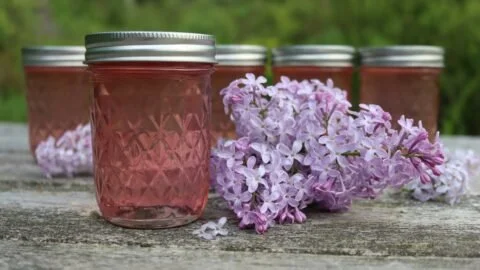
Storage, Freezing & Make-Ahead Tips
- Refrigerator storage: Homemade flower jelly stored in clean, airtight jars will keep in the refrigerator for up to about 1 month. Keep a date label on the jar.
- Freezing: To freeze, fill freezer-safe jars or containers leaving at least 1/2 inch headspace (jelly expands slightly). Freeze for up to 6 months. Thaw in the refrigerator overnight; texture may be slightly softer than fresh-canned jelly.
- Canning shelf life: Properly water-bath canned and sealed jars (processed for 10 minutes) can be stored in a cool, dark pantry for up to a year, though flavor is best within the first 6–9 months.
- Make-ahead: Flower jelly keeps well and actually benefits from a week’s rest for flavors to meld. Make several small batches across peak blossom days to create variety — rose jelly one week, lavender the next.
- Portioning advice: Consider making smaller jars (4 oz) for gifts and sampling, and larger jars (8–12 oz) for home use. Smaller jars reduce waste and keep freshness.
How to Use / Serve This Dish
- On toast or scones: A classic. Slather on warm toast, croissants, or freshly baked scones for a floral breakfast treat.
- Cheese pairing: Flower jelly is gorgeous with soft cheeses like goat cheese, brie, or ricotta. Try a smear of goat cheese on a cracker topped with a teaspoon of flower jelly and a toasted nut.
- Desserts: Use as a filling for layered cakes, a glaze for fruit tarts, or folded into whipped cream for a delicate mousse.
- Cocktails & mocktails: Stir a spoonful into sparkling wine, gin cocktails, or lemonade for a floral twist. It makes an elegant, seasonal simple syrup substitute.
- Yogurt & granola: Swirl into Greek yogurt with granola and fresh fruit for a pretty breakfast parfait.
- Gifts: Fill small jars, tie with twine and a sprig of dried petals for a thoughtful homemade gift from your garden.
FAQ
Can I use frozen flowers or petals for Flower Jelly?
Yes — you can use frozen edible petals if they were frozen fresh and pesticide-free. Thaw and drain briefly; expect a slightly paler infusion. For best color and aroma, fresh petals are preferred, but frozen can work well outside of peak season.
What if my jelly doesn’t set?
Common causes: adding sugar before the pectin step, insufficient pectin, old/expired pectin, or incorrect sugar ratio for the pectin type. If it doesn’t set, you can reboil the jelly with an additional packet of powdered pectin (follow packet directions) or use a commercial gelling agent as directed. Always check pectin’s expiration and follow the sequence: pectin first, 1-minute boil, then sugar, then 1-minute boil.
Can I substitute honey, maple syrup, or alternative sweeteners?
Substituting other sweeteners changes the chemistry and often the set. Honey and maple syrup can be used in small amounts for flavor if you use a low-sugar pectin formulated for alternative sweeteners, but results can vary. For reliable gel, use granulated sugar with regular pectin or follow the box instructions for low-sugar pectin and the recommended sugar amount.
Are all flowers edible? How do I know which to use?
No — not all flowers are edible. Only use varieties you’re certain are edible and grown without pesticides. Common edible choices: rose (petals only), violets, lavender, pansies, nasturtiums, and marigolds (certain types). Avoid flowers from florists (likely treated), and never use poisonous flowers like oleander or foxglove. When in doubt, consult a trusted foraging/edible flower guide.
Conclusion
Making Flower Jelly is a seasonal act of kindness to yourself and your table — a way to preserve a fleeting bloom and share its fleeting perfume all year long. If you’re looking for more inspiration, Creative Canning’s flower jelly guide has a thorough step-by-step and lots of recipe ideas, and their collection of edible flower jelly recipes is a great place to explore variations and seasonal pairings. Try a small batch this season, experiment with different blossoms, and don’t forget to share jars with friends — homemade flower jelly is as much a gift as it is a preserve.
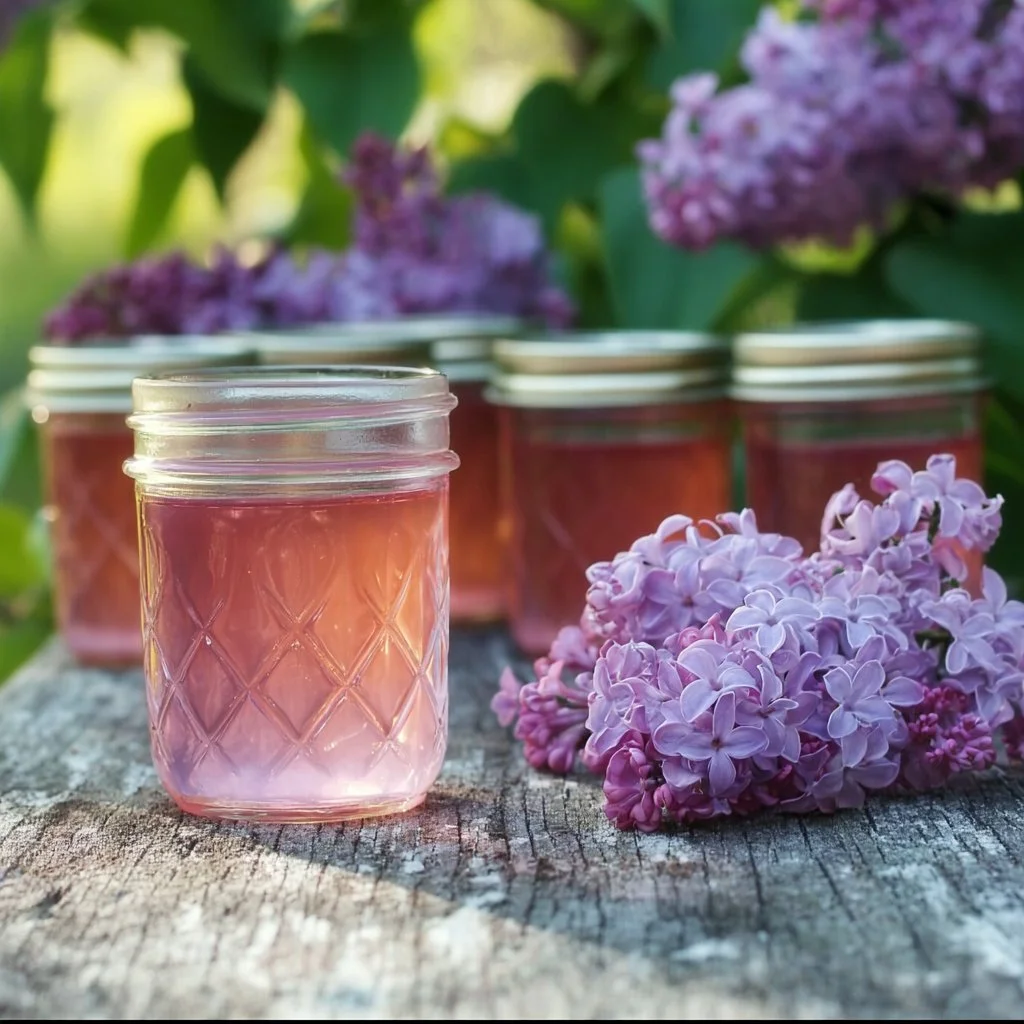
Flower Jelly
Ingredients
Method
- Gently separate 4 cups of edible flower blossoms from their stems, removing any green parts.
- Rinse quickly only if the flowers are dusty; pat dry on a towel.
- Place the cleaned petals in a heatproof bowl. Pour 4 cups boiling water over the petals and stir gently.
- Allow the tea to infuse for about 10 to 30 minutes, depending on the desired color and aroma.
- Strain the floral tea through a fine-mesh sieve lined with cheesecloth into a saucepan, and discard solids.
- Add 2 tablespoons lemon juice to the strained tea.
- Bring the mixture to a rolling boil over medium-high heat. Sprinkle in the powdered pectin while stirring.
- Allow to boil for 1 minute after adding pectin.
- Add the sugar and stir constantly until it dissolves.
- Bring back to a rolling boil for 1 minute.
- Remove from heat and ladle the hot jelly into sterilized jars, leaving 1/4 inch headspace.
- Wipe rims and apply lids.
- Process jars in a boiling water bath canner for 10 minutes if canning.
- If not canning, cool jars completely before storing in the refrigerator for up to a month.