If you’re craving the cozy, hands-on comfort of sushi without the fuss of rolling, this Spicy Salmon Sushi Bake Recipe is the kind of dish that feels like a warm hug on a plate. It takes the bold, creamy flavors of a spicy salmon roll and transforms them into a casserole-style bake that’s perfect for weeknights, potlucks, or calm Sunday afternoons when you want something deliciously impressive without a ton of elbow grease. With tender sushi rice, rich diced salmon, a spicy mayo kick, and crunchy nori on top, this dish hits savory, spicy, and satisfying notes all at once—ideal for those who love to create comforting, from-scratch meals in their own kitchen.
Why You’ll Love This Recipe
- Quick and easy to prepare — great for busy evenings but tastes like you put in a lot more time.
- Made with simple, accessible ingredients you can find at most grocery stores.
- Perfect for gatherings, game nights, or cozy dinners when you want to feed a crowd without stress.
- Comforting and satisfying: the creamy, spicy salmon melds with warm rice for familiar, craveable flavors that please adults and kids alike.
What sets this version apart is the balance: light, seasoned sushi rice forms a fluffy base that lets the spicy salmon topping shine, while a brief bake gives the salmon a slightly caramelized edge and melds flavors beautifully. It’s the kind of recipe that becomes part of family traditions—the sort you make when you want applause without complicated technique. Feel confident in the kitchen knowing this dish is forgiving, welcoming to tweaks, and always a crowd-pleaser.
Ingredients Needed
For the rice base
- 2 cups sushi-style rice (uncooked) — short-grain rice gives the classic sticky texture. Rinse thoroughly under cold water before cooking.
- 2 1/2 cups water — for cooking the rice (adjust slightly if using a different rice cooker).
- 1/4 cup rice vinegar — for seasoning the rice; use seasoned rice vinegar or plain rice vinegar blended with sugar and salt (see below).
- 2 tablespoons granulated sugar — to balance the vinegar; can reduce slightly for less sweetness.
- 1 teaspoon fine salt — enhances the rice flavor.
For the spicy salmon topping
- 1 pound fresh salmon fillet, skin removed and cut into small cubes — sushi-grade or very fresh supermarket salmon is ideal. If unsure, cook through before mixing.
- 1/2 cup mayonnaise — Japanese mayo (like Kewpie) gives the richest, umami-forward creaminess, but standard mayo works fine.
- 2 tablespoons Sriracha (or more to taste) — adjust for desired heat level. Substitute a milder chili sauce if you prefer less spice.
- 1 teaspoon toasted sesame oil — adds a warm, nutty note; a little goes a long way.
- 1/2 cup scallions/green onions, finely chopped — reserve extra for garnish.
For garnish and finishing
- 1 sheet nori (seaweed), sliced into thin strips — use roasted nori; cutting with kitchen shears is easiest.
- Tobiko (flying fish roe), to taste (optional) — adds color and a savory pop; omit if avoiding seafood roe.
Ingredient notes
- Fresh vs. frozen salmon: fresh is best, but you can use previously frozen and thawed salmon—pat dry well. If you’re uncomfortable eating raw-ish fish, briefly sear or bake it first before mixing.
- Mayo swap: For a lighter version, use half mayo and half plain Greek yogurt; texture will be slightly tangier.
- Sriracha alternatives: Sambal oelek or a dollop of spicy gochujang will deepen flavor.
Ingredients & Equipment Notes
Useful tools
- Rice cooker or heavy-bottomed pot with tight lid: for the most consistent sushi rice—rice cookers remove guesswork.
- 9×13-inch baking dish (or similar size): gives an even layer of rice and topping; glass or metal both work.
- Mixing bowls: one for the rice dressing, another for the salmon mix.
- Sharp knife and cutting board: for cleanly dicing salmon and slicing green onions.
- Kitchen shears: makes cutting nori into strips quick and simple.
- Spatula or rice paddle: to gently fold rice and spread it in the dish.
- Instant-read thermometer (optional): useful if you want to confirm salmon is cooked to your preference.
How these help
- A rice cooker keeps the rice texture reliable and frees you to prep the rest.
- A good baking dish ensures even browning on top without overcooking the rice.
- A thermometer is handy if you like to ensure salmon reaches a safe internal temperature, especially when using raw fish.
Instructions – How to Make "Spicy Salmon Sushi Bake Recipe"
-
Preheat your oven.
- Set the oven to 375°F (190°C) so it’s fully heated when the assembled bake goes in. This temperature yields a slightly toasted top without drying out the salmon. Preheating matters because it creates a predictable environment for browning.
-
Rinse and cook the sushi rice.
- Place 2 cups sushi rice in a fine-mesh sieve and rinse under cold running water, stirring with your hand until the water runs mostly clear. This removes excess starch and helps the rice be pleasantly sticky without clumping.
- Combine the rinsed rice and 2 1/2 cups water in your rice cooker or a heavy-bottomed pot. Cook according to your rice cooker’s settings or bring to a boil on the stove, then lower heat, cover, and simmer until the water is absorbed (about 15–20 minutes on the stove). Let the rice rest, covered, for 10 minutes off the heat to finish steaming.
-
Season the rice.
- While the rice rests, whisk together 1/4 cup rice vinegar, 2 tablespoons sugar, and 1 teaspoon salt in a small bowl until the sugar dissolves. This warm-seasoning mix is the classic sweet-sour lift that defines sushi rice.
- Transfer the hot rice to a wide bowl or shallow pan. Gently fluff with a rice paddle or spatula, then fold in the vinegar mixture in even strokes—don’t smash the grains. You want the rice to stay glossy, slightly sticky, and fragrant with vinegar. Visual cue: each grain should be separate but cling slightly when pinched.
-
Press the rice into the baking dish and cool slightly.
- Spread the seasoned rice evenly across the bottom of your 9×13-inch baking dish, using wet hands or a lightly oiled spatula to smooth it into a compact layer. A tight base helps support the topping.
- Allow the rice to cool just enough that the topping doesn’t melt immediately—about 5–10 minutes. Warm rice is ideal; too hot can make the mayo separate, too cool may not meld as well in the oven.
-
Prepare the spicy salmon mixture.
- In a separate bowl, combine 1 lb diced salmon (skinless), 1/2 cup mayonnaise, 2 tablespoons Sriracha (adjust to taste), 1 teaspoon sesame oil, and 1/2 cup chopped green onions. Stir gently until every piece is coated. Taste a small bit of the mixture (optional); you’re aiming for balanced heat and creaminess.
- Why this matters: the mayo binds the salmon and keeps moisture in the oven, while sesame oil adds depth. If your salmon is lean or has been previously frozen, you may want a touch more mayo to preserve moisture.
-
Assemble the bake.
- Spread the salmon mixture evenly over the rice layer, creating an even top. Press lightly so the topping adheres to the rice. If you like a more golden, broiled finish later, you can leave the salmon slightly thicker in the middle.
-
Bake until set and slightly golden.
- Place the dish in the preheated oven and bake for 25–30 minutes. You’re looking for the salmon to be cooked through and the top to have small golden spots. Visual cues: the topping will puff slightly, the edges may bubble, and the mayo will take on a light tan color. If you want a deeper browned finish, switch to broil for 30–60 seconds—watch carefully to prevent burning.
-
Rest and garnish.
- Remove the bake from the oven and let it rest for 5 minutes. This pause allows juices to redistribute so scooped portions hold together.
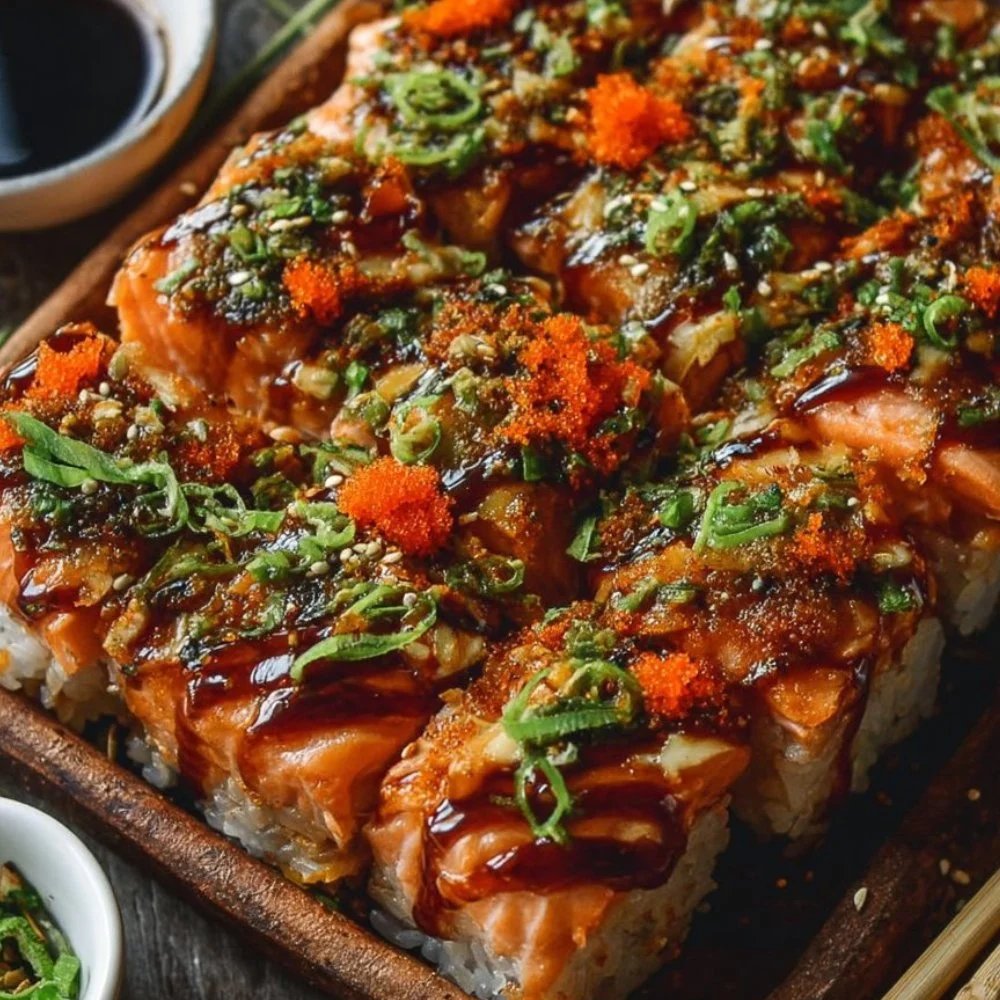
- Sprinkle additional sliced green onions, thin nori strips, and tobiko if you’re using it. The nori brings crunchy umami, green onions add freshness, and tobiko lends a briny pop and color contrast.
-
Serve warm and enjoy.
- Scoop out the bake with a serving spoon. Pair with small bowls of soy sauce, pickled ginger, or extra Sriracha on the side for guests to customize. This dish is best eaten warm, when the flavors are at their most inviting.
Serving Suggestions & Storage Tips
Serving ideas and presentation
- Family-style: Place the baking dish at the center of the table and let everyone scoop onto small plates—great for casual dinners.
- Individual bowls: Spoon warm sushi bake over small bowls of steamed greens or extra rice for a rice-bowl presentation.
- Shared appetizer: Serve in a smaller dish and accompany with toasted sesame crackers, sliced cucumbers, or crispy wonton chips for scooping.
- Make it interactive: Offer small plates of garnishes—extra green onions, thin cucumber ribbons, soy sauce, wasabi, and pickled ginger—so guests can customize bites.
Pairings and accompaniments
- Salad: A crisp Asian slaw (cabbage, carrot, rice vinegar, sesame oil) cuts the richness beautifully.
- Soup: Miso soup or a light dashi-based broth keeps the meal balanced and comforting.
- Drinks: Crisp, cold beers, a citrusy white wine (Sauvignon Blanc), or green tea pair nicely with the spicy, creamy flavors.
Storage and reheating
- Refrigerator: Transfer leftovers into an airtight container and refrigerate within two hours of baking. They will keep well for up to 3 days. When storing, try to keep garnishes separate to preserve texture.
- Freezing: You can freeze portions in freezer-safe containers for up to 2 months, though the rice texture may change slightly upon thawing. For best results, freeze before baking: assemble the dish, cover tightly, and freeze; then thaw overnight in the fridge before baking.
- Reheating: Reheat single portions in the oven at 350°F (175°C) covered with foil for 10–12 minutes, or until warmed through. For a quicker method, microwave in 30-second bursts, stirring between intervals to restore heat evenly. To revive a slightly soggy top, pop under the broiler for 30–60 seconds to re-crisp.
Make-ahead tips
- Rice: Cook and season the rice up to a day ahead; keep tightly covered in the fridge. Bring to room temperature before assembling so the mayo doesn’t separate.
- Salmon mix: Combine the salmon and sauce up to a few hours before baking and keep chilled. Mix gently right before spreading to keep texture optimal.
Helpful Notes & Variations
Ingredient swaps and substitutions
- Salmon: If you prefer cooked fish, briefly sear the diced salmon in a skillet until just opaque before mixing with mayo. Canned salmon can be used in a pinch—drain and flake well.
- Mayonnaise: For a lighter tang, swap half the mayo for plain Greek yogurt. For a dairy-free option, use vegan mayo.
- Spice: Swap Sriracha for gochujang (Korean chili paste) for a deeper, fermented heat, or use chili garlic sauce for more texture.
- Rice alternatives: If you can’t find sushi rice, medium-grain rice is the next best option; it won’t be quite as sticky but will still hold.
Dietary adaptations
- Gluten-free: Use gluten-free Sriracha and tamari-based soy sauce for dipping. Most of this recipe is naturally gluten-free when checking condiments.
- Lower sodium: Reduce added salt in the rice seasoning and use low-sodium soy sauce for serving.
- Vegetarian: Replace salmon with diced roasted mushrooms or marinated tofu, tossed in the same spicy mayo mix. Try adding a little miso paste to the mayo for that seafood-like umami.
Flavor enhancements and add-ins
- Crunch: Fold in thinly sliced cucumber or toasted sesame seeds on top after baking for crunch.
- Citrus lift: A squeeze of yuzu or lemon just before serving brightens the whole dish.
- Heat layers: Drizzle a little extra Sriracha or a flavored chili oil on individual plates for guests who like more fire.
Common mistakes to avoid
- Overcooking rice: Avoid drying out the rice by not overbaking; the rice should be warm and slightly firm, not hard.
- Too-hot rice under mayo: Let rice cool slightly to prevent the mayo from separating into oil and water.
- Heavy-handed mixing: Stir the salmon and mayo gently so the salmon doesn’t fall apart and get mushy; you want lovely chunks throughout.
Frequently Asked Questions (FAQ)
{questions}
Answer: I know this looks like an odd heading, but you probably came here with a bundle of real questions on your mind—how to keep the rice fluffy, whether to use raw salmon, and how long this will last in the fridge. Here are clear, experience-based answers to the common concerns home cooks ask when making a spicy salmon sushi bake.
-
Can I use raw salmon in this dish?
Yes—this recipe is commonly made with fresh, sushi-grade salmon diced and mixed into the mayo mixture, then baked. If you’re at all nervous about raw fish, briefly sear the cubes in a hot skillet for 30–60 seconds per side (just enough to take the chill off and firm up the exterior) before combining with the sauce. Alternatively, use previously cooked salmon or poach the fillet until fully opaque. -
How sticky should my sushi rice be?
Sushi rice should be sticky enough that grains cling together slightly but still remain distinct when you look closely. Rinsing removes excess surface starch that makes rice gummy. Fluff gently and fold in the vinegar mix—avoid smashing the rice, which creates gluey texture. -
Can I make this ahead of time?
Yes. You can prepare the rice and salmon mix separately up to a day ahead. Store them chilled and assemble right before baking. If you want to fully assemble in advance, keep the assembled dish covered in the fridge and bake within 12–24 hours for best texture. -
How long will leftovers last?
Properly stored in an airtight container in the refrigerator, leftovers will be good for up to 3 days. Reheat thoroughly before eating. If frozen, expect some rice texture change; thaw overnight before reheating. -
Is tobiko necessary?
No—tobiko is optional and mainly adds briny pops and a lovely color contrast. If you don’t have it, a sprinkle of sesame seeds or more nori strips works well. -
How do I get a nicely browned top without drying the salmon?
Bake at 375°F for 25–30 minutes until set and lightly golden. If you want more browning, finish with a short broil (30–60 seconds), watching like a hawk. Broiling too long will dry the topping, so quick bursts are best. -
Can I make this spicy for those who love heat while keeping it mild for kids?
Yes—mix some of the salmon with a mild mayo, and add Sriracha to a separate portion, or let diners drizzle heat on their own. Serving Sriracha and extra sesame oil on the side makes it customizable. -
What else can I serve with this to round out a meal?
Pair with a crisp green salad, pickled vegetables, miso soup, or steamed greens. Small sides with acidity (pickled ginger, quick cucumber salad) balance the rich, creamy topping.
If you have a specific worry—like ingredient swaps you’re considering or appliance questions—ask away in the comments. I love troubleshooting recipes with home cooks and offering tailored tips based on what’s in your pantry.
Conclusion
This Spicy Salmon Sushi Bake Recipe is a warm, no-fuss way to bring sushi-night vibes to your table without rolling a single piece. It’s comforting and crowd-friendly, perfect for cozy dinners, casual gatherings, or anytime you want a home-cooked dish that tastes restaurant-worthy. If you’d like a step-by-step visual or additional serving ideas, check out How to Make Salmon Sushi Bake – FeedMi Recipes, and for another take on the spicy topping and presentation, this version is a lovely reference: Spicy Salmon Sushi Bake – The Food Blog.
Try this recipe soon—then come back and tell me how you tweaked it. Leave a comment, a star rating, and if you loved the photos and want to save this for later, pin it on Pinterest. What’s one unexpected ingredient you’d add to your version of a sushi bake?

Spicy Salmon Sushi Bake
Ingredients
Method
- Preheat your oven to 375°F (190°C).
- Rinse and cook the sushi rice: Rinse 2 cups sushi rice in a fine-mesh sieve under cold water until the water runs mostly clear, then combine with 2.5 cups of water and cook.
- Let the rice rest covered for 10 minutes off the heat after cooking.
- Whisk together 1/4 cup rice vinegar, 2 tablespoons sugar, and 1 teaspoon salt in a bowl until dissolved and season the rice.
- Spread the seasoned rice evenly across the bottom of a 9x13-inch baking dish.
- Combine salmon, mayonnaise, Sriracha, sesame oil, and green onions in a separate bowl and stir gently.
- Spread the salmon mixture evenly over the rice layer and press lightly.
- Bake in the preheated oven for 25-30 minutes until cooked through and slightly golden.
- Let the bake rest for 5 minutes, then garnish with green onions, nori strips, and tobiko if using.
- Serve warm with soy sauce and pickled ginger on the side.