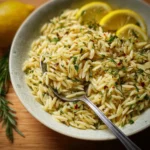
Greek Orzo with Tomatoes, Olives, Basil, and Feta is my go-to weeknight comfort—especially when summer tomatoes are at their peak. “Have you tried it yet?” I find myself asking friends and neighbors the same way I nudged my partner the first time: taste this and tell me what you think. This recipe centers on orzo pasta simmered in vegetable broth and finished with juicy cherry tomatoes, Kalamata olives, fragrant basil, and crumbly feta for a perfect balance of tang and creaminess. It’s the kind of dish that feels like sunshine on a plate and brings everyone to the table—effortlessly.
Why You’ll Love This Greek Orzo Recipe
- Quick and easy: One-pan stovetop method that’s relaxed but impressive.
- Simple ingredients: Pantry-friendly orzo pasta, canned or fresh tomatoes, olives, olive oil, herbs, and feta.
- Seasonal star: Brilliant with summer cherry tomatoes and fresh basil, but adaptable year-round.
- Comforting yet light: Fulfills that need for hearty pasta without feeling heavy.
- Great for guests: Pretty enough to serve warm as a side or to make into a main for casual dinners.
What makes this version unique is the toasting of the orzo before simmering—this adds a nutty depth you don’t always find in other Greek orzo recipes. I like how the orzo takes on subtle roasted notes, then soaks up a fragrant vegetable broth. Emotionally, it’s simple nostalgia: late-summer backyard dinners, the hum of conversation, and a bowl passed around with a wooden spoon. For home cooks, it’s confidence-building—few steps, big payoff.
Ingredients Needed
For the base
- 1 cup orzo pasta — regular durum wheat orzo works best for the classic texture; whole-wheat orzo can be used for extra fiber but will be slightly heartier.
- 2 cups vegetable broth — low-sodium broth recommended so you can control seasoning.
For the mix-ins
- 1 cup cherry tomatoes, halved — use ripe, firm tomatoes; you can substitute grape tomatoes if you prefer.
- 1/2 cup Kalamata olives, pitted and sliced — these bring a lovely briny contrast; you can swap for green olives if you like a milder flavor.
- 1/2 cup feta cheese, crumbled — a tangy, creamy feta (sheep or sheep-goat blend) is best; add more or less to taste.
For finishing and seasoning
- 1/4 cup fresh basil, chopped — tear the leaves for the best texture and aroma.
- 2 tablespoons olive oil — a good extra-virgin olive oil will enhance flavor.
- Salt and freshly ground black pepper, to taste — remember the feta and olives are salty, so season lightly and adjust at the end.
Quick notes and substitutions
- Fresh vs. jarred tomatoes: Fresh cherry tomatoes are ideal in summer; canned diced tomatoes (drained) can work in a pinch. If using canned, add them toward the end so they don’t make the orzo too mushy.
- Vegetable broth: If you don’t have broth, a well-balanced water with a teaspoon of concentrated vegetable stock or miso can work.
- Feta texture: If you prefer creamier pockets of cheese distributed through the pasta, crumble the feta a bit finer or stir a few tablespoons in at the end for melty pockets.
Ingredients & Equipment Notes
Useful tools
- Large skillet with a lid: A wide skillet gives the orzo more surface area to toast and cook evenly; a lid is helpful to simmer the pasta gently.
- Measuring cups and spoons: For accurate liquid-to-orzo ratios.
- Wooden spoon or silicone spatula: For stirring without scratching the pan.
- Sharp knife and cutting board: For chopping tomatoes and basil and slicing olives.
How they help
- A heavy-bottomed skillet prevents hot spots and burning while toasting the orzo.
- A tight-fitting lid traps steam so the orzo cooks through evenly and absorbs the broth without constant stirring.
- Using a wooden spoon allows you to scrape any tasty browned bits without damaging the pan.
Keep this section short and practical: these tools simplify the process and help you achieve that perfect tender-yet-separated orzo.
Instructions – How to Make “Greek Orzo with Tomatoes, Olives, Basil, and Feta”
- Heat the olive oil over medium heat in a large, heavy skillet.
- Why this matters: Warming the oil first lets the orzo toast evenly instead of absorbing too much oil; medium heat provides controlled browning without burning.
- Visual cue: The oil should shimmer but not smoke.
- Add the orzo to the skillet and toast for 1–2 minutes, stirring constantly so the grains brown evenly.
- Why a quick toast: Toasting deepens the orzo’s flavor and gives a subtle nuttiness that complements the feta and tomatoes.
- Visual cue: The orzo will take on a light golden color and smell slightly toasty.
- Pour in the vegetable broth and increase the heat until it comes to a gentle boil. Give everything a quick stir to loosen any toasted bits from the pan.
- Why: Bringing the broth to a boil before reducing ensures consistent cooking and helps the pasta absorb liquid evenly.
- Mini-tip: If your broth is cold from the fridge, pouring it in and raising the heat quickly prevents the orzo from clumping.
- Reduce the heat to low, cover the skillet, and let the orzo simmer for about 10 minutes, or until the grains are tender and most of the broth is absorbed. Stir once or twice during cooking to keep the orzo from sticking.
- Visual cue: You’ll know it’s done when the orzo is plump and tender but still has a slight bite—al dente is ideal. If there’s still a small ring of liquid around the edge, that’s okay.
- Stir in the halved cherry tomatoes, sliced Kalamata olives, and crumbled feta cheese. Cook for an additional 2–3 minutes, uncovered, until the tomatoes warm through and the feta begins to mingle with the hot orzo.
- Why this step: Adding the tomatoes and olives at the end keeps their texture bright and prevents the tomatoes from turning to mush. The warm feta softens but still retains creaminess.
- Mini-tip: If you like a slightly saucier result, reserve a splash of the broth before you finish simmering and stir it in now.
- Remove the skillet from the heat and fold in the chopped fresh basil.
- Why: Adding the basil off the heat preserves its fresh aroma and prevents it from turning dark and limp.
- Visual cue: The basil will remain bright green and fragrant, giving the dish an immediate lift.
- Taste and season with salt and freshly ground black pepper as needed. Remember that the feta and olives add sodium, so start light and adjust gradually.
- Mini-tip: If you want an extra pop, finish with a drizzle of high-quality olive oil or a squeeze of lemon juice for brightness.
- Serve warm as a side dish or as a main with a simple green salad or roasted vegetables. Garnish with a few whole basil leaves and a sprinkle of extra feta, if desired.
- Presentation tip: Serve right from the skillet or transfer to a shallow bowl for a family-style presentation.
Serving Suggestions & Storage Tips
Serving ideas and presentation
- As a side: This Greek orzo is a stellar companion to grilled vegetables, roasted chicken breast (non-pork), or seared fish like salmon or halibut. Its Mediterranean flavors pair beautifully with simply prepared proteins.
- As a main: Make it the star by adding a generous handful of baby spinach stirred in at the end for extra greens, or toss in drained chickpeas for protein and substance.
- For a picnic or potluck: Serve warm or at room temperature—this orzo works wonderfully as a Mediterranean pasta salad when chilled, so it’s great for outdoor gatherings.
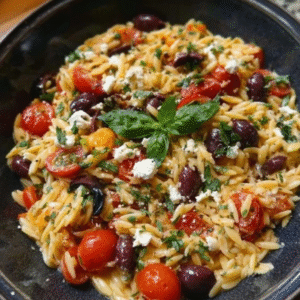
- Plating tip: Spoon the orzo into a warm shallow bowl, scatter extra feta and basil on top, and add a final drizzle of olive oil. The contrast of white feta, red tomatoes, and green basil is visually appealing.
Pairings and accompaniments
- Light white wine alternatives: Try pairing with sparkling water with lemon, or cucumber-mint iced tea for a refreshing non-alcoholic accompaniment.
- Bread: Serve with crusty whole-grain bread or warm pita for soaking up any juices.
- Side salads: A simple cucumber-dill salad or an arugula-lemon salad complements the orzo’s richness.
Storage and reheating
- Refrigerator storage: Store leftovers in an airtight container for up to 3–4 days. Because the orzo absorbs more liquid over time, it will be firmer after refrigeration.
- Freezing: Freezing is not ideal for this dish because tomatoes and feta can change texture; if you must freeze, portion into airtight containers and consume within 1 month. Thaw in the refrigerator overnight and expect some textural changes.
- Reheating best practice: Reheat gently on the stovetop over low heat with a splash of water or vegetable broth to loosen the grains and revive creaminess. Microwave in short bursts, stirring between intervals, and add a teaspoon of olive oil or a little broth to prevent drying out.
- Make-ahead tip: Cook the orzo through step 4, cool, and store the plain orzo. When ready to serve, warm gently and add fresh tomatoes, olives, basil, and feta just before serving to keep their textures and flavors vibrant.
Creative serving variations
- Warm Mediterranean bowl: Layer warm orzo with roasted eggplant, sautéed zucchini, and a dollop of labneh or Greek yogurt.
- Orzo-stuffed peppers: Mix cooled orzo with extra herbs and use it to fill roasted bell pepper halves; top with extra feta and bake for 10–12 minutes to meld flavors.
- Light lunch: Toss chilled orzo with arugula, thinly sliced red onion, and a lemon-olive oil dressing for a refreshing midday meal.
Helpful Notes & Variations
Ingredient swaps and substitutions
- Orzo alternatives: If you don’t have orzo, small pasta shapes like acini di pepe, fregola (Sardinian pasta), or even small shells can stand in—adjust cooking times accordingly.
- Olives: Swap Kalamata for Castelvetrano for a milder, buttery olive, or mix both for contrast.
- Feta alternatives: For a lower-sodium option, rinse a block of feta under cold water and pat dry before crumbling. For a creamier, less tangy profile, blend in a tablespoon of ricotta with the feta.
Dietary adaptations
- Gluten-free: Use a certified gluten-free orzo (rice-based or corn-based pastas shaped like orzo) and follow the same liquid-to-pasta ratio as package directions may vary.
- Vegan: Replace feta with a plant-based feta alternative or marinated tofu; omit cheese entirely and add toasted pine nuts or a drizzle of hummus for creaminess.
Flavor enhancements and add-ins
- Lemon zest and juice: A sprinkle of lemon zest and a squeeze of lemon just before serving brightens the whole dish.
- Red pepper flakes: Add a pinch during the toasting step if you enjoy a subtle heat.
- Capers: If you love briny pops, add a tablespoon of rinsed capers along with the olives.
- Fresh herbs: Mix in chopped mint for a cool twist, or parsley to amplify the herbaceous notes.
Common mistakes to avoid
- Overcooking orzo: Keep a close eye during the simmer; orzo can go from perfectly tender to mushy quickly. Taste test at 9 minutes.
- Adding salty ingredients too early: Since olives and feta contain salt, add them later and taste before adding more salt.
- Skipping the toast: The toasting step transforms the flavor profile; if you skip it, the dish will still be good but less layered.
Experience-based tips
- If your broth reduces faster than the orzo cooks, add a little hot water, a splash at a time, to prevent sticking—this keeps the texture tender.
- If you want pockets of creamier cheese, stir half the feta in while the pan is still warm and sprinkle the remainder on top as garnish.
Conclusion
Greek Orzo with Tomatoes, Olives, Basil, and Feta is a deceptively simple Mediterranean orzo recipe that gives you maximum flavor with minimal fuss. The toasty orzo, juicy cherry tomatoes, briny Kalamata olives, fresh basil, and creamy feta combine into a dish that’s bright, comforting, and reliably crowd-pleasing. Whether you’re serving it as a side at a summer barbecue or turning it into a hearty weeknight main with chickpeas or greens, it’s the kind of recipe you’ll return to again and again. I hope you make it this week—then come back and tell me how it turned out, leave a star rating, and share a photo if you can.
For more inspiration and similar one-pan orzo ideas, check out this warm take on Greek orzo from Julia’s Album at Greek Orzo – Julia’s Album, a lovely one-pan version on The Comfort of Cooking at One-Pan Greek Orzo with Tomatoes and Feta – The Comfort of Cooking, and another warm serving idea at OliveTomato’s recipe page Warm Greek Orzo with Feta and Tomato – OliveTomato.com.
Frequently Asked Questions
How can I make this dish ahead of time and still keep it fresh?
Make the orzo through step 4, cool quickly by spreading it on a shallow tray, then refrigerate in an airtight container for up to 24 hours. Add the fresh tomatoes, olives, basil, and feta just before serving. When reheating, warm gently on the stovetop with a splash of broth to revive the texture.
Can I use a different pasta if I don’t have orzo?
Yes—small pasta shapes like small shells, ditalini, or fregola make good substitutes. Keep an eye on cooking times since each shape varies; adjust the amount of liquid if needed.
Why did my orzo become mushy and how can I prevent it?
Overcooking is the most common cause. To avoid mushiness, check the orzo at 8–9 minutes for al dente texture and remove it from heat when it’s just tender. Also use the correct broth-to-orzo ratio and avoid excessive stirring once the broth is simmering.
Is this recipe suitable for meal prep or freezing?
This orzo is good for meal prep but not ideal for long-term freezing. Store refrigerated leftovers for up to 3–4 days. Freeze only if necessary, and expect some texture change in the tomatoes and feta.
How can I boost the protein to make this a complete one-bowl meal?
Stir in a can of rinsed chickpeas, add roasted tofu cubes, or serve alongside grilled chicken breast (non-pork) or fish. For vegan protein, toss in toasted walnuts or pumpkin seeds and a generous scoop of cooked lentils.
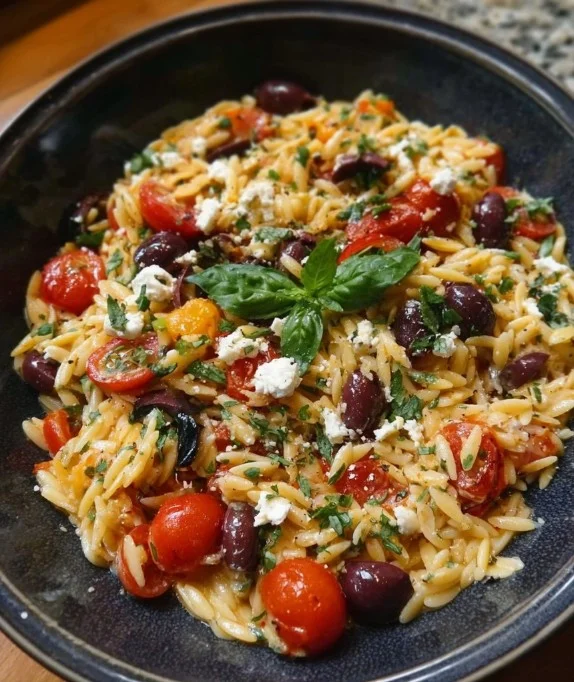
Greek Orzo with Tomatoes, Olives, Basil, and Feta
Ingredients
Method
- Heat the olive oil over medium heat in a large, heavy skillet.
- Add the orzo to the skillet and toast for 1–2 minutes, stirring constantly.
- Pour in the vegetable broth and increase the heat until it comes to a gentle boil.
- Reduce the heat to low, cover the skillet, and let the orzo simmer for about 10 minutes.
- Stir in the halved cherry tomatoes, sliced Kalamata olives, and crumbled feta cheese. Cook for an additional 2–3 minutes.
- Remove the skillet from the heat and fold in the chopped fresh basil.
- Taste and season with salt and freshly ground black pepper as needed.
- Serve warm as a side dish or main with a simple green salad or roasted vegetables.