Baked German Pancake: Irresistible Oven-Baked Dutch Baby for Easy Brunch
A warm, puffy Dutch baby oven pancake that’s simple, impressive, and perfect for comforting breakfasts or celebratory brunches
Baked German Pancake — have you ever watched it rise like a golden soufflé and thought, “I can make that at home”? I remember the first time I pulled one from the oven and turned to my partner, laughing, “It actually worked!” You’ll find this recipe is reliably dramatic: eggs, milk, flour, and butter transform into a puffed, tender oven pancake that’s both homely and show-stopping. It’s the kind of recipe that smells like weekend mornings, cool-weather gatherings, or a Sunday brunch when you want something warm, buttery, and a little bit theatrical. Main ingredients are simple — eggs, milk, flour, and butter — and they come together to create the classic puffed texture that makes this baked German pancake so comforting.
Why You’ll Love This Baked German Pancake Recipe
- Quick and easy to prepare — minimal hands-on time, big payoff.
- Made with everyday ingredients you probably already have in the pantry.
- Perfect for weekend breakfasts, cozy fall mornings, or a celebratory brunch.
- Comforting and impressive — it puffs up dramatically in the oven and makes guests smile.
- Versatile: serve it sweet with powdered sugar and fruit, or add savory twists (see variations).
What makes this version unique is its simplicity and reliability. I’ve tested ratios and technique so you don’t have to — the result is consistent puff, a crisp golden edge, and a custardy center. Emotionally, this is the recipe that builds confidence in the kitchen: it’s forgiving, impressive, and instantly nostalgic once it hits the table. The ritual of dusting powdered sugar and letting the pancake fall is a small, joyful moment worth savoring.
Ingredients Needed for Baked German Pancake
For the batter:
- 4 large eggs — room temperature helps with volume and even mixing.
- 1 cup whole milk — or your favorite milk (see notes for substitutions).
- 1 cup all-purpose flour — spooned into the cup and leveled for accuracy.
- 1/4 teaspoon fine salt — balances the sweetness and enhances flavor.
For the pan:
- 1/4 cup unsalted butter — cut into pieces so it melts evenly in the hot dish.
To serve:
- Powdered sugar for dusting — adds a delicate sweetness and pretty finish.
- Fresh fruit for serving (optional) — berries, sliced apples, or stone fruit are lovely when in season.
Clarifying notes:
- Eggs at room temperature will give a lighter batter and better rise; if you forget, 10–15 minutes on the counter helps.
- Whole milk creates a richer custard; use 2% or a plant-based milk (see substitutions) for a lighter option.
- Unsalted butter lets you control salt; if you only have salted butter, reduce the added salt slightly.
Ingredients & Equipment Notes
Useful tools:
- Blender or whisk — a blender makes the batter silky smooth in seconds; a whisk works fine if you whisk until no lumps remain.
- 9×13-inch baking dish — size matters; this recipe is balanced for a 9×13 dish for an even puff and browning.
- Oven mitts and a heatproof surface — the pan will be very hot after melting butter and baking.
- Cooling rack — helps prevent soggy bottoms when the pancake comes out.
How they help:
- Blender: creates a uniform batter and a fine texture, eliminating lumps.
- Preheated baking dish: melting butter in the hot dish creates sizzling edges and helps the batter start cooking immediately, which encourages a strong rise.
- A correctly sized dish ensures cook time and puff are predictable.
Keep this section practical: have your butter measured, dish at the ready, and oven fully preheated for best results.
Instructions – How to Make Baked German Pancake
-
Preheat the oven to 425°F (220°C).
- Why this matters: A very hot oven is essential. The sudden heat causes the eggs in the batter to steam and create that dramatic puff. Make sure the oven has fully reached temperature before you put the pan in.
-
Whisk the batter until silky smooth.
- In a large bowl (or the jar of a blender), whisk together 4 large eggs, 1 cup milk, 1 cup all-purpose flour, and 1/4 teaspoon salt until the mixture is completely smooth and slightly frothy.
- Why a blender helps: If you’re using a blender, blend for 20–30 seconds to incorporate air and ensure no lumps remain. If whisking by hand, whisk vigorously for 1–2 minutes. The batter should be pourable and homogenous, with no visible flour pockets.
-
Melt the butter in the baking dish in the hot oven.
- Place a 9×13-inch baking dish in the preheated oven for 2–3 minutes to warm it, then add the 1/4 cup unsalted butter, evenly distributing the pieces so they melt quickly.
- Visual cue: The dish should be sizzling hot and the butter completely melted and bubbling slightly — that’s the heat you want. Warm the dish briefly before adding the butter if you prefer; the key is getting the butter hot so it starts to cook the batter on contact.
-
Pour the batter into the dish over the melted butter.
- Carefully remove the pan from the oven using oven mitts, swirl the melted butter to coat the bottom and sides, and immediately pour the batter into the very hot dish.
- Why this step matters: Pouring batter onto hot butter creates instant cooking at the edges, producing the contrast between crisp, golden rims and the custardy center.
-
Bake until puffed and golden.
- Bake for 20–25 minutes, until the pancake is puffed up dramatically and the top is a deep golden brown.
- Visual cues: The edges should look set and crisp; the center will still be a bit jiggly when gently nudged but not wet. The top will have a caramelized sheen and a uniform color.
-
Remove from the oven and dust with powdered sugar.
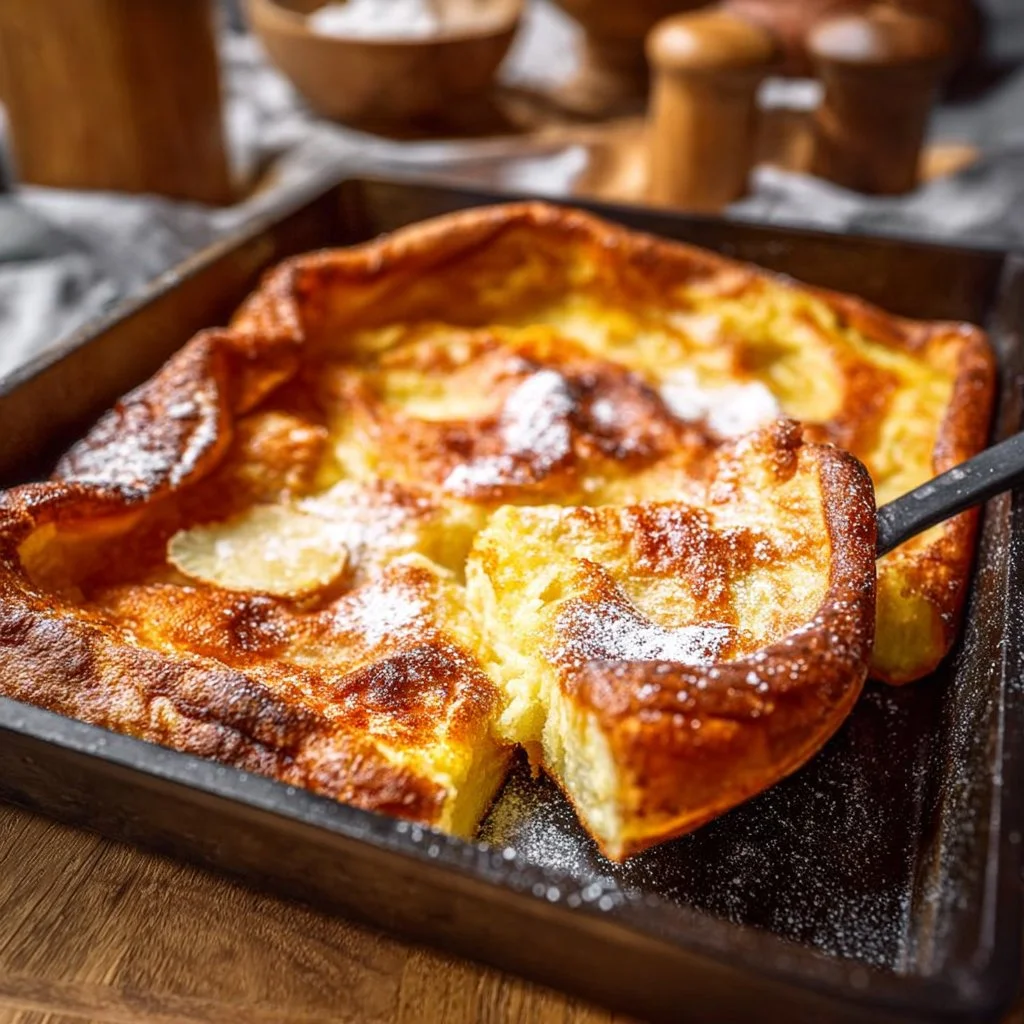
- Carefully slide the pan onto a heatproof surface or cooling rack and let it rest for a minute. Dust generously with powdered sugar and serve with fresh fruit if desired.
- Tip: The pancake will deflate slightly as it cools — this is normal. Serve immediately for the most dramatic presentation, or slice into squares and serve warm.
Serving Suggestions & Storage Tips for Baked German Pancake
Serving ideas and presentation:
- Classic: Dust with powdered sugar and top with a handful of mixed berries and a dollop of yogurt or whipped cream.
- Citrus twist: Serve with a scattering of thin orange zest and a drizzle of maple syrup to brighten the flavor.
- Cozy fall: Top with warmed cinnamon apples or pear compote for a seasonal twist.
- Savory option: Try a light sprinkle of shredded sharp cheese and chopped chives before baking (see variations), then serve with a side salad for brunch.
Pairings and accompaniments:
- Beverages: Coffee, tea, or a sparkling fruit mocktail make lovely complements.
- Sides: Bacon alternatives (chicken or turkey bacon if desired), roasted potatoes, or a fruit salad round out the meal.
- For a brunch spread, add a frittata, roasted vegetables, or a simple green salad.
Creative serving variations:
- Individual portions: Use muffin tins or smaller ramekins, reducing bake time to about 12–15 minutes for 4–5 inch dishes.
- Toppings bar: Set out powdered sugar, lemon wedges, fresh fruit, compotes, Nutella, and maple syrup for a fun, build-your-own brunch.
Storage and reheating:
- Refrigerator: Store leftovers in an airtight container for up to 3–4 days. Cool completely before sealing to avoid sogginess.
- Freezing: You can freeze slices wrapped tightly in plastic wrap and aluminum foil for up to 1 month. Thaw overnight in the refrigerator before reheating.
- Reheating methods:
- Oven: Reheat slices at 325°F (160°C) for 8–12 minutes until warmed through; this helps restore some crispness.
- Toaster oven: Works well for single slices; reheat on medium for 4–6 minutes.
- Skillet: Warm a nonstick skillet over medium-low heat, add a tiny pat of butter, and reheat slices for 2–3 minutes per side to revive crisp edges.
- Avoid microwaving for extended periods; it warms quickly but can make the texture rubbery. If you must microwave, heat briefly (20–30 seconds) and finish in a skillet if you want to rejuvenate edges.
Helpful Notes & Variations
Ingredient swaps and substitutions:
- Milk options: Swap whole milk for 2% or a plant-based milk like almond or oat milk. For oat milk, expect a slightly thicker batter and a milder flavor.
- Flour alternatives: For gluten-free, substitute a 1:1 gluten-free baking blend. Texture may vary slightly; the pancake will still puff but might be less elastic.
- Butter: Use vegan butter for a dairy-free version; flavor and browning will be slightly different but delicious.
Flavor enhancements and add-ins:
- Vanilla or citrus: Add 1 teaspoon vanilla extract or 1 teaspoon grated lemon zest to the batter for aromatic lift.
- Spiced: Stir 1/2 teaspoon cinnamon or warm spices into the batter or sprinkle on top with powdered sugar.
- Fruit folded in: For a fruitier pancake, scatter chopped apples, pears, or berries in the hot butter before pouring the batter. Keep chunks small and evenly distributed so the rise isn’t impeded.
- Savory version: Omit powdered sugar and add 1/2 cup grated cheese and 2 tablespoons chopped chives to the batter. Pair with a light salad.
Dietary adaptations:
- Egg-free: This recipe relies heavily on eggs for structure and puff; for an egg-free pancake, explore vegan Dutch baby recipes that use chickpea flour and aquafaba, but expect different texture and rise.
- Lower-fat: Use skim milk and reduce butter slightly; note that less fat will change the texture and crispness.
Common mistakes to avoid:
- Not preheating the oven or the pan: This causes a weak rise and a denser pancake.
- Overmixing after adding flour: While you want a smooth batter, vigorous prolonged mixing can develop gluten and make the pancake tough.
- Using the wrong pan size: A smaller pan will make the pancake thicker and require longer baking; a larger pan will make it thin and possibly overbaked. Stick to a 9×13-inch pan for this recipe.
- Opening the oven door mid-bake: Avoid checking early; the sudden temperature drop can reduce the puff. Only open near the end if you need to check browning.
Conclusion
This Baked German Pancake is a warm, comforting showpiece that feels both nostalgic and effortless. It’s the kind of recipe that turns an ordinary morning into something special: simple ingredients, short hands-on time, and a dramatic oven puff that delights everyone at the table. If you enjoy easy breakfast ideas that impress without stress, this oven-baked Dutch baby will quickly become a go-to. Give it a try on your next weekend brunch, and please come back to share how it went — I love hearing about your twists and topping choices.
For more inspiration and variations, I appreciated the detailed method on German Pancakes Recipe – Tastes Better From Scratch, and the creative serving ideas on German Pancakes Recipe – Creme De La Crumb. If you loved this recipe, leave a comment, give it a star rating, and pin it for later — and tell me: what fruit will you pair with your first slice?
Frequently Asked Questions
{questions}
Q: Can I make the batter ahead of time?
A: Yes and no. You can whisk the batter and refrigerate it for up to 24 hours, but I recommend bringing it to room temperature and giving it a quick whisk before pouring. Cold batter straight from the fridge may slightly reduce the initial steam needed for maximum puff, but it will still bake well.
Q: Can I use a blender or should I whisk by hand?
A: Both methods work. A blender produces an ultra-smooth batter quickly and incorporates a little extra air, which can help the rise. Whisking by hand is perfectly fine — just make sure the batter is lump-free and slightly frothy.
Q: Why didn’t my pancake puff as much as it should have?
A: Common causes include a not-hot-enough oven or pan, cold batter straight from the fridge, or opening the oven door early. Ensure your oven reaches 425°F (220°C) and your baking dish and butter are hot when you pour the batter.
Q: Can I add fruit to the batter?
A: Yes — you can scatter small, evenly chopped fruit in the hot butter before pouring the batter. Large pieces can weigh the batter down and prevent a full rise, so keep fruit small and evenly distributed.
Q: How should I reheat leftovers to keep them from getting soggy?
A: Reheat slices in a 325°F (160°C) oven for 8–12 minutes or in a skillet over medium-low heat for a few minutes per side. Avoid long microwave reheating, which can make the texture rubbery.
Q: Can I make smaller, individual Dutch babies?
A: Absolutely. Use oven-safe ramekins or a muffin tin and reduce baking time to around 12–15 minutes depending on size. Keep an eye on them — they puff quickly and are done when golden and set.
If you try this recipe, I’d love to hear about your results and any creative toppings you used. Happy baking!
Baked German Pancake
Ingredients
Method
- Preheat the oven to 425°F (220°C).
- In a large bowl (or the jar of a blender), whisk together the eggs, milk, flour, and salt until the mixture is completely smooth and slightly frothy.
- Place a 9×13-inch baking dish in the preheated oven for 2–3 minutes to warm it, then add the unsalted butter.
- Carefully remove the pan from the oven using oven mitts, swirl the melted butter to coat the bottom and sides, and immediately pour the batter into the very hot dish.
- Bake for 20–25 minutes, until the pancake is puffed up dramatically and the top is a deep golden brown.
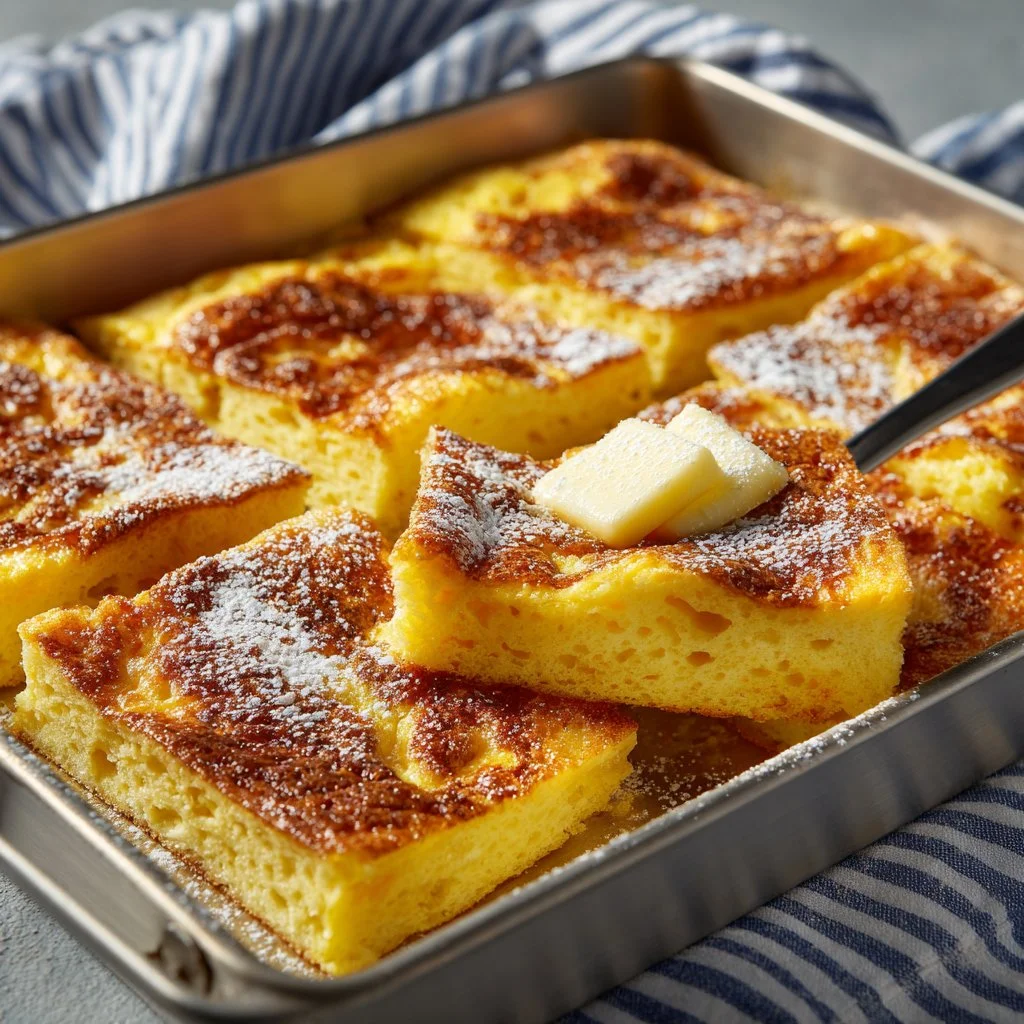
- Carefully slide the pan onto a heatproof surface or cooling rack, dust generously with powdered sugar, and serve with fresh fruit if desired.