There’s something deeply comforting about a simple, homemade fish dinner that feels both elegant and cozy — and Baked Salmon with Lemon Butter Cream Sauce fits that bill perfectly. This seasonal salmon recipe highlights fresh fillets baked to flaky perfection, finished with a silky lemon butter cream sauce that brightens and enriches every bite. Whether you’re celebrating a weeknight win or hosting a casual dinner, this dish brings a fresh, sunny flavor that pairs beautifully with spring and summer produce. If you love easy, from-scratch cooking, this baked salmon will quickly become a go-to in your repertoire — and if you want a spicy twist to try another salmon idea, check out this baked Cajun salmon with avocado lime sauce: baked Cajun salmon with avocado lime sauce.
Ingredients & Equipment
Ingredients
- 2 tablespoons freshly squeezed lemon juice
- 1 tablespoon olive oil
- 1 minced garlic clove
- 2 tablespoons old-style Dijon mustard
- 5 skinless salmon fillets (about 5 oz each)
- 1/2 teaspoon ground black pepper
- Salt (to taste)
- 1/4 cup unsalted butter
- 1 1/2 tablespoons minced garlic cloves
- 1/2 cup heavy cream
- 1-2 tablespoons freshly squeezed lemon juice (optional, for extra brightness)
- 1 tablespoon parsley (finely chopped)
- Lemon slices for serving
Equipment
- Baking tray or ovenproof skillet
- Small mixing bowl
- Small saucepan for the sauce
- Wooden spoon or heatproof spatula
- Measuring spoons and cups
- Kitchen thermometer (helpful for accurate doneness)
- Optional: blender or immersion blender (for a super-silky sauce)
- Parchment paper or aluminum foil (for easy cleanup)
Notes
- The recipe uses skinless salmon fillets for convenience, but skin-on fillets work too — see variations below.
- Old-style Dijon mustard adds texture and tang; smooth Dijon or whole-grain mustard can be swapped in.
- A quick kitchen thermometer ensures you don’t overcook the salmon (target 125–130°F for medium-rare to medium).
For an extra technique boost — if you enjoy rich cream sauces on protein like this, you might also like a buttery, savory approach used in other recipes such as a classic chicken wellington with a Dijon cream touch: chicken Wellington with Dijon cream sauce.
Step-by-Step Instructions (with tips)
-
Preheat your oven to 425°F (220°C).
- Tip: A hot oven gives the salmon a slightly golden exterior while preserving a tender interior. If you prefer a broiled finish, crank the oven to broil for the last 1–2 minutes, watching carefully.
-
In a bowl, mix 2 tablespoons freshly squeezed lemon juice, 1 tablespoon olive oil, 1 minced garlic clove, and 2 tablespoons old-style Dijon mustard.
- Tip: Whisk until emulsified so the mustard and lemon bind with the oil. This quick marinade doubles as a flavor boost and light glaze.
-
Coat the salmon fillets evenly with the marinade and season with 1/2 teaspoon ground black pepper and salt to taste.
- Tip: Pat the fillets dry first to help the marinade cling. Let the fillets sit at room temperature for 10–15 minutes if you have time — it helps them cook more evenly.
-
Place the marinated salmon in a skillet or baking dish, spaced slightly apart for even heat circulation.
- Tip: Line the baking dish with parchment or foil to make cleanup easier. If using skin-on fillets, place skin-side down.
-
Bake for about 10–15 minutes, depending on thickness. Salmon is done when it flakes easily with a fork and reaches 125–130°F (52–54°C) for medium, or 140°F (60°C) if you prefer well done.
- Tip: For a crispier top, broil for 1–2 minutes at the end, or sear the fillets skin-side down in a hot skillet for 1–2 minutes before finishing in the oven.
-
Meanwhile, make the lemon butter cream sauce: melt 1/4 cup unsalted butter in a saucepan over low-medium heat. Add 1 1/2 tablespoons minced garlic cloves and sauté until fragrant (about 30 seconds to 1 minute).
- Tip: Keep the heat moderate so the garlic doesn’t brown; burned garlic tastes bitter.
-
Stir in 1/2 cup heavy cream and bring it to a gentle simmer. Let the sauce reduce and thicken slightly, stirring frequently, for about 3–5 minutes.
- Variation: For a smoother, silkier sauce, briefly blend with an immersion blender or transfer to a blender for a few pulses.
-
Taste and add 1–2 tablespoons freshly squeezed lemon juice if you want more brightness, then stir in 1 tablespoon finely chopped parsley. Adjust salt and pepper to taste.
- Tip: The lemon juice brightens the heavy cream and balances the butter. Add it slowly and taste as you go.
-
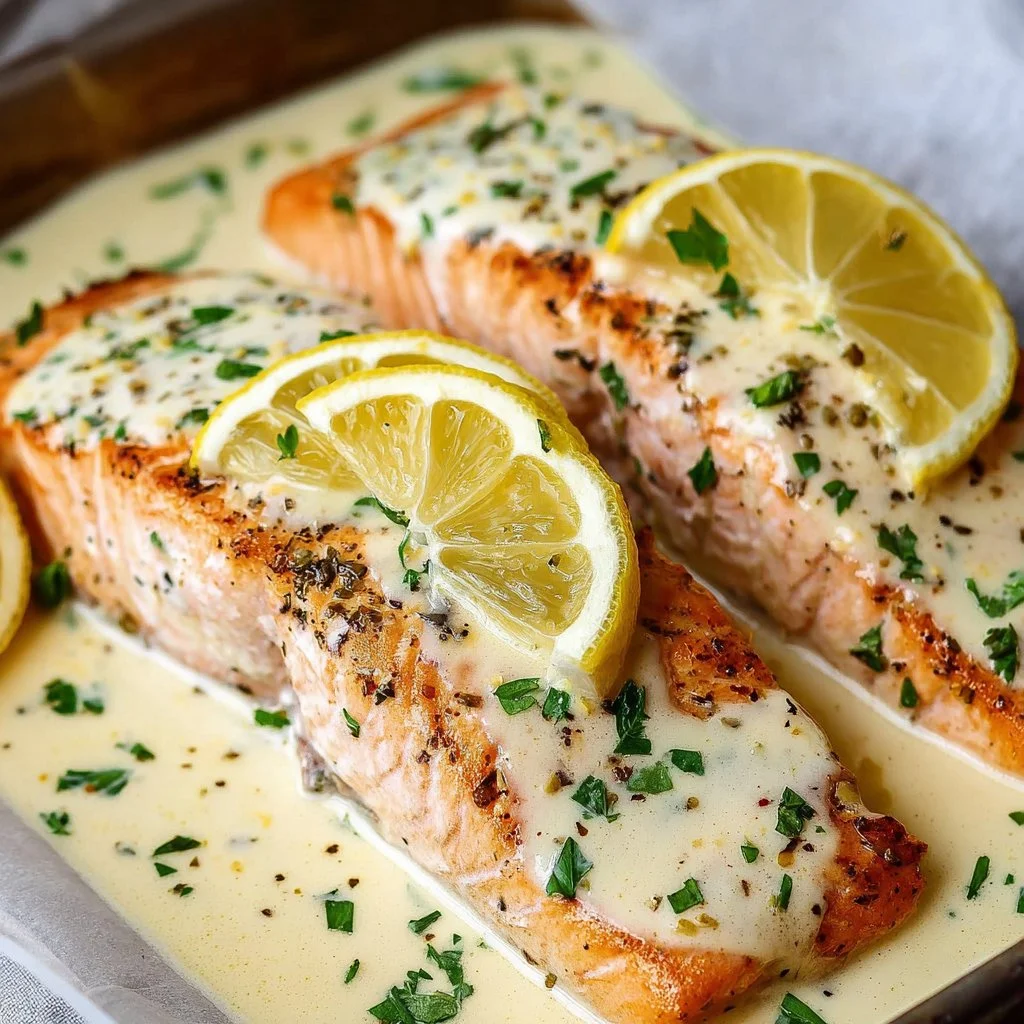
Once the salmon is cooked, remove it from the oven and pour the warm lemon butter cream sauce over the fillets. Let the plated fillets rest for 5–10 minutes before serving so the flavors settle.
- Tip: Resting helps the sauce meld with the salmon and keeps the fillets moist.
Additional cooking variations and tips
- Roasting vs. Poaching (boiling): Roasting (baking) concentrates flavor and gives a slightly caramelized exterior; poaching is gentler and yields a tender, moist texture. To poach, simmer fish in a lightly seasoned broth or court-bouillon at just-below-boiling temperature (around 170–180°F / 75–82°C) for 8–10 minutes depending on thickness. If you want the sauce over poached salmon, reduce the sauce slightly less so it complements the delicate texture.
- Pan-seared then oven-finished: For a golden crust, sear the salmon 2 minutes per side in a hot ovenproof skillet, then transfer to a 400°F oven for 5–8 minutes.
- Gluten-free: This recipe is naturally gluten-free if your Dijon mustard is GF — check labels.
- Dairy-free option: Substitute the butter with a neutral oil and use canned coconut cream or a dairy-free heavy cream alternative; finish with extra lemon for bright acidity.
Storage, Freezing & Make-Ahead Tips
Short-term storage
- Refrigerate leftovers in an airtight container within two hours of cooking. Properly stored, cooked salmon keeps 2–3 days in the fridge.
- Store the sauce separately from the fish if you plan to reheat — cream-based sauces can separate when reheated, so keeping them aside lets you reheat gently and whisk to recombine.
Freezing
- Cooked salmon can be frozen, but texture may change slightly on thawing. Portion the salmon fillets into individual freezer-safe containers or heavy-duty freezer bags with sauce on the side (if possible). Frozen cooked salmon is best used within 2 months.
- To freeze for longer storage, flash-freeze the fillets on a tray first, then transfer to labeled freezer bags to prevent freezer burn.
Reheating
- Reheat gently in a 275–300°F oven until warmed through (about 10–15 minutes), covered with foil to preserve moisture. Reheat the sauce slowly over low heat, whisking; add a splash of cream or water if it’s too thick.
- Avoid microwaving high-heat for long durations — it can dry the fish and break the sauce.
Make-ahead
- The lemon-mustard marinade can be prepped and stored in the fridge for up to 24 hours. Marinate salmon for up to 30 minutes before baking.
- The sauce can be made a day ahead and gently reheated; when reheating, whisk to restore silkiness and finish with fresh lemon juice and parsley.
Portioning advice
- A 5 oz fillet is a common single-serving size. If you’re feeding a crowd, plan 5–6 oz per adult for generous portions. Pair with simple sides to round out the meal.
How to Use / Serve This Dish
Serving ideas
- Classic pairing: Serve over a bed of buttery mashed potatoes or creamy polenta to catch every drop of sauce.
- Lighter options: Place the salmon on a large mixed salad of baby greens, cucumber, cherry tomatoes, and avocado; drizzle with extra lemon juice for a spring or summer lunch.
- Veggie sides: Roasted asparagus, green beans almondine, or sautéed spinach are perfect seasonal companions. For a starch, try herbed quinoa or lemon rice pilaf.
- Pasta: Toss cooked linguine or fettuccine with a bit of olive oil and lemon zest, plate the salmon on top, and spoon the cream sauce over for a luxurious pasta entrée.
- Brunch twist: Flake the salmon into scrambled eggs or onto savory crepes with a dollop of the sauce for a weekend brunch.
Creative variations
- Herb-forward: Stir in chopped dill or tarragon instead of parsley for a different herbal note.
- Citrus mix: Combine lemon and a touch of orange or lime juice for a bright, layered citrus profile.
- Spicy kick: Add a pinch of red pepper flakes to the sauce or a dash of hot sauce to the marinade for heat.
For inspiration on how other cooks pair bold flavors with creamy sauces, you might enjoy seeing creative spins on lemony salmon like this spicy garlic-butter pairing: Cajun boiled eggs with spicy garlic butter sauce, which demonstrates how garlic-butter can elevate simple proteins.
And if you like making components in advance, this boiled-egg recipe highlights techniques for prepping savory sauces and can be useful for meal-prep strategies: Cajun boiled eggs with spicy garlic butter sauce (meal-prep tips).
FAQ
Q: Can I use skin-on salmon fillets instead of skinless?
A: Yes. Keep the skin on during baking for added moisture and flavor; place fillets skin-side down on the baking tray. If you prefer crispy skin, sear skin-side down in a hot skillet for 1–2 minutes before finishing in the oven.
Q: How do I know when the salmon is cooked?
A: The most reliable method is a kitchen thermometer: 125–130°F (52–54°C) for medium (moist and slightly translucent), or 140°F (60°C) for fully opaque and firm. You can also check by flaking with a fork — it should separate easily but still feel moist.
Q: Can I substitute the heavy cream for something lighter?
A: You can use half-and-half for a lighter sauce, but it will be less rich and may not thicken as much. For dairy-free options, full-fat coconut milk or a cashew cream work, though the flavor will change slightly. If using lower-fat dairy, gently reduce the sauce to concentrate it without boiling.
Q: How long will leftovers last?
A: Cooked salmon and the cream sauce stored separately in the refrigerator will keep for 2–3 days. Do not refreeze cooked fish more than once. When in doubt, use your senses — if it smells off or the texture is unpleasant, discard.
Conclusion
Baked Salmon with Lemon Butter Cream Sauce is a wonderfully comforting yet bright dish that celebrates seasonal freshness and straightforward cooking. It’s approachable enough for a weeknight and elegant enough for a small celebration, with a sauce that brings buttery richness and citrus lift to every forkful. If you’d like to explore more creamy lemon-salmon ideas from other kitchens, check out this richly flavored take on lemon salmon here: Creamy Lemon Salmon – Salt & Lavender, or try another simple baked salmon with an amazing lemon sauce for more techniques and inspiration: Baked Salmon with Amazing Lemon Sauce Recipe – Pinch of Yum.
I hope this recipe becomes a favorite in your kitchen — if you try it, I’d love to hear how you served it or any delicious tweaks you made. Happy cooking!
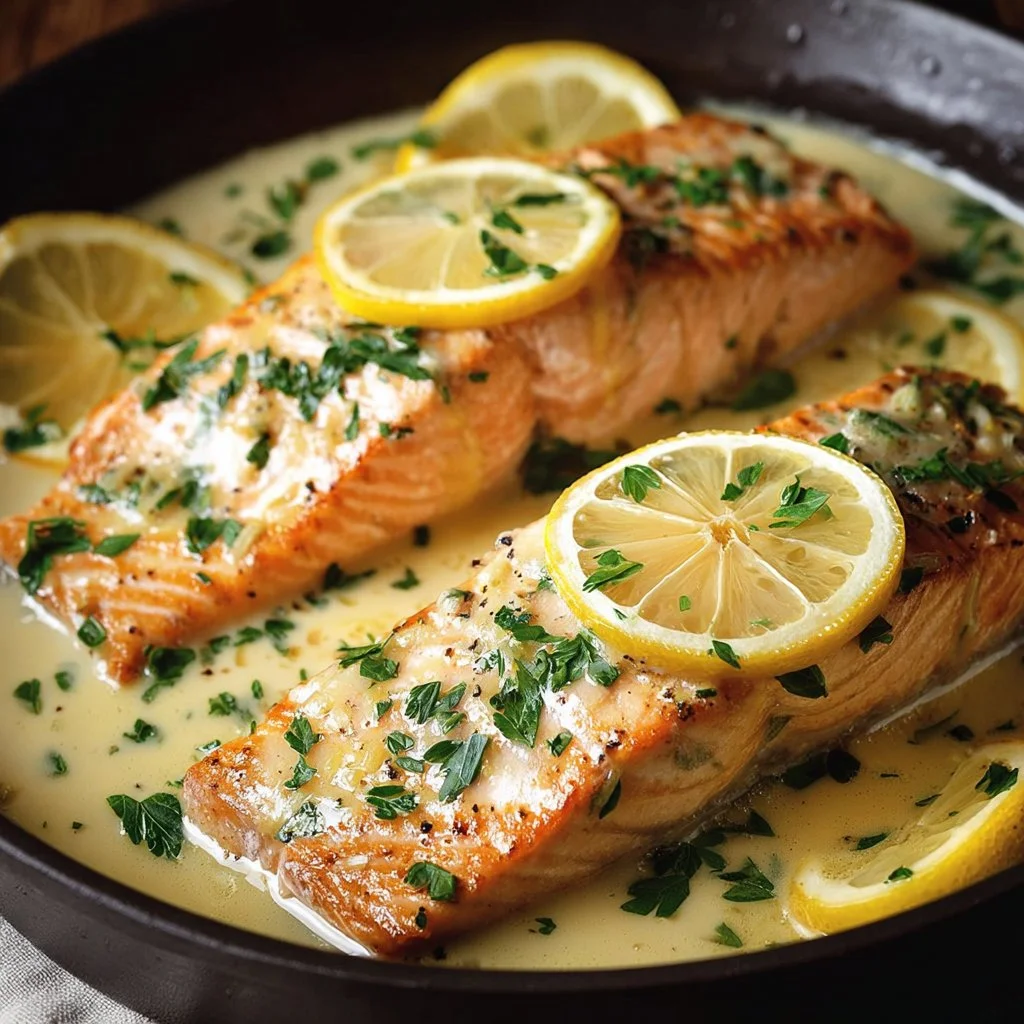
Baked Salmon with Lemon Butter Cream Sauce
Ingredients
Method
- Preheat your oven to 425°F (220°C).
- In a bowl, mix lemon juice, olive oil, minced garlic, and Dijon mustard until emulsified.
- Coat salmon fillets with the marinade and season with black pepper and salt, letting them sit at room temperature for 10-15 minutes.
- Place marinated salmon in a baking dish, spaced apart for even cooking.
- Bake for 10-15 minutes until the salmon flakes easily and reaches desired doneness.
- Melt unsalted butter in a saucepan over low-medium heat, then add minced garlic and sauté until fragrant.
- Stir in heavy cream and bring to a gentle simmer, allowing it to thicken slightly for about 3-5 minutes.
- Add lemon juice for brightness and stir in chopped parsley.
- Pour the warm lemon butter cream sauce over the cooked salmon and let it rest for 5-10 minutes before serving.