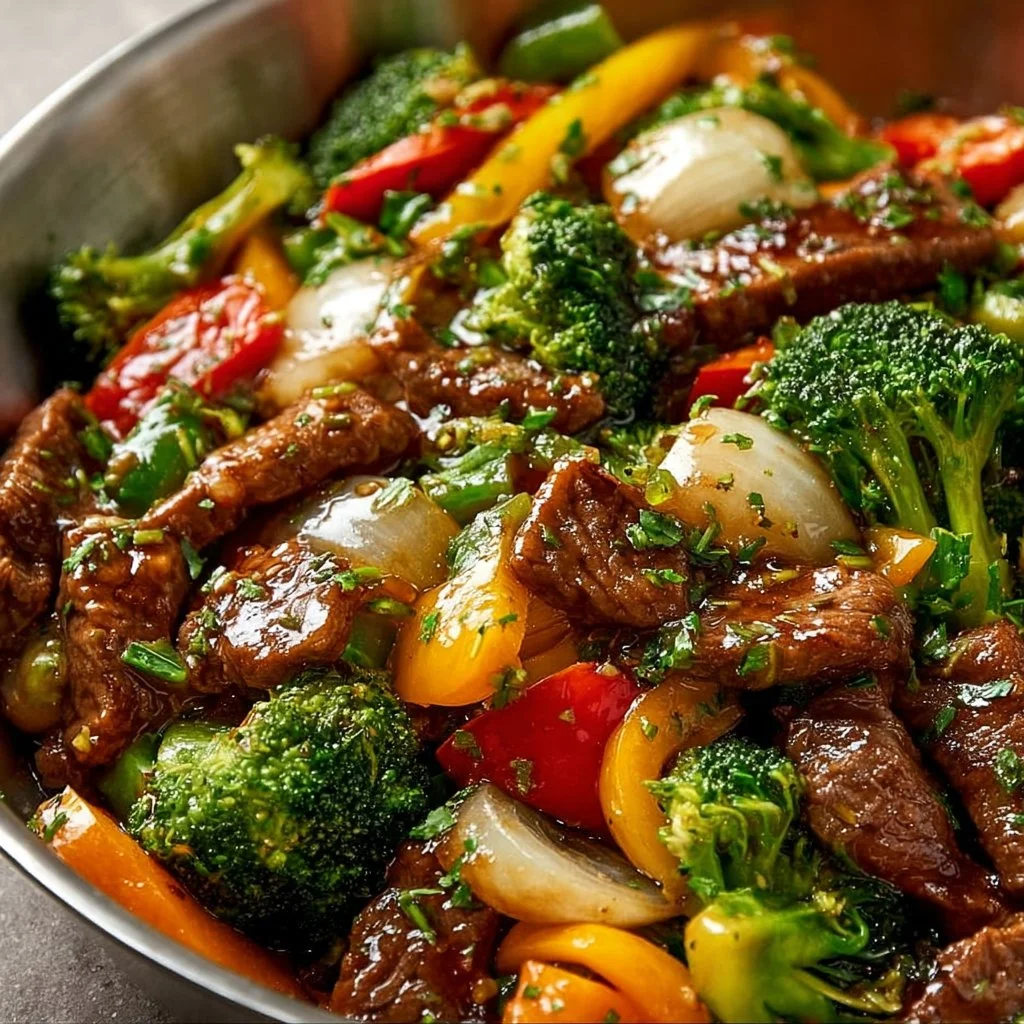
There’s something wonderfully comforting about a sizzling pan of Beef Stir Fry with Vegetables — it’s fast, colorful, and full of flavor, exactly what many of us crave on busy weeknights or chilly seasonal evenings. With tender slices of beef sirloin and a mix of crisp seasonal vegetables, this dish celebrates simple, from-scratch cooking without demanding hours in the kitchen. If you love hearty, homey meals that still feel fresh and bright, this stir-fry is worth trying; it pairs the savory richness of beef with the sweet crunch of bell peppers and snap peas. For another cozy weeknight option that pairs well with rice or noodles, try this creamy pasta recipe I often make: creamy Rotel pasta with ground beef.
Ingredients & Equipment
Ingredients:
- 1 lb beef sirloin, sliced thinly
- 2 cups mixed vegetables (bell peppers, broccoli, carrots, snap peas)
- 3 tablespoons soy sauce
- 2 tablespoons oyster sauce
- 1 tablespoon cornstarch
- 2 tablespoons vegetable oil
- 2 cloves garlic, minced
- 1 teaspoon ginger, minced
Notes:
- Beef sirloin is flavorful and becomes very tender when sliced thinly against the grain. You can substitute flank steak if you prefer.
- Mixed vegetables: use whatever is seasonal and fresh. In late summer, add extra bell peppers; in spring, emphasize snap peas and asparagus.
- Soy sauce and oyster sauce provide the umami backbone — low-sodium soy sauce is a good swap if you’re watching salt.
- Cornstarch acts as a light velveting agent for the beef and helps thicken the sauce.
Helpful tools:
- A large wok or heavy skillet (for even, high-heat cooking)
- Sharp knife and cutting board (for fast, uniform slices)
- Small mixing bowl and measuring spoons
- Tongs or a spatula
- Optional: kitchen thermometer to check beef doneness, a blender or immersion blender if you want a smooth sauce, and a baking tray if you roast vegetables as a variation.
For home cooks who love to multitask in the kitchen, an air fryer can be handy for quick vegetable roasting — if you like the idea of crispier roasted florets, see this tasty chicken-and-veggie idea: air fryer boneless chicken bites (swap chicken for beef or use the method for veggies).
Step-by-Step Instructions (with tips)
-
In a bowl, mix the sliced beef with cornstarch and let it marinate for 10 minutes.
- Tip: Toss the beef with cornstarch and a pinch of salt; the cornstarch draws moisture to the surface and helps create a silky coating once cooked. For extra flavor, add a teaspoon of soy sauce to the marinade.
-
Heat 1 tablespoon of vegetable oil in a pan over medium-high heat. Add the beef and stir-fry until browned, about 3-4 minutes. Remove from the pan and set aside.
- Tip: Make sure the pan is hot before adding the beef. Work in a single layer and don’t overcrowd; if needed, cook the beef in two batches to ensure proper browning.
-
In the same pan, add the remaining oil, garlic, and ginger; stir-fry for 30 seconds.
- Tip: Garlic and ginger can burn quickly — keep the movement rapid and the heat controlled so they release aroma without bittering.
-
Add the mixed vegetables and stir-fry for about 5 minutes until tender-crisp.
- Variation: If you prefer roasted veggies’ deeper flavor, toss the vegetables with a little oil and roast them on a baking tray at 425°F (220°C) for 10–12 minutes until edges are charred, then add them to the stir-fry in step 5. For a softer texture, parboil or steam broccoli and carrots briefly (1–2 minutes) before stir-frying.
-
Return the beef to the pan and add soy sauce and oyster sauce. Stir well and cook for another 2-3 minutes.
- Tip: If the sauce looks too thin, mix an extra teaspoon of cornstarch with 2 tablespoons of cold water and stir it in to thicken quickly. Taste and adjust — a dash of sesame oil at the end adds a warm, nutty finish.
-
Serve hot over rice or noodles.
- Tip: Fluff steamed rice with a fork and spoon the stir-fry over it, or toss the cooked stir-fry with drained noodles for a saucy stir-fried noodle bowl.
Variations and flavor suggestions:
- Make it spicy: add 1/2 teaspoon of chili flakes, sliced fresh chilies, or a spoonful of sambal oelek to the sauce.
- Make it citrusy: finish with a teaspoon of rice vinegar and a squeeze of lime to brighten the dish.
- Vegetarian twist: swap beef for firm tofu (press and toss with cornstarch) or use mushrooms for an earthy umami flavor.
- Herb lift: garnish with scallions, cilantro, or toasted sesame seeds for texture and freshness.
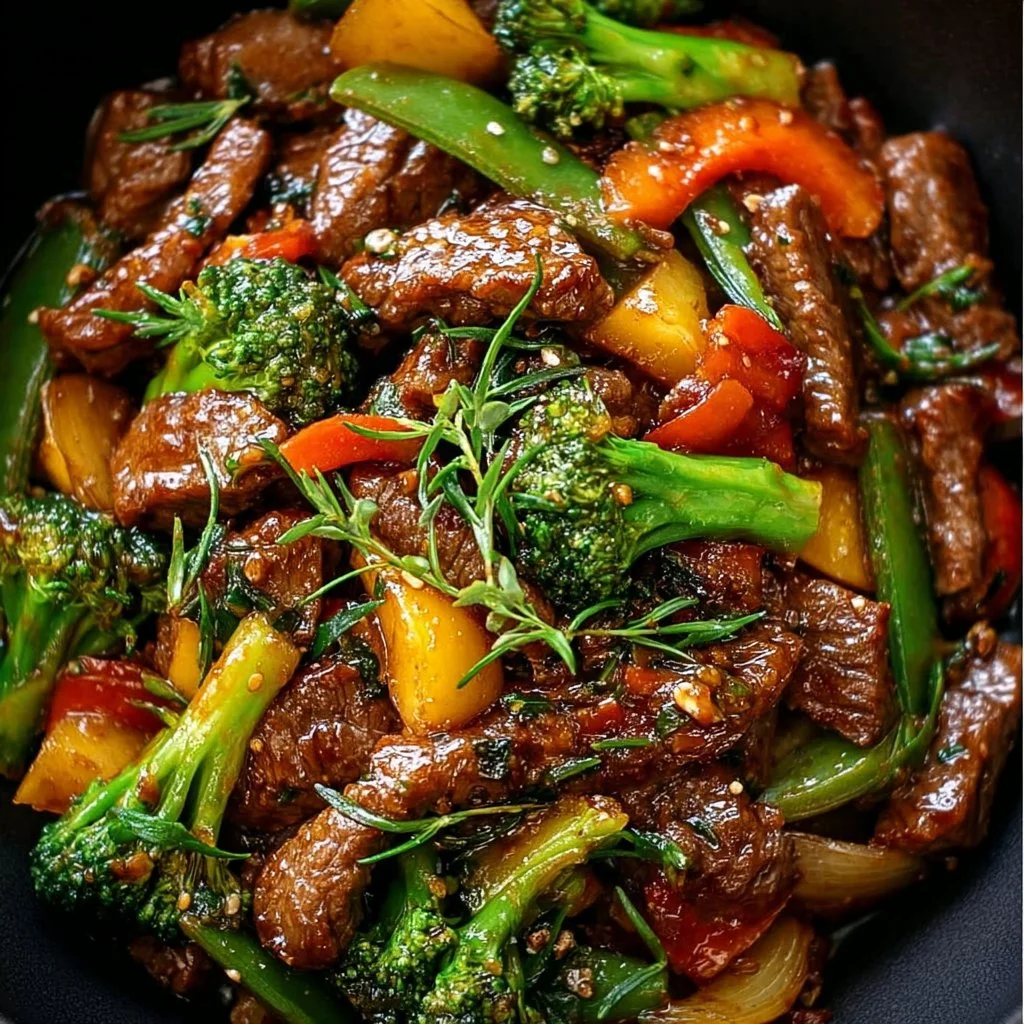
Storage, Freezing & Make-Ahead Tips
Storing leftovers:
- Refrigerate stir-fry in an airtight container within two hours of cooking. It will keep well for 3–4 days in the fridge.
- To prevent vegetables from becoming soggy, store rice separately if you made a large batch serving.
Freezing:
- Freezing stir-fry is possible but not ideal for all vegetables. Broccoli and carrots freeze reasonably well, but snap peas and bell peppers may become soft. If you plan to freeze, slightly undercook the vegetables in the initial stir-fry so they retain some firmness after reheating.
- Portion the cooled stir-fry into meal-sized freezer-safe containers or bags. Remove excess air and freeze for up to 2 months. Thaw in the refrigerator overnight before reheating.
Reheating:
- For the best texture, reheat on the stovetop over medium heat with a splash of water or broth to loosen the sauce. Avoid microwaving too long as the beef can toughen and the vegetables can become limp.
- If frozen, thaw completely, then stir-fry quickly in a hot pan to revive some crispness.
Make-ahead tips:
- Slice the beef and chop the vegetables up to a day ahead; keep them in separate airtight containers in the fridge.
- Prepare the sauce (soy + oyster) and keep it in a small jar; add at the final step for faster assembly.
- If you enjoy crispy roasted veggies, roast them ahead and crisp again quickly under high heat when serving.
For more ideas on pairing proteins with vegetables in speedy weeknight meals, check out this chicken-and-broccoli combo that inspired some of these techniques: air fryer chicken bites and broccoli.
How to Use / Serve This Dish
Serving ideas:
- Classic: Serve over steamed jasmine or basmati rice for a family-friendly plate.
- Noodle bowl: Toss with cooked udon, rice noodles, or soba for a comforting noodle stir-fry.
- Meal prep: Portion into containers with a base of brown rice and a side of pickled cucumbers or kimchi for contrast.
- Lettuce wraps: Spoon cooled stir-fry into crisp butter lettuce leaves for a lighter dinner or party appetizer.
Pairings:
- Drinks: A chilled lager, a light-bodied red like Pinot Noir, or jasmine tea complement the savory flavors.
- Sides: A simple cucumber salad, steamed edamame, or a bright carrot-ginger slaw adds freshness.
- Garnishes: Thinly sliced scallions, toasted sesame seeds, or a drizzle of chili oil elevate the final plate.
Creative ways to repurpose leftovers:
- Omelet filling: Stir the leftover stir-fry into beaten eggs for a robust omelet.
- Fried rice: Chop the leftovers and stir them into fried rice with an extra egg for a quick lunch.
- Sandwich or wrap: Layer in a soft tortilla with shredded lettuce and a swipe of sriracha mayo.
If you want a completely different regional spin, use the same quick-cooking technique with cornmeal pockets or Latin-inspired sides — recipes like these are fun to experiment with: arepas with cheese can be a playful accompaniment when you want a heartier, handheld option.
FAQ
Q: Can I substitute chicken or tofu for the beef?
A: Absolutely. Thinly sliced chicken breast or thigh cooks quickly in the same method; adjust cooking time (2–3 minutes for chicken). For tofu, press extra-firm tofu well, toss with cornstarch, and pan-fry until golden for a satisfying vegetarian swap.
Q: How long does this stir-fry keep in the refrigerator?
A: Stored in an airtight container, the stir-fry will keep for 3–4 days. Keep rice separate for the best texture. Reheat thoroughly until steaming hot.
Q: My vegetables get soggy — how can I keep them crisp?
A: Cook over high heat in a wide pan and avoid overcrowding; cook in batches if needed. Add vegetables that take longer (like carrots and broccoli) first, and add quick-cooking ones (like snap peas and bell peppers) later. Alternatively, roast or blanch vegetables briefly before stir-frying to control texture.
Q: Can I make the sauce thicker or thinner to suit my taste?
A: Yes. Thicken with a cornstarch slurry (1 tsp cornstarch + 2 tbsp water) added while the pan cooks. To thin, add a splash of broth or water and simmer briefly. Taste and adjust soy or oyster sauce as needed.
Conclusion
Beef Stir Fry with Vegetables is one of those seasonal, comforting dishes that feels homemade yet fresh — it’s quick enough for weeknights, flexible enough to use whatever produce is in season, and satisfying enough to become a family favorite. Whether you stick to the basic soy-and-oyster sauce combo or experiment with citrus, spice, or roasted vegetables, this recipe rewards simple techniques and bold flavors. If you’d like more ideas for veggie-forward stir-fry inspiration, check out this hearty, vegetable-rich version at Heavy-on-the-Veggies Beef and Vegetable Stir Fry. For another classic quick-cooking approach, you might also enjoy this trusted guide: Quick Beef Stir-Fry Recipe – Allrecipes.
Ready to try it tonight? I’d love to hear how you customize your stir-fry — leave a comment, take a photo, and share it with friends. Happy cooking!