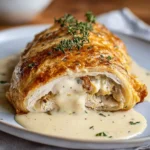
Chicken Wellington, I can already see your eyes light up. Let me tell you, when I first wrapped a golden chicken breast in flaky puff pastry, smothered in a silky Dijon cream, I felt like I had changed dinner forever. This is the kind of recipe I bring out when I want to impress without fuss, when comfort and showmanship need to meet on the same plate. It features tender seared chicken, a creamy mustard sauce, optional mushrooms for earthiness, and buttery puff pastry that bakes to a perfect crisp. If you love cozy, seasonal dinners that look like a celebration, you are in the right place. Also, if you want something lighter but still luxurious, try pairing it with one of my favorite bowls like this Bang Bang Chicken Bowl for a contrasting weeknight option.
Why You’ll Love This Recipe
- Quick and easy to prepare once you get the assembly rhythm
- Simple, accessible ingredients you can find at any grocery store
- Perfect for cooler months, cozy dinners, or a special family celebration
- Comforting and impressive enough for guests while still homey and satisfying
What sets this Chicken Wellington apart is the creamy Dijon sauce tucked right into the pastry with the chicken. There is no dry center here; each bite is saucy and rich without being heavy. I designed this version to be approachable: short searing gives golden color and locks in juices, a light mushroom and garlic sauté adds aroma if you choose to include it, and the quick cream sauce thickens to cling to the chicken. It’s a recipe that builds confidence—once you assemble one, you will feel ready to experiment and personalize.
Ingredients Needed
Below I’ve organized the ingredients clearly and added helpful notes so you know what to buy and how to swap items if needed.
For the chicken
- 2 boneless, skinless chicken breasts — patted dry and trimmed of any extra fat. If very large, butterflying or pounding to even thickness helps for even cooking.
For the pastry and finishing
- 1 sheet puff pastry, thawed according to package directions — use all-butter puff pastry if you want extra flavor; keep chilled until ready.
For searing and sauce base
- 1 tablespoon olive oil — or a neutral oil with a high smoke point
- 2 tablespoons unsalted butter — for richness and to carry the aromatics
Aromatics and optional veggies
- 2 cloves garlic, finely minced — fresh adds bright flavor
- 1 cup mushrooms, finely chopped (optional) — cremini or white button are great; use fresh rather than frozen for best texture. If you skip mushrooms, you still get a lovely mustard cream sauce.
For the cream sauce
- 2 tablespoons all-purpose flour — helps thicken the sauce; for gluten-free use a 1:1 GF flour blend
- 1 cup whole milk or heavy cream — whole milk creates a lighter sauce, cream yields silkier richness
- 1 teaspoon Dijon mustard — the tang backbone of the sauce; adjust to taste
- Salt and black pepper to taste — freshly ground black pepper is best
For egg wash and garnish
- 1 large egg, beaten — for egg wash to create that golden, glossy pastry top
- 1 tablespoon fresh parsley, chopped — optional garnish for color and fresh herb lift
Substitution notes and clarifications
- Chicken: Boneless, skinless breasts are specified for neat assembly. If you prefer dark meat, you can try thin boneless chicken thighs but adjust searing time.
- Puff pastry: Keep it cold so it puffs. Thaw in the fridge if possible rather than on the counter for best texture.
- Dairy: Use whole milk for a lighter sauce or half-and-half for a balance. Heavy cream gives the creamiest filling.
- Mushrooms: Optional but recommended for extra umami. If using dried mushrooms, rehydrate and chop finely, reducing added liquid in pan.
- Herbs: Parsley is a simple garnish. You can mix in a little thyme or tarragon into the sauce for a different aromatic profile.
Pantry & Fresh Produce Checklist
- Check you have salt, pepper, and Dijon mustard.
- Confirm your puff pastry sheet is fully thawed and still chilled.
- Fresh garlic and parsley make a noticeable difference.
Ingredients & Equipment Notes (Optional)
- Heavy skillet or cast iron pan: Important for a good sear and even heat. A nonstick pan works in a pinch but will not build the same fond.
- Whisk and wooden spoon: For smoothing the sauce and scraping up browned bits.
- Baking sheet and parchment paper: For clean, even baking and easy cleanup.
- Instant-read thermometer: Extremely helpful to ensure the chicken reaches 165°F without overbaking the pastry.
- Rolling pin and sharp knife or pizza cutter: For shaping pastry neatly around the chicken.
- Cooling rack: Rest Wellington briefly on a rack to keep the bottom crisp while finishing.
A good, heavy skillet matters because it produces the caramelized exterior on the chicken that becomes flavor base for the sauce. An instant-read thermometer saves stress—trust me, it prevents dry chicken and a soggy pastry compromise.
Instructions – How to Make “Chicken Wellington”
- Prepare the chicken and workspace.
- Pat both chicken breasts very dry and season generously with salt and pepper.
- Why this matters: Drying the surface helps the chicken form a golden crust when seared rather than steaming.
- Visual cues: The breasts should look evenly seasoned and the surface dry to the touch.
- Mini tip: If one breast is much thicker, butterfly it or gently pound to an even thickness for consistent cooking.
- Heat the oil and sear the chicken.
- Warm 1 tablespoon olive oil in a heavy skillet over medium-high heat until it just shimmers.
- Add the breasts and sear 2 to 3 minutes per side, until golden brown.
- Why this matters: A quick sear builds a flavorful crust and seals juices so the interior stays moist during baking.
- Visual cues: Look for a deep golden color; the chicken should release from the pan easily when it has a proper sear.
- Mini tip: Do not overcrowd the pan. If the pan cools too much, the chicken will steam rather than brown.
- Remove and let the chicken cool slightly.
- Transfer seared breasts to a plate and let rest 5 minutes.
- Why this matters: Resting avoids steam building inside the pastry and prevents the sauce from becoming separated.
- Visual cues: The surface will firm slightly and be warm but not piping hot.
- Make the flavor base in the same pan.
- Reduce heat to medium and add 2 tablespoons butter to the pan. Once melted, add minced garlic and the finely chopped mushrooms if using.
- Sauté 2 to 3 minutes until garlic is fragrant and mushrooms are softened.
- Why this matters: Cooking the aromatics in the pan picks up those browned bits from searing, adding depth to the sauce.
- Visual cues: The garlic should be lightly golden, not burned; mushrooms should shrink and turn glossy.
- Mini tip: If you are skipping mushrooms, allow the garlic to bloom in butter for a touch longer for extra flavor.
- Create the roux and thicken the sauce.
- Stir in 2 tablespoons flour and cook for about 1 minute, stirring constantly to cook out the raw flour taste.
- Slowly whisk in 1 cup milk or cream until everything is smooth.
- Why this matters: The brief cook of flour makes a roux that will thicken the sauce and help it cling to the chicken.
- Visual cues: The mixture will transform from grainy to smooth and start to thicken within a couple of minutes.
- Mini tip: Pour the dairy in a thin stream while whisking to avoid lumps.
- Season and simmer to the right consistency.
- Add 1 teaspoon Dijon mustard, and season with salt and freshly ground black pepper. Simmer gently until the sauce holds a coat on the back of a spoon.
- Why this matters: Dijon adds tang and lift, cutting through the richness for balance.
- Visual cues: The sauce should be velvety and thick enough to mound slightly but still spreadable.
- Mini tip: If the sauce becomes too thick, thin with a splash of milk; if too thin, simmer a bit longer off heat to reduce.
- Roll out puff pastry and portion.
- Lightly flour a surface and roll the thawed puff pastry sheet out to a rectangle large enough to wrap each breast individually. Cut into two equal rectangles.
- Why this matters: Rolling ensures an even thickness that bakes uniformly and creates those layered pockets of pastry.
- Visual cues: The pastry should be cool to the touch and slightly elastic.
- Mini tip: Keep the pastry on a cool surface and work briskly to prevent it from getting too soft.
- Assemble the Wellington.
- Spoon a few tablespoons of the warm Dijon cream sauce into the center of each pastry rectangle. Place a seared chicken breast on top, then spoon a little more sauce over the top.
- Why this matters: The sauce in the middle keeps the chicken moist and ensures every bite has creamy flavor.
- Visual cues: There should be a neat puddle of sauce cushioning the chicken without overflowing.
- Mini tip: If you have extra sauce, reserve some for serving alongside the finished Wellingtons.
- Seal and shape the parcels.
- Fold the pastry up and over the chicken, sealing edges tightly by pinching or using a little beaten egg to glue. Place seam-side down on a parchment-lined baking sheet.
- Why this matters: A well-sealed seam protects the filling and encourages the pastry to expand upward, creating a crisp, golden dome.
- Visual cues: The parcel should look snug with a smooth top. Trim any excess pastry for tidy edges.
- Mini tip: Chill assembled parcels for 10 minutes if the pastry feels soft to help them keep their shape during baking.
- Egg wash and vent.
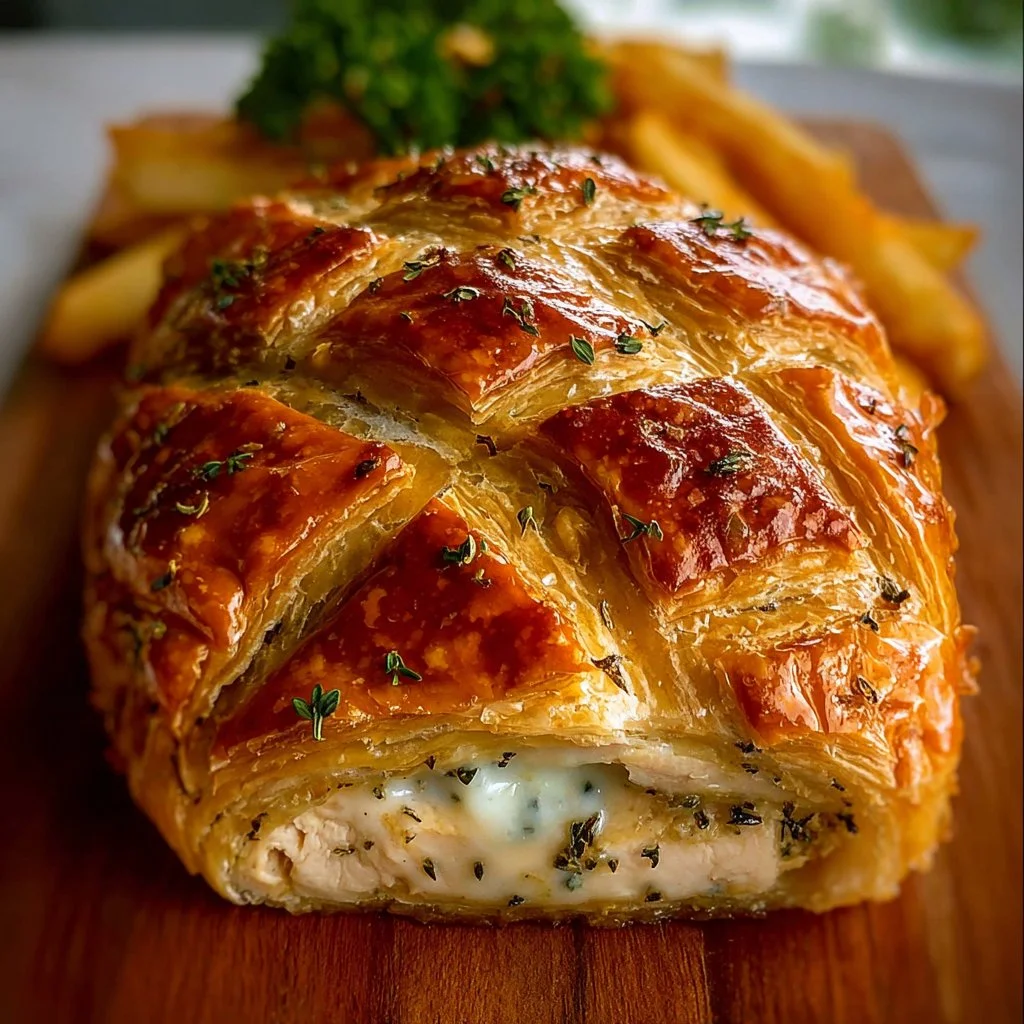
- Brush the tops with beaten egg to encourage a glossy, golden finish and cut a small slit or two for steam to escape.
- Why this matters: Egg wash creates that irresistible sheen and venting prevents pastry from becoming soggy inside.
- Visual cues: A light sheen should appear and vents will let steam escape during baking.
- Mini tip: For a decorative touch, use pastry trimmings to create leaves or lattice and gently press them on top with more egg wash.
- Bake to golden perfection.
- Bake in a preheated oven at 400°F (200°C) for 25 to 30 minutes, until the pastry is beautifully golden and an instant-read thermometer inserted into the thickest part of the chicken reaches 165°F.
- Why this matters: The oven temperature and time balance crisp pastry with fully cooked, juicy chicken.
- Visual cues: Pastry should be puffed and evenly browned; juices from the seam should run clear.
- Mini tip: If the pastry browns too quickly, tent loosely with foil for the remaining baking time.
- Rest, garnish, and serve warm.
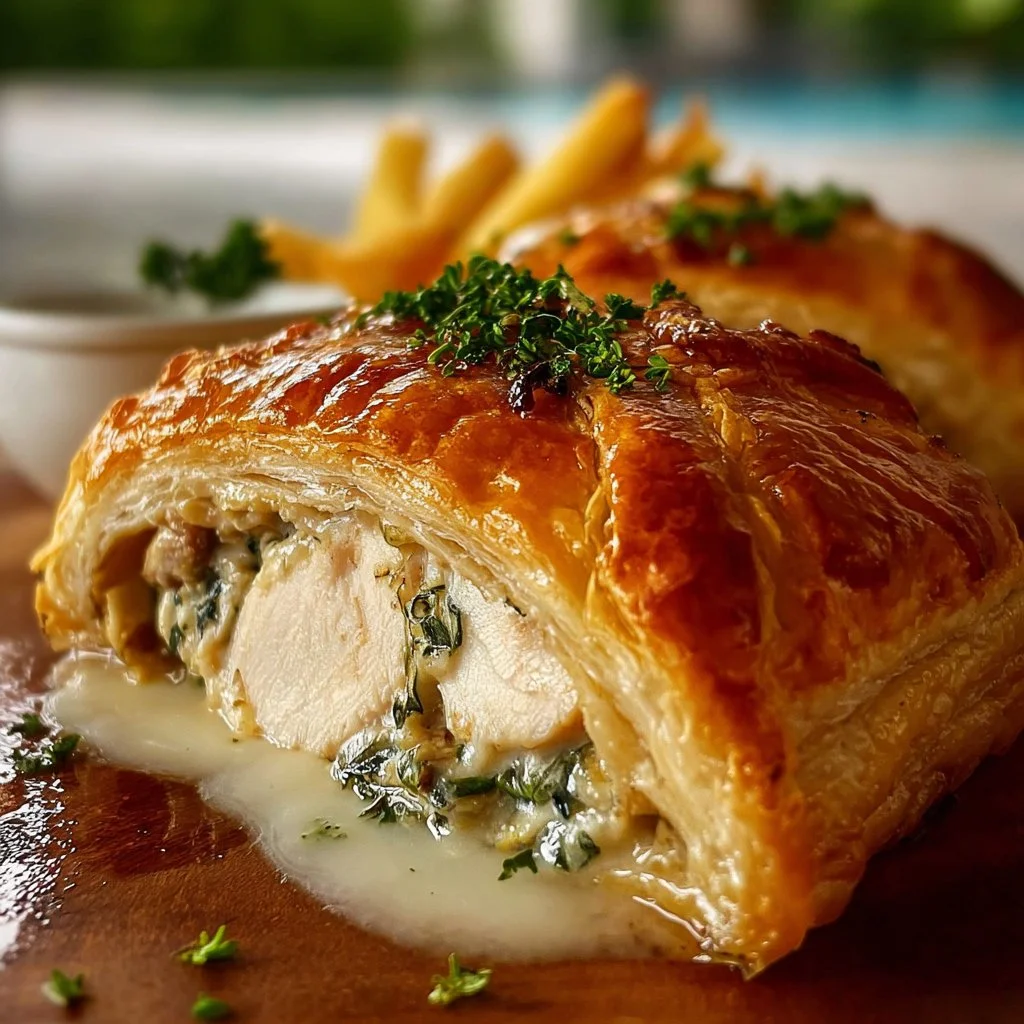
- Let the Chicken Wellington rest for 5 minutes after removing from the oven, then garnish with chopped fresh parsley and slice to reveal the cross-section.
- Why this matters: A short rest settles the juices and prevents them from draining out the moment you slice.
- Visual cues: The interior should show a cooked, tender breast surrounded by a ribbon of sauce inside the pastry.
- Mini tip: Serve with extra Dijon cream sauce on the side for saucier plates.
Serving Suggestions & Storage Tips
Serving ideas
- Plate each Wellington with a spoonful of extra Dijon cream sauce and a scattering of fresh parsley for color.
- Complement with bright, seasonal sides: roasted root vegetables or a shaved fennel and apple salad add freshness and texture.
- For a cozy, family-style dinner, serve sliced Wellingtons on a large board with roasted potatoes and a simple mixed greens salad.
Presentation tips
- Slice at a slight angle to show off layers: seared chicken, creamy filling, and flaky pastry.
- Use a serrated knife for clean cuts and wipe the blade between slices to keep the presentation tidy.
- Garnish with a sprig of parsley or a light dusting of cracked black pepper for contrast.
Pairings
- Light, citrusy salads or steamed green beans with lemon complement the dish’s richness.
- For starch, creamy mashed potatoes or buttered pearl couscous create comforting pairings without overpowering the flavors.
Creative variations
- Add caramelized onions or shallots to the sauce for a sweet edge.
- Fold a small handful of chopped spinach into the sauce for color and extra nutrients.
- For an herb-forward profile, stir in fresh thyme or tarragon to the sauce just before wrapping.
Storage
- Fridge: Store cooled Wellingtons in an airtight container for up to 3 days.
- Freezer: You can freeze unbaked, assembled parcels for up to 1 month. Freeze on a tray until firm, then wrap tightly in foil and transfer to a freezer bag.
- Thaw overnight in the refrigerator before baking; add a few extra minutes to the bake time if baking from partially chilled.
Best reheating methods
- Reheat slices in a 350°F oven for 10 to 12 minutes until warmed through to keep the pastry crisp.
- Avoid microwaving as it will make the pastry soggy and the texture less appealing.
- If reheating a whole or large piece from frozen, bake at 375°F until internal temperature reaches 165°F, tenting with foil if the pastry is browning too quickly.
Pro tip: If you have leftover sauce, warm it gently on low heat and add a splash of milk to loosen if needed. It brightens up the reheated slices.
Helpful Notes & Variations
Ingredient substitutions
- Milk vs cream: Whole milk creates a lighter sauce; heavy cream makes a richer, silkier filling.
- Gluten-free: Use a gluten-free puff pastry and a GF flour blend for the roux.
- Chicken alternative: Thin boneless chicken thighs can be used for juicier meat; adjust searing time and verify internal temp.
Dietary adaptations
- Lower fat: Use whole milk and reduce butter slightly, or decrease the amount of sauce placed inside the Wellington.
- Vegetarian twist: Replace chicken with thick slices of roasted butternut squash or large portobello mushrooms. Follow the same assembly and baking times, adjusting for vegetable cook time.
- Dairy-free: Use unsweetened plant-based milk and a dairy-free butter alternative. The texture will be different but still pleasant.
Flavor add-ins
- Herbs: Chopped tarragon, chives, or thyme added to the sauce provide subtle complexity.
- Cheese: A thin smear of a mild cheese like fontina or Gruyere inside the pastry can add creaminess.
- Umami boost: Stir a teaspoon of Worcestershire sauce or miso into the sauce sparingly for deeper flavor.
Common mistakes and how to avoid them
- Soggy bottom pastry: Make sure the pastry and assembled parcels are chilled slightly before baking and that the chicken is not overly juicy when wrapped.
- Undercooked chicken: Use an instant-read thermometer to confirm internal temp of 165°F.
- Burnt garlic: Keep the garlic moving in the pan and remove from high heat once it becomes fragrant and lightly golden.
Experience-based tips
- Chill the assembled Wellingtons for 10 minutes before baking to help pastry layers set and resist collapsing.
- Reserve a little sauce to serve on the side so guests can control sauciness.
- Practice one assembly as a test run if making multiple for guests; you will find the rhythm and timing smoother the second time.
If you want a contrast of flavors for your dinner lineup, consider a comforting soup like this chicken dumpling soup to start, or pair with hearty sides like the creamy winner in Best Smothered Chicken and Rice for a full southern comfort spread.
Conclusion
This Chicken Wellington brings together simple grocery ingredients into something that feels celebratory and deeply comforting. The golden puff pastry gives you a crunchy exterior, the seared chicken stays juicy, and the Dijon cream sauce inside makes every bite luxurious without fuss. It is the kind of recipe you can serve for an intimate dinner, holiday meal, or a weekend treat that doubles as Sunday comfort food. If you want to explore other takes and inspirations, check out a classic benchmark like this Easy Chicken Wellington Recipe from The Wicked Noodle, compare different cream sauce ideas at Easy Chicken Wellington with Dijon Cream Sauce – The Dizzy Cook, or admire richer mushroom and cheese versions such as Chicken Wellington with Mushrooms and Gorgonzola for inspiration. Now go make one, slice through that golden crust, and enjoy the applause around your table.
- Frequently Asked Questions
Can I make this recipe ahead of time?
Yes. You can assemble the Wellingtons and refrigerate them for several hours before baking, which makes them excellent for dinner party prep. For longer storage, assemble and freeze the unbaked parcels on a tray until firm, then wrap tightly and freeze for up to one month. Thaw overnight in the refrigerator before baking, and add a few extra minutes to the oven time if still chilled.
How should I store leftovers and how long do they last?
Store cooled leftovers in an airtight container in the refrigerator for up to 3 days. For longer storage, wrap individual portions tightly and freeze for up to 1 month. Reheat from refrigerated or thawed frozen state for best texture.
What is the best way to reheat or serve this recipe after storage?
Reheat in a 350°F oven for 10 to 12 minutes to warm through while keeping the pastry crisp. If reheating from frozen, bake at 375°F until the internal temperature reaches 165°F, tenting with foil if the pastry begins to brown too quickly. Avoid microwaving to preserve flakiness.
Can I adjust or substitute ingredients to fit my preferences?
Absolutely. Substitute whole milk for heavy cream to reduce richness, use gluten-free flour and puff pastry for a GF version, or swap in thin boneless chicken thighs for juicier meat. Add spinach, caramelized onions, or herbs like thyme and tarragon to alter the flavor profile. If you omit mushrooms, the sauce remains fragrant and delicious.
Do you have tips to ensure the best texture and flavor every time?
Yes. Sear the chicken until deeply golden to develop flavor, keep the puff pastry chilled until assembly, and use an instant-read thermometer to avoid overcooking the chicken. Chill assembled parcels briefly before baking to help them hold shape, and save a bit of sauce for serving so the Wellington remains moist and saucy when plated.
Chicken Wellington
Ingredients
Method
- Pat both chicken breasts very dry and season generously with salt and pepper.
- If one breast is much thicker, butterfly it or gently pound to an even thickness.
- Warm olive oil in a heavy skillet over medium-high heat until it shimmers.
- Add the breasts and sear for 2 to 3 minutes per side until golden brown.
- Transfer seared breasts to a plate and let rest for 5 minutes.
- In the same pan, reduce heat to medium, add butter, and once melted, add minced garlic and mushrooms (if using).
- Sauté for 2 to 3 minutes until garlic is fragrant and mushrooms are softened.
- Stir in flour and cook for about 1 minute. Slowly whisk in milk or cream until smooth.
- Add Dijon mustard and season with salt and pepper. Simmer gently until the sauce thickens.
- Roll out the puff pastry and cut it into two equal rectangles.
- Spoon warm Dijon cream sauce into the center of each pastry rectangle. Place a seared chicken breast on top and spoon more sauce over.
- Fold the pastry over the chicken, sealing edges tightly. Place seam-side down on a parchment-lined baking sheet.
- Brush with beaten egg and cut slits for venting.
- Bake in a preheated oven at 400°F (200°C) for 25 to 30 minutes until golden.
- Let rest for 5 minutes before garnishing with parsley and slicing to serve.