There’s something quietly magical about turning wild, roadside blooms into a jar of sunshine you can spread on toast. Dandelion Jelly is a seasonal, charming preserve that captures the floral, slightly honeyed notes of dandelion petals and turns them into a beautiful pale-gold jelly. Foragers and home cooks alike adore this recipe because it celebrates spring’s abundance, uses an ingredient many people already know, and produces a delicate, comforting condiment that’s perfect for breakfast, tea sandwiches, or gifting. If you’re curious about foraging, want to try something new with a bounty of blooms, or simply love from-scratch preserves, this dandelion jelly recipe is worth a place in your pantry.
Ingredients & Equipment
Ingredients
- 4 cups dandelion petals (or 2 cups packed petals)
- 4 cups sugar
- 2 Tbsp. lemon juice (or 1/2 tsp citric acid)
- 1 box Powdered Pectin (1.75 ounces, such as Sure-Jel)
- Boiling Water
Notes:
- Harvest roughly 8 cups of whole flower heads to yield about 4 cups of loose petals; you’ll discard the green portions (see instructions).
- Use pesticide-free dandelions; collect from areas away from roads and lawns treated with chemicals.
- If you prefer a slightly tangier jelly, increase lemon juice by 1 tsp.
Helpful Tools & Equipment
- Heavy-bottomed saucepan (4–6 quart)
- Fine mesh strainer or cheesecloth for straining petals
- Large mixing bowl
- Measuring cups and spoons
- Jar funnel and ladle (for easy jar filling)
- Sterilized jars with lids (for refrigerator storage or canning)
- Candy thermometer (optional, useful if you like precise boiling points)
- Baking tray (to lay out petals briefly while sorting)
- Tongs and jar lifter (if you choose to water-bath can)
- Blender or immersion blender (optional, if you want to puree for a smoother texture)
- Kitchen scale (optional, for more accurate pectin-to-liquid ratios)
Step-by-Step Instructions (with tips)
- Harvest and prepare petals
- Harvest roughly 8 cups of dandelion flower heads on a dry day when the flowers are open. Gently remove just the yellow petals, discarding the green portions and the stems. Aim to avoid the bitter green parts, as they can affect flavor.
- You should end up with roughly 4 cups of petals (not packed) or 2 cups packed. Spread petals on a baking tray briefly to inspect for insects or debris, and pick out any unwanted bits.
Tip: Wear gloves if you have sensitive skin, but many people find petal handling pleasant and quick. Harvest only the bright yellow inner petals; the green base is where most bitterness resides.
- Make the dandelion petal tea
- Place the cleaned petals in a heatproof mixing bowl or jar. Pour 4 cups boiling water over the petals, fully submerging them.
- Allow the tea to steep for at least 1 hour. For deeper color and flavor, steep up to 24 hours in the refrigerator — this creates a richer floral infusion.
Tip: Cover the bowl while steeping to prevent dust from falling in. If you plan to steep overnight, refrigerate after the first hour to preserve freshness.
- Strain and measure the tea
- After steeping, use a fine mesh strainer or cheesecloth to strain the petals into a bowl. Gently press or ring the petals to extract every last bit of liquid.
- Measure the resulting dandelion tea. You should have about 3 3/4 to 4 cups of liquid. If you’re short, you can top up with water to reach 4 cups, but note that this may slightly dilute flavor.
Tip: Capture any remaining drained liquid by pressing the petals with a spoon inside cheesecloth; this helps maximize yield.
- Prepare to cook
- Pour the measured dandelion tea into a heavy-bottomed saucepan. Add 2 Tbsp. lemon juice (or 1/2 tsp citric acid) and the powdered pectin. Stir thoroughly to dissolve the pectin into the cold liquid.
- Bring the mixture to a boil over high heat. Important: Do not add sugar yet — pectin needs to activate in the unsweetened, acidic liquid.
Tip: Using a heavy-bottomed pan helps prevent scorching and uneven boiling as you add sugar later.
- Add the sugar and cook
- Once the dandelion tea and pectin mixture reaches a rapid, rolling boil, quickly add the 4 cups sugar and stir to combine.
- Return the mixture to a hard boil and maintain it, stirring constantly, for 1–2 minutes. Time carefully: a short, strong boil activates the pectin and creates a proper set.
Tip: Stir with a heatproof spatula and watch carefully to prevent foam from boiling over. If foam forms, skim it off with a spoon for clearer jelly.
- Test for set (optional)
- If you own a candy thermometer, the jelly should reach about 220°F (104°C) at sea level. If you prefer an old-fashioned test, chill a small dish in the freezer. Spoon a little jelly onto the chilled dish and let it sit for a minute; if it wrinkles when pushed with your finger, it’s set.
Tip: Altitude affects boiling points. If you live at high elevation, consult pectin’s manufacturer recommendations for adjusted boiling time.
- Jar and cool
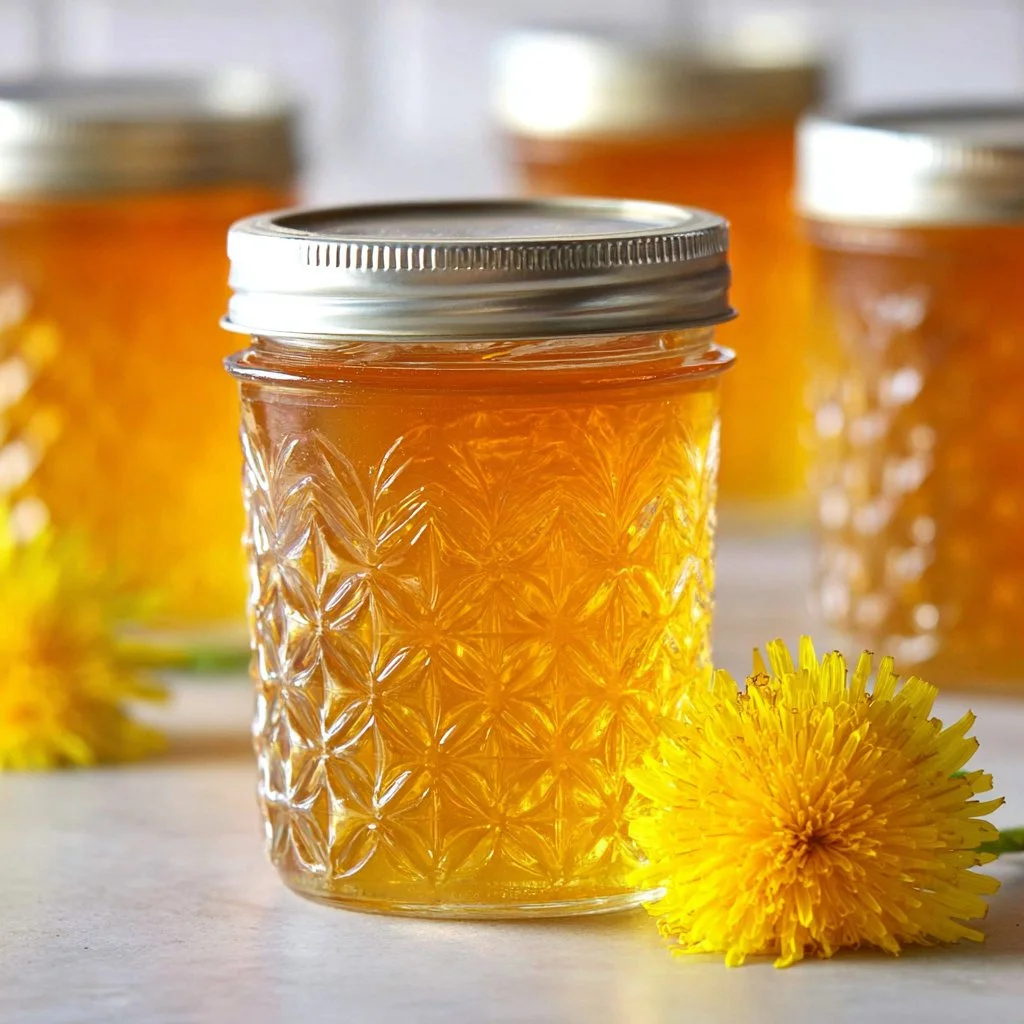
- Pour the hot jelly into prepared jars using a jar funnel, leaving about 1/4 inch headspace. Wipe rims clean, apply lids and rings, and allow the jelly to cool on the counter undisturbed. The jelly will thicken as it cools. Let set for at least 12 hours; some jellies take up to 48 hours to fully gel.
Tip: If foam remains on top after cooling, simply spoon it off; it won’t affect flavor.
- Optional: Water bath canning
- To shelf-stable preserve your jelly, process jars in a boiling water bath for 5–10 minutes (adjusting for altitude and jar size). Make sure jars are sterile and that processing guidelines for fruit jellies are followed. If you prefer, store the jelly in the refrigerator for immediate use — it will keep well chilled.
Tip: If you’re new to canning, consult a reputable canning guide for step-by-step water bath instructions and altitude adjustments.
Variations & Flavor Suggestions
- Roasted dandelion jelly: Roast the petals briefly at 350°F for 8–10 minutes (watch closely) before steeping to deepen the caramel notes into a darker, richer jelly.
- Honey-sweetened twist: Substitute up to 1 cup of the sugar with honey for a floral boost; remember sugar affects pectin set, so reduce honey carefully (a full swap can prevent setting).
- Mixed wildflower jelly: Add an equal portion of other edible blossoms (like clover or chamomile) to introduce layered flavors.
- Citrus blossom accent: Add a teaspoon of orange zest in with the petals for a bright citrus lift.
Storage, Freezing & Make-Ahead Tips
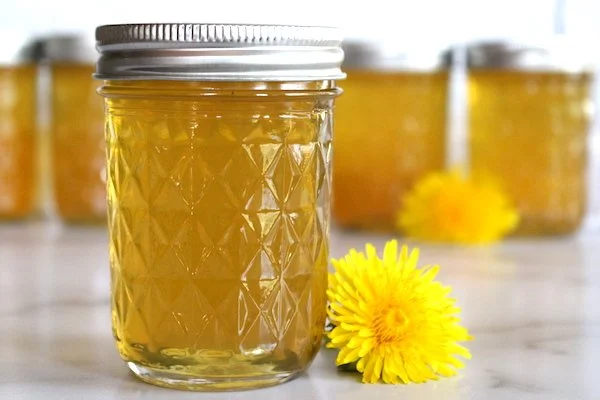
- Refrigerator: Homemade dandelion jelly stored in clean, sealed jars will keep in the refrigerator for up to 3–4 weeks. For best flavor and texture, consume within a month.
- Freezing: Jelly freezes well. Pour cooled jelly into freezer-safe containers, leaving 1/2 inch headspace for expansion, and freeze for up to 12 months. Thaw in the refrigerator before use. Note: frozen and thawed jelly can be slightly softer than fresh but still delicious.
- Canning (shelf-stable): If properly water-bath canned and processed, dandelion jelly can be shelf-stable for up to a year. Once opened, refrigerate and consume within 3–4 weeks.
- Portioning: Consider making a mix of small 4 oz jars and a few larger jars. Small jars are charming for gifting and reduce waste once opened.
- Make-ahead: You can make the dandelion tea up to 24 hours ahead and keep it refrigerated. Assemble and cook the jelly the next day for easier timing.
Storage Tips
- Label jars with date and batch notes (e.g., roasted petals, extra lemon).
- If you notice fermentation (bubbling, off-odors) or mold, discard the jar. Proper sterilization and timely processing reduce risk.
How to Use / Serve This Dish
Dandelion jelly is unexpectedly versatile and pairs beautifully with both sweet and savory items:
- Breakfast: Spread on toast, English muffins, scones, or warm biscuits. It’s particularly wonderful on buttered toast with a sprinkle of sea salt.
- Tea time: Use as a filling for delicate tea sandwiches or thumbprint cookies for a spring-themed tea service.
- Cheese board: Pair with mild, creamy cheeses like Brie or goat cheese; the floral sweetness balances soft cheese and crunchy crackers.
- Glaze: Thin with a tablespoon of warm water and brush over roasted carrots or root vegetables as a subtly sweet glaze.
- Yogurt or oatmeal: Stir a spoonful into plain yogurt or morning oats for floral complexity.
- Cocktail/Mocktail syrup: Mix a teaspoon or two into sparkling water, gin, or lemony cocktails for a floral note.
Creative Serving Idea
- Honeyed dandelion thumbprints: Make a batch of shortbread, press an indentation, fill with dandelion jelly, and bake briefly — a sunny twist on classic thumbprint cookies.
FAQ
Q: Can I use whole dandelion flowers instead of removing the petals?
A: You should remove the green base and any stems because those contain bitterness. Only the inner yellow petals are used for the best flavor. Carefully separating petals takes time, but the result is a cleaner, sweeter jelly.
Q: What if my jelly doesn’t set?
A: Common causes include insufficient pectin activation, too much liquid (if you didn’t measure), or substituting sugar with too much honey. If your jelly remains loose after cooling, you can reheat it with a small amount of additional pectin (follow package instructions) and reprocess. Always measure liquids precisely and follow the pectin manufacturer’s guidance.
Q: Can I use a different type of pectin?
A: Use powdered pectin (the recipe assumes a 1.75 oz box like Sure-Jel). If you prefer liquid pectin, follow the liquid pectin brand’s directions for timing and additions; they often require different steps for adding sugar and boiling times.
Q: Are there allergies or safety concerns with eating dandelions?
A: Most people can safely eat dandelion petals, but if you have known allergies to related plants (e.g., ragweed or other Asteraceae family plants), proceed cautiously. Also, only harvest from untreated areas to avoid pesticides. When in doubt, consult a healthcare professional.
Conclusion
Dandelion Jelly is one of those recipes that feels like a small spring ritual: gathering bright heads, steeping a floral tea, and bottling sunlight into jars you can enjoy all year. It’s gentle in flavor, surprisingly versatile, and a lovely way to connect with the season. If you want a visual step-by-step or extra canning notes as you try this at home, this guide from How to Make Dandelion Jelly – Lonely Pines Farm is a great companion, and for more on texture and shelf life, see this Dandelion Jelly Recipe; Tastes like Honey? – Simply Canning. Try a small batch first, savor the process, and if you love it, gift a few jars — homemade dandelion jelly always feels like sharing a little springtime joy.
Dandelion Jelly
Ingredients
Method
- Harvest roughly 8 cups of dandelion flower heads on a dry day when the flowers are open.
- Gently remove just the yellow petals, discarding the green portions and the stems.
- Aim to avoid the bitter green parts, as they can affect flavor.
- Spread petals on a baking tray briefly to inspect for insects or debris.
- Place the cleaned petals in a heatproof mixing bowl or jar.
- Pour 4 cups boiling water over the petals and allow to steep for at least 1 hour.
- After steeping, strain the petals using a fine mesh strainer.
- Measure the resulting dandelion tea, ensuring you have about 3 3/4 to 4 cups of liquid.
- Pour the measured dandelion tea into a saucepan and add lemon juice and powdered pectin.
- Stir thoroughly to dissolve the pectin into the cold liquid, and bring the mixture to a boil over high heat.
- Once boiling, add the sugar and stir to combine.
- Maintain a rolling boil for 1–2 minutes, stirring constantly.
- Pour the hot jelly into prepared sterilized jars, leaving 1/4 inch headspace.
- Wipe rims clean, apply lids and rings, and let cool on the counter.
- To make shelf-stable, process jars in a boiling water bath for 5–10 minutes.