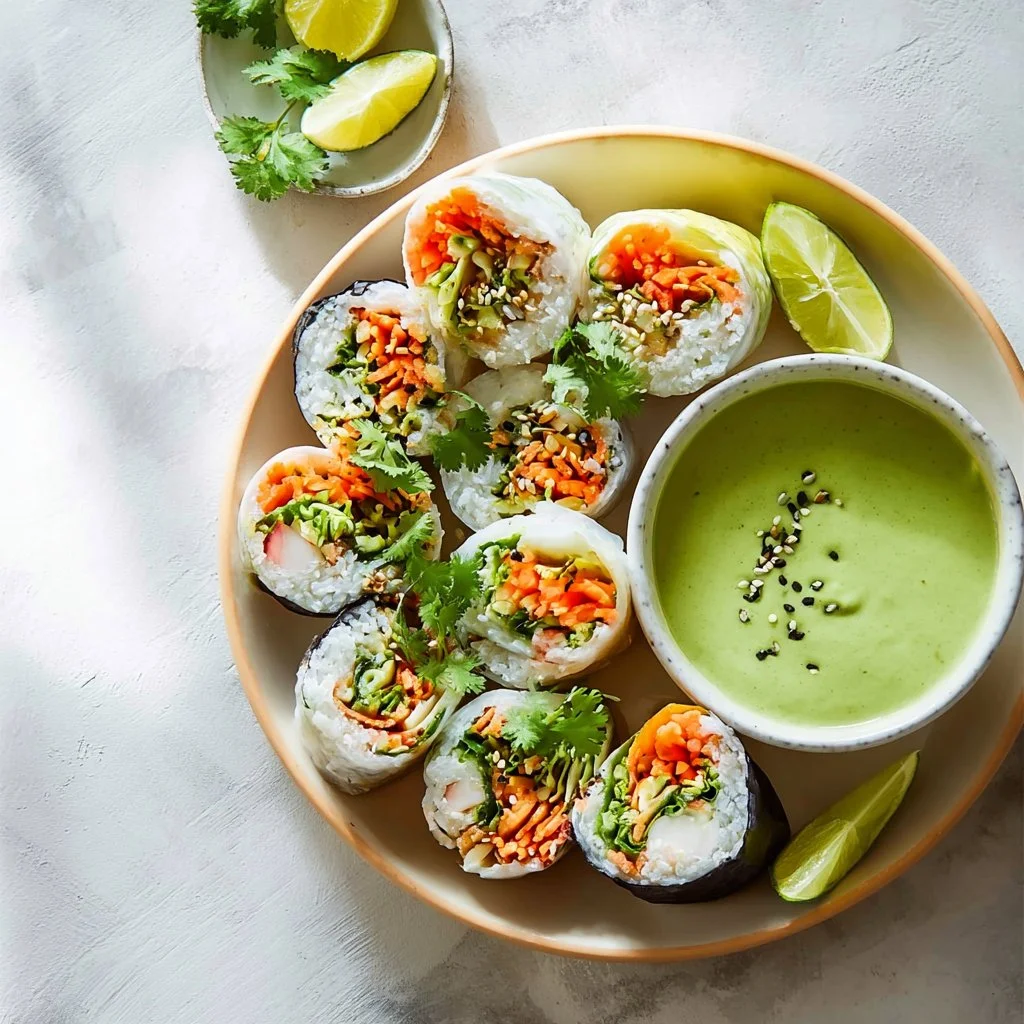
Spring is the perfect time for bright, crunchy, and light meals—and these Fresh Sushi Spring Rolls {Vegan} capture that seasonal feeling in every bite. They’re packed with crisp cabbage, sweet mango, creamy avocado, and sticky seasoned sushi rice wrapped in delicate rice paper; the contrast of textures makes them endlessly satisfying. Whether you’re hosting a casual lunch, meal-prepping for sunny days ahead, or simply craving a fresh-from-the-market dinner, these rolls are quick, fun to assemble, and totally plant-based. If you enjoy pairing simple mains with fruity salads, try them alongside a refreshing Peach Watermelon Salad for a complete springtime menu.
Why You’ll Love These Fresh Sushi Spring Rolls
There’s something comforting about rolling your own food. These vegan sushi spring rolls are gentle on the palate, visually appealing, and customizable. They highlight seasonal produce—think spring cabbage and ripe mango—while offering a satisfying mouthfeel from the sushi rice and creamy avocado dipping sauce. They’re great for feeding a crowd, packing for picnics, or enjoying as a light weeknight dinner. Plus, they’re naturally gluten-free (watch soy sauce labels) and easy enough for cooks of all levels.
Ingredients & Equipment
Ingredients
- 1/2 avocado
- 2 tbsp coconut yogurt
- 2 tbsp soy milk
- 1 clove garlic
- 1/2 lemon, juice
- pinch of salt
- dash of black pepper
- 1 cup cabbage
- 1 carrot
- 1 cucumber
- 1/2 mango
- 1/2 avocado
- 1 sheet nori algae
- 2 tsp black sesame seeds
- 125 grams sushi rice
- 2 tbs rice vinegar
- 1/2 tsp salt
- 1/2 tsp sugar
- 8 rice papers
Equipment
- Medium saucepan with lid (for rice)
- Small saucepan or microwave-safe bowl (to warm vinegar mix)
- Cutting board and sharp knife
- Vegetable peeler or mandoline (for thin strips)
- Food processor or blender (for the avocado dipping sauce)
- Large shallow dish for warm water (for rice papers)
- Clean kitchen towel or parchment paper (work surface)
- Sharp knife and a damp cloth to clean between cuts
- Optional: rice cooker (if you prefer one), baking tray (for arranging rolls), thermometer (for rice doneness)
Notes
- The ingredient list repeats avocado to emphasize its use both inside the roll and in the dipping sauce—don’t worry if you want to use a whole avocado instead.
- If you don’t have coconut yogurt, a mild plain plant-based yogurt works fine.
- For extra protein, consider adding crispy tofu or tempeh (see FAQ for substitutions). If you like the playful simplicity of rolled snacks, check out a fun banana sushi recipe for kid-friendly inspiration.
Step-by-Step Instructions (with tips)
H3: Prepare the sushi rice
- Rinse 125 grams of sushi rice under cold water until the water runs mostly clear—this removes excess starch and keeps the rice glossy and non-sticky.
- Combine the rice with the appropriate amount of water (follow package instructions) in a medium saucepan. Bring to a boil over medium-high heat, then reduce to a simmer, cover, and cook on low for 10 minutes.
- Remove from heat and let rest, covered, for 15 minutes. This resting step allows the rice to finish steaming and become tender.
Tip: Use a rice cooker if you have one—the texture is reliably perfect. If you’re using a stove, avoid lifting the lid during cooking and resting.
H3: Prepare the rice dressing
- In a small saucepan, mix 2 tablespoons rice vinegar with 1/2 teaspoon salt and 1/2 teaspoon sugar.
- Gently warm the mixture on the stove just until the salt and sugar dissolve—no need to boil.
- Pour the dressing over the hot rice and use a wooden spoon to fold it in, spreading the rice out slightly so it cools evenly. Let the rice cool down to near room temperature before assembling.
Tip: Fan the rice while you mix the vinegar in to help it cool faster and develop a shiny surface—this mimics sushi chefs’ technique.
H3: Prepare the avocado dipping sauce
- Cut an avocado in half, remove the pit, and scoop out the flesh into a food processor.
- Add 2 tablespoons coconut yogurt, 2 tablespoons soy milk, 1 finely chopped clove of garlic, juice of half a lemon, a pinch of salt, and a dash of black pepper.
- Blend until smooth and creamy, adding a teaspoon of water or more soy milk if you prefer a thinner dipping sauce.
Tip: Taste and adjust acidity—if it’s too rich, a touch more lemon juice brightens it up. For extra heat, add a teaspoon of sriracha or a pinch of chili flakes.
H3: Prepare the spring roll fillings
- Thinly slice 1 cup of cabbage, 1 carrot (julienne or use a peeler), 1 cucumber (seeded and cut into thin strips), and 1/2 mango into matchsticks.
- Cut the nori algae sheet into strips about 4 inches long with scissors.
- Slice the remaining half avocado into thin strips for the filling.
Tip: Keep fillings similar thickness so the roll is easy to fold and looks neat. If your mango is very ripe, pat the strips slightly dry so they don’t make the rice paper soggy.
H3: Assemble your sushi spring rolls
- Fill a large shallow dish with warm (not hot) water. Dip each rice paper sheet for about 15 seconds—until it’s soft but still slightly firm. The rice paper will continue to soften on your work surface.
- Place the softened paper on a clean kitchen towel or parchment. Place a scoop of the seasoned sushi rice onto the bottom half of the paper and gently spread it out, leaving about an inch of space on each side.
- Layer the cabbage, carrot, avocado strips, cucumber, mango, a strip or two of nori, and sprinkle 2 teaspoons of black sesame seeds over the fillings.
- Take the bottom edge nearest you and fold it up and over the fillings. Fold the left and right edges inward to encase the filling. Then roll away from you tightly until the rice paper seals.
Tip: If the rice sticks to your hands, keep them damp; a little water prevents rice from mashing while spreading. For neater slices, wet the knife and wipe between cuts.
H3: Roll your sushi spring roll
- Use a very sharp knife to slice each roll in half. If you like bite-sized pieces, cut into thirds or quarters.
- Arrange on a plate and serve immediately with the avocado dipping sauce.
Variation ideas
- Roasting vs. raw: You can roast carrot and cabbage in a hot oven for 8–10 minutes with a little oil for a slightly caramelized flavor instead of using them raw.
- Add protein: Marinated tofu, tempeh strips, or edamame make these more filling. If you want a fun twist inspired by handheld snacks, think about the warm-toasted charm of mini grilled cheese Hawaiian rolls for a party platter feel—serve both for variety.
- Spice level: Add thin jalapeño slices or a drizzle of chili oil to bring heat.
- Gluten-free soy: Use tamari instead of soy if you need wheat-free.
Always rest your rice after cooking and let the vinegar absorb properly for best texture.
Storage, Freezing & Make-Ahead Tips
Short-term storage
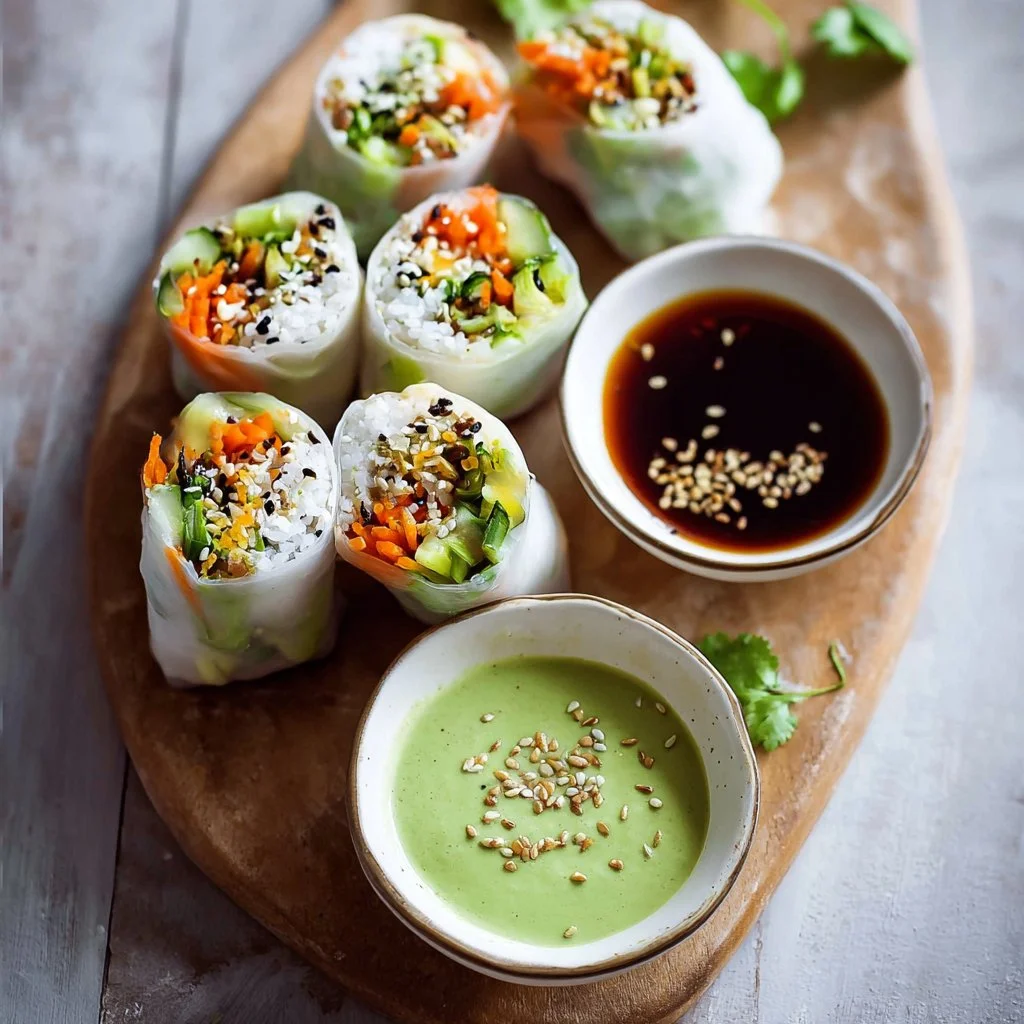
- Assembled rolls are best eaten fresh. If you need to store leftovers, place them seam-side down in an airtight container lined with a damp paper towel to prevent drying out. Consume within 24 hours for best texture.
- Keep the avocado dipping sauce chilled in a separate airtight container for up to 2 days. Stir before serving; if it darkens a little, a squeeze of lemon and a quick blend refreshes it.
Freezing
- Rice paper and fillings do not freeze well once assembled—the rice paper becomes very chewy and fillings soggy on thaw. I don’t recommend freezing assembled rolls.
- If you want to freeze components, cooked sushi rice freezes well in portioned blocks for up to 1 month; thaw in the fridge and re-season with warmed rice vinegar dressing. Pre-chop and freeze mango or carrot slices separately only if you plan to cook them later; fresh is best.
Make-ahead strategy
- Cook and season the sushi rice earlier in the day and hold it at room temperature covered.
- Slice all vegetables and fruits and store them separately in airtight containers in the fridge.
- Mix the dipping sauce and keep chilled.
- Assemble rolls just before serving for the best texture and appearance.
Portioning advice
- Each person typically eats 2–4 rolls as a light meal or 1–2 rolls as part of a larger spread. For parties, plan on 3–5 rolls per person depending on other dishes.
How to Use / Serve This Dish
Serving ideas
- Serve these rolls as an appetizer, light lunch, or main with a side of steamed edamame or a crisp green salad.
- Pair them with small bowls of extra soy sauce, tamari, or a ginger-scallion dressing for variety.
- For a picnic or potluck, assemble fillings and rice ahead, and set up a “roll-your-own” station where guests soften rice paper and build their rolls—this is interactive and fun for groups.
Creative variations
- Turn them into a bento box: Add pickled vegetables, citrus slices, and roasted seaweed snacks for a balanced meal.
- Make them into hand rolls: Use larger rice paper and roll cone-shaped for an on-the-go snack.
- Swap the rice for quinoa or cauliflower rice for a lower-carb option—keep in mind the texture will differ.
For inspiration on unique handheld presentations and party-ready small bites, consider pairing these vegan rolls with a creative savory snack like easy baked salmon sushi cups when you’re serving non-vegan guests—mix and match plates for variety.
FAQ
Q: Can I substitute the sushi rice with another grain? A: Yes. Short-grain sushi rice gives the classic sticky texture and mild flavor, but you can use medium-grain rice, cooked quinoa, or cauliflower rice in a pinch. If using a non-sticky grain, press it lightly to help it hold inside the rice paper and reduce the amount so the roll doesn’t become too dense.
Q: How long will the avocado dipping sauce keep? A: Stored in an airtight container in the refrigerator, the avocado sauce keeps for 1–2 days. It may darken slightly; a quick blend with a little lemon juice brings back brightness. If you want longer storage, substitute mashed silken tofu and lemon for a similar texture and longer shelf life.
Q: Can I make these nut-free or allergy-friendly? A: Yes. This recipe is already nut-free. To make it soy-free, replace soy milk and any soy-based sauces with oat or almond milk and coconut aminos (check labels). To keep things gluten-free, choose tamari that’s labeled gluten-free.
Q: What’s the best way to keep rice paper from tearing while rolling? A: Don’t soak the rice paper for too long—15 seconds in warm water is usually enough. Work on a damp towel (not wet) so the paper doesn’t stick. Use room-temperature fillings and avoid overfilling. If a paper tears, simply overlap another softened sheet to reinforce it.
Conclusion
These Fresh Sushi Spring Rolls {Vegan} are a lovely, seasonal way to celebrate spring produce—bright mango, crunchy cabbage, and creamy avocado all come together for a fresh, comforting bite. They’re adaptable, great for sharing, and perfect for those days when you want a from-scratch dish that feels special but isn’t fussy. If you’d like more plant-forward roll ideas, explore this vibrant take on vegan rolls, or check out a similar crunchy roll with flavorful sauces for inspiration. Try these at your next gathering, and don’t forget to share your favorite filling combos!
For another vibrant vegan roll idea, see this recipe for Vegan Fresh Sushi Spring Rolls – Vibrant plate, and for a salty-spicy variation with tofu and peanut flavors, take a look at Vegan Rice Paper Rolls with Sriracha & Soy Sauce Tofu and Peanut ….