German Chocolate Cake has a way of feeling like a warm conversation with an old friend. I remember the first time I made this layered delight for a rainy Sunday — the house smelled like toasted coconut and brown sugar, and I felt proud and comforted at the same time. If you love a classic chocolate cake topped with a gooey coconut-pecan frosting, you are in the right place. I’ll walk you through each step, explain why things work, and share simple swaps and serving ideas. If you enjoy other gooey, layered desserts, like my favorite s’mores chocolate cake, this German Chocolate Cake will feel like a cozy upgrade.
Why You’ll Love This Recipe
- Quick to mix and straightforward to bake with familiar pantry staples
- Uses accessible, everyday ingredients for a true from-scratch feel
- Perfect for cozy seasons, celebrations, and potlucks where comfort matters
- Impressive to serve but comforting and familiar to eat
What sets this version apart is the balance between a tender, moist chocolate sponge and a rich coconut-pecan frosting that is glossy and studded with toasted coconut and chopped pecans. I aim for a reliable, forgiving cake that gives you confidence even if you are not an expert baker. The technique keeps the cake moist (boiling water in the batter is the secret for a tender crumb), and the frosting is made on the stovetop so it develops that classic, slightly caramelized flavor and chewy texture that makes German Chocolate Cake unforgettable.
Ingredients You Will Need
Ingredients Needed
Below I’ve grouped the ingredients into cake and frosting sections and added quick clarifications so you know exactly what to reach for.
Cake ingredients
- 1 3/4 cups all-purpose flour — spoon and level the cup for accuracy or weigh if possible
- 3/4 cup unsweetened cocoa powder — Dutch-process or natural will both work; flavor shifts slightly depending on type
- 2 cups granulated sugar — standard white sugar keeps the crumb tender and the cake sweet without heaviness
- 1 1/2 teaspoons baking powder — leavening for lift
- 1 1/2 teaspoons baking soda — reacts with acid in cocoa and other ingredients for extra rise
- 1 teaspoon salt — enhances chocolate flavor
- 2 large eggs — at room temperature for best volume
- 1 cup whole milk — adds richness; you can substitute 2% if that is what you have
- 1/2 cup vegetable oil — keeps the cake tender and moist (neutral oil like canola or sunflower is fine)
- 2 teaspoons vanilla extract — for roundness and depth
- 1 cup boiling water — hot water blooms the cocoa for a deeper chocolate flavor and thins the batter for a moist crumb
Frosting ingredients (coconut-pecan topping)
- 1 cup sweetened shredded coconut — sweetened gives the classic texture and chew; use desiccated or freshly shredded depending on preference
- 1 cup chopped pecans — toast lightly for extra flavor, but you can use untoasted if preferred
- 1 cup brown sugar — packed lightly; the molasses in brown sugar gives the frosting its caramel notes
- 1/2 cup evaporated milk — contributes to the custardy texture; do not replace with regular milk without adjusting cook time
- 1/2 cup butter — unsalted is best so you can control seasoning
Notes on these ingredients
- Fresh vs. packaged coconut: Fresh shredded coconut can be more tender and has better aroma, but packaged sweetened shredded coconut is convenient and stores longer.
- Pecans: If you prefer a milder nut, walnuts work as a substitute but will alter the classic flavor slightly.
- Evaporated milk: This is not sweetened condensed milk; evaporated milk has less sugar and a creamier cooked texture when combined with brown sugar and butter.
Ingredients & Equipment Notes (Optional)
A few tools make this recipe easier and more reliable:
- Two 9-inch round cake pans — when greased and floured properly the layers release cleanly. If you only have one pan, you can bake in batches, but expect longer oven time.
- Mixing bowls and a sturdy whisk or an electric mixer — a stand mixer or hand mixer saves effort, but vigorous whisking by hand works too.
- A heatproof spatula — for folding and scraping batter cleanly.
- A small saucepan and a wooden spoon — needed for the stovetop frosting so you can stir continuously without burning.
- Cooling racks — to cool cakes evenly and prevent sogginess.
Why these matter: Even, reliable pan size and good mixing tools prevent overmixing, uneven bake, and cracked layers. A heavy-bottomed saucepan for the frosting helps prevent hot spots and sticking.
Instructions – How to Make “German Chocolate Cake”
Follow these clear, numbered steps. Each step includes why it matters, visual cues, and mini tips to help you succeed.
- Preheat the oven to 350°F (175°C). Grease and flour two 9-inch round cake pans.
- Why: Preheating ensures even rising and baking from the moment the batter goes in. Greasing and flouring prevents sticking.
- Visual cue: The oven should be at a steady 350°F before the pans go in; the pans should have an even thin film of oil and dusting of flour or a parchment round for extra insurance.
- Tip: If you use nonstick spray with flour, apply it lightly and shake out excess.
- In a large bowl, whisk together the all-purpose flour, unsweetened cocoa powder, granulated sugar, baking powder, baking soda, and salt until homogenous.
- Why: Dry ingredients benefit from being evenly distributed so the leavening and cocoa do not clump.
- Visual cue: The mixture should be uniform in color with no visible pockets of cocoa or baking soda.
- Tip: Sift the cocoa powder if it tends to be lumpy in your pantry.
- Add the eggs, whole milk, vegetable oil, and vanilla extract to the dry ingredients and beat on medium speed for 2 minutes until the batter is smooth and slightly aerated.
- Why: Beating develops structure and binds liquids with dry ingredients. The oil contributes to tenderness while eggs provide lift and stability.
- Visual cue: The batter should look glossy and thoroughly combined — not streaky with flour or oil.
- Tip: Scrape the bowl halfway through mixing to incorporate any pockets of flour.
- Carefully stir in the cup of boiling water. The batter will become thin; pour it evenly into the prepared pans.
- Why: The hot water blooms the cocoa, intensifies the chocolate flavor, and produces a moist cake crumb. A thin batter bakes up with a tender texture.
- Visual cue: After adding hot water, the batter should be pourable like a thick cream. Do not be alarmed by the thinness; this is normal.
- Tip: Pour the boiling water slowly while stirring to avoid splashing and to ensure even incorporation.
- Bake for 30 to 35 minutes, or until a toothpick inserted into the center comes out with just a few moist crumbs. Let the cakes cool in the pans for 10 minutes, then run a knife around the edge and invert onto cooling racks to cool completely.
- Why: Baking time varies by oven and pan, so the toothpick test ensures doneness without overbaking. Cooling in the pan lets the cake set, while transferring avoids steam making the cake soggy.
- Visual cue: The cakes will spring back lightly to the touch when done and will have slightly pulled away from the pan edges. Centers should be set.
- Tip: If the top browns too quickly, tent lightly with foil partway through baking.
- For the frosting, combine the brown sugar, evaporated milk, and butter in a saucepan set over medium heat. Stir continuously until the butter melts and the mixture becomes smooth and begins to bubble gently.
- Why: Heating these ingredients creates a custardy, caramel-like base that thickens and holds the coconut and pecans. Continuous stirring prevents scorching.
- Visual cue: The mixture should be smooth and glossy with small, gentle bubbles as it simmers.
- Tip: Use medium heat and a heavy-bottomed saucepan to avoid hot spots. If you have a candy thermometer, aim for a temperature around 230°F to 235°F for a safe thickening point, but stirring until it thickens is sufficient.
- Remove the saucepan from the heat and stir in the shredded coconut and chopped pecans. Allow the frosting to cool until it thickens enough to spread without running off the cake.
- Why: Adding coconut and pecans off the heat keeps them from charring and preserves texture. Cooling lets the frosting achieve a spreadable, tabling consistency.
- Visual cue: The frosting should be glossy and thick but still scoopable. It will firm slightly as it cools.
- Tip: Stir in the coconut and nuts fully so the topping is evenly distributed; for extra texture toast the pecans beforehand and fold in when slightly cooled.
- Assemble the cake by placing one cooled layer on your serving plate, spreading a thick layer of the coconut-pecan frosting over it, topping with the second cake layer, and spreading frosting over the top and sides. Enjoy your homemade German Chocolate Cake.
- Why: Layering while the frosting is warm but not hot allows it to meld to the cake without melting it. Spreading frosting evenly creates a beautiful finish and keeps the layers from sliding.
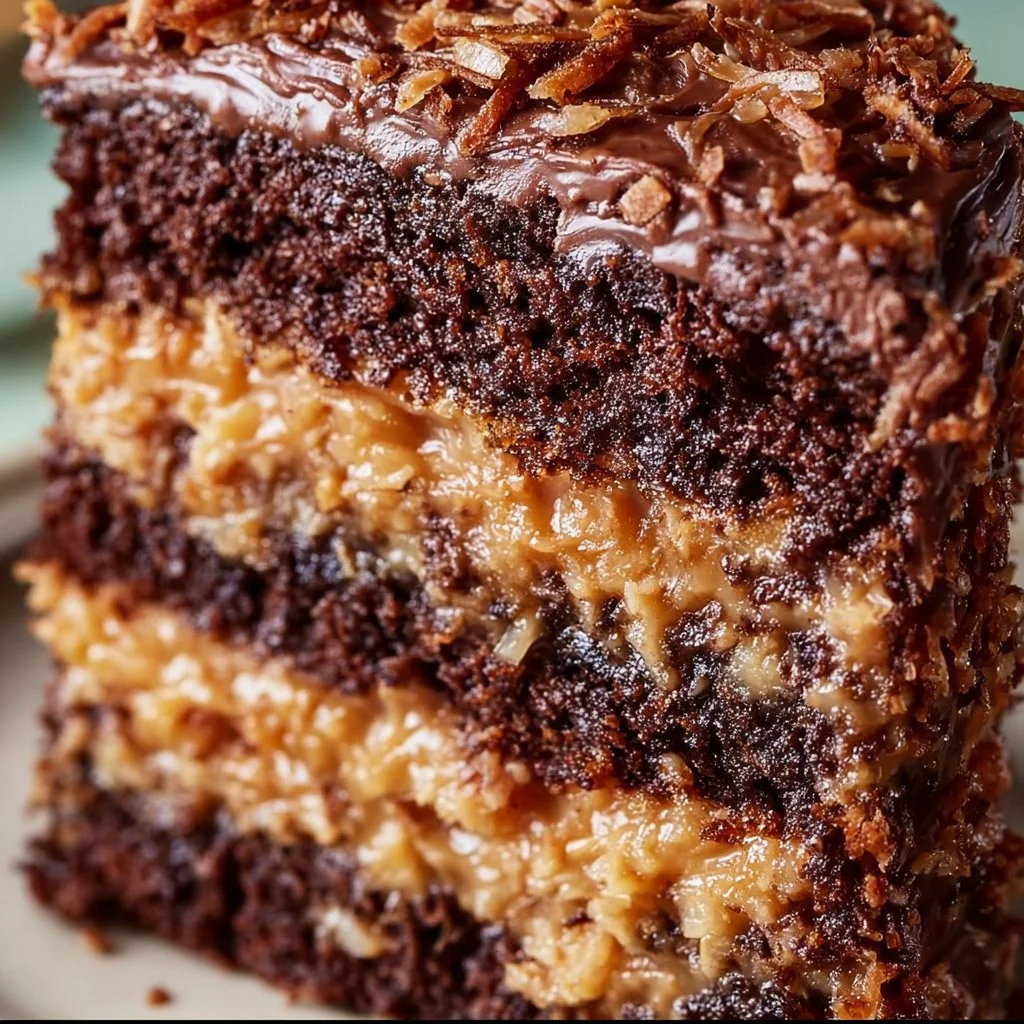
- Visual cue: The final cake should have a glossy, textured top where coconut and pecans peek through. Sides can be coated thinly, or left rustic for a homespun look.
- Tip: If the frosting firms too much to spread, warm slightly in short bursts over low heat or in a warm water bath, stirring to restore spreadability.
Serving Suggestions & Storage Tips
Serving ideas
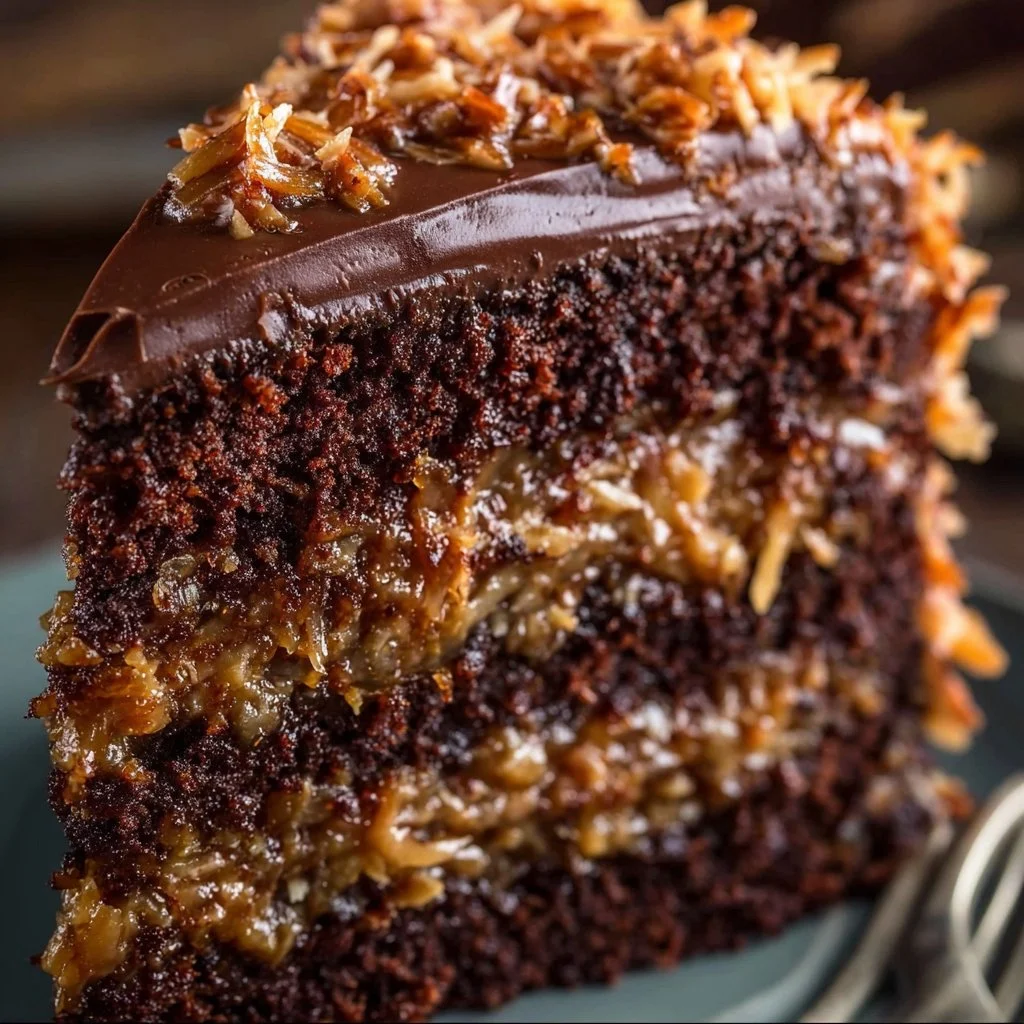
- Slice this cake thick so each piece shows the layers and chunky coconut topping. A simple dollop of whipped cream or a scoop of vanilla ice cream compliments the richness.
- For special occasions, garnish the top with a few whole toasted pecans and a light dusting of cocoa powder around the plate for contrast.
Presentation tips
- Let the cake rest at room temperature for 20 minutes before serving if it has been refrigerated so the frosting softens slightly.
- Serve on a warm plate for a cozy touch during cooler months.
Pairings
- A cup of robust black coffee or a rich coffee substitute pairs beautifully with the sweet, caramelized notes of the frosting.
- For a non-caffeinated pairing, try a warm chai tea or a bright herbal tea to cut through the richness.
Creative variations
- Layer with additional chocolate ganache between the cake layers for a more decadent version.
- Sprinkle toasted coconut flakes on top just before serving for an extra crunch.
Storage
- At room temperature: Store covered with a cake dome for up to 2 days in a cool part of the kitchen.
- In the refrigerator: Place in an airtight container or cover tightly; the cake will last 4 to 5 days. Allow slices to come to room temperature before serving for best texture.
- In the freezer: Wrap individual slices or the whole cake tightly in plastic wrap then foil; freeze for up to 2 months. Thaw overnight in the refrigerator and then bring to room temperature before serving.
Best reheating methods
- For a single slice: Warm in a microwave for 10 to 15 seconds to soften frosting and cake (watch carefully to avoid overheating).
- For multiple slices: Let frozen slices thaw in the refrigerator, then briefly warm at 300°F in a preheated oven for 5 to 7 minutes covered loosely with foil to revive texture without drying.
Make-ahead tips
- You can bake the layers up to two days ahead and keep them wrapped at room temperature. Prepare the frosting the day you plan to serve for the freshest texture.
- If transporting, assemble the cake on a sturdy base and secure inside a cake carrier. Chill slightly to set the frosting for easier transport.
Helpful Notes & Variations
Ingredient substitutions
- Milk: Use a milk alternative like unsweetened oat milk if needed, but whole milk provides the best richness for this recipe. If using a substitute, expect slight changes in texture.
- Vegetable oil: Melted butter can be used for a more buttery crumb; substitute 1:1 but the cake will be slightly firmer.
- Pecans: Swap with walnuts if that is your preference; note that the flavor profile will shift a bit.
Dietary adaptations
- To reduce refined sugar, experiment with 1:1 natural sugar replacements, but monitor the frosting texture as brown sugar contributes to structure.
- Gluten-free: Use a reliable 1:1 gluten-free flour blend formulated for baking; results vary, so test with a single layer first.
Flavor add-ins
- For a gentle twist, fold 1 teaspoon of instant espresso powder into the batter to amplify chocolate depth without making the cake taste like coffee.
- Add a teaspoon of cinnamon to the frosting for a warming autumnal note.
Common mistakes and how to avoid them
- Overbaking: Check the cake at the lower end of the time range; remove when a few moist crumbs cling to the toothpick. Overbaking leads to dryer cake.
- Runny frosting: If the frosting is too hot when applied, it will slide off; let it cool to a spreadable consistency. Stirring while it cools helps keep it glossy.
- Soggy layers: Don’t assemble with very warm cake layers; this creates steam and sogginess. Cool completely or to just-warm before building.
Experience-based tips
- Toast your pecans for 6 to 8 minutes at 350°F until fragrant for a deeper nutty flavor. Cool before chopping.
- If you like a neater look, frost the sides thinly with a crumb coat and chill 15 minutes before the final frosting layer. The coconut-pecan frosting is chunky, so a thin crumb coat helps secure crumbs.
Conclusion
This German Chocolate Cake stands out because it pairs a tender, moist chocolate sponge with a nostalgic, rich coconut-pecan frosting that feels both celebratory and homey. It gives you the emotional payoff of a crowd-pleasing dessert without requiring overly complex techniques, and the stovetop frosting brings a bit of theater and comfort to the kitchen experience. Try the recipe and let the caramelized aroma of coconut and brown sugar fill your home. If you want to compare variations or get inspired by other takes on this classic, check out this detailed version from Homemade German Chocolate Cake – Tastes Better From Scratch, explore an upgraded twist at Upgraded German Chocolate Cake – Sally’s Baking Addiction, or see a beloved family-style version at Mama’s Homemade German Chocolate Cake recipe. I hope you’ll leave a comment and star rating after you try it, and share a photo on social media so others can see your cozy creation.
Frequently Asked Questions
Can I make this recipe ahead of time?
Yes. You can bake the cake layers up to two days in advance and keep them wrapped tightly at room temperature. Prepare the frosting the day you plan to assemble so it stays glossy and slightly warm when applied. Alternatively, you can bake and freeze the layers for longer storage and assemble after thawing.
How should I store leftovers and how long do they last?
Store leftover cake in an airtight container. At room temperature, it will be best within 48 hours. In the refrigerator, the cake will keep for 4 to 5 days. For longer storage, wrap slices or the whole cake tightly and freeze for up to 2 months.
What is the best way to reheat or serve this recipe after storage?
For single slices, a 10- to 15-second zap in the microwave softens the frosting and revives the texture. For multiple slices, thaw in the refrigerator and then warm in a 300°F oven for 5 to 7 minutes covered loosely with foil. Allow a few minutes at room temperature so the frosting is not icy when served.
Can I adjust or substitute ingredients to fit my preferences?
Yes. You can swap pecans for walnuts, use a milk alternative if needed, or replace vegetable oil with melted butter for a different mouthfeel. Be cautious substituting evaporated milk in the frosting, as it contributes to the thick, custardy texture; any change may require adjusting cook time and technique.
Do you have tips to ensure the best texture and flavor every time?
Use room temperature eggs and milk for even mixing, measure flour accurately by spooning into the cup and leveling or weigh ingredients if possible, do not overbake, and allow the frosting to cool to a spreadable consistency before assembling. Toasting pecans and using fresh coconut enhance aroma and texture, and adding boiling water to the batter is the key to a moist, tender crumb.
Homemade German Chocolate Cake – Tastes Better From Scratch
Upgraded German Chocolate Cake – Sally’s Baking Addiction
Mama’s Homemade German Chocolate Cake recipe
German Chocolate Cake
Ingredients
Method
- Preheat the oven to 350°F (175°C). Grease and flour two 9-inch round cake pans.
- In a large bowl, whisk together the all-purpose flour, unsweetened cocoa powder, granulated sugar, baking powder, baking soda, and salt until homogenous.
- Add the eggs, whole milk, vegetable oil, and vanilla extract to the dry ingredients and beat on medium speed for 2 minutes until the batter is smooth and slightly aerated.
- Carefully stir in the cup of boiling water. Pour the batter evenly into the prepared pans.
- Bake for 30 to 35 minutes, or until a toothpick inserted into the center comes out with just a few moist crumbs.
- Let the cakes cool in the pans for 10 minutes, then run a knife around the edge and invert onto cooling racks to cool completely.
- For the frosting, combine the brown sugar, evaporated milk, and butter in a saucepan set over medium heat. Stir continuously until the butter melts and the mixture becomes smooth and begins to bubble gently.
- Remove the saucepan from the heat and stir in the shredded coconut and chopped pecans. Allow the frosting to cool until it thickens enough to spread without running off the cake.
- Assemble the cake by placing one cooled layer on your serving plate, spreading a thick layer of the coconut-pecan frosting over it, topping with the second cake layer, and spreading frosting over the top and sides.