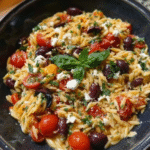
Greek Orzo with Lemon and Herbs is one of those recipes I reach for when I want something bright, simple, and deeply comforting. “Can you make a side that feels like sunshine?” you might ask, and I’ll say yes — this orzo does just that. I remember the first time I mixed steaming orzo with lemon zest and a handful of fresh dill; you could hear my roommate say, “What’s that smell?” and I knew I’d nailed a keeper. With orzo pasta as the star, plus lemon, olive oil, parsley, and dill, this dish is refreshingly straightforward and radiates homey comfort in every bite. If you’ve been searching for an easy lemon orzo or a lemon herb orzo recipe that sings of Mediterranean flavors, you’re in the right place.
(Also — if you love quick dinner ideas that pair well with grilled chicken or roasted vegetables, I often serve this alongside my favorite Greek chicken bowls for a full, satisfying meal.)
Why You’ll Love This Recipe
- Quick and easy to prepare — ready in about 20 minutes with minimal hands-on time.
- Made with simple, pantry-friendly ingredients like orzo pasta, lemon, olive oil, and fresh herbs.
- Perfect for spring and summer lunches, picnics, potlucks, or as a bright side to weeknight dinners.
- Comforting and light at once — familiar pasta texture with a lively citrus-herb lift that feels both nourishing and impressive.
What makes this version unique is the single-minded focus on freshness: instead of heavy creams or long-cooked sauces, the flavor is carried by real lemon zest and juice, bright parsley, and fragrant dill. Emotionally, this dish is tied to small, everyday celebrations — a warm bowl on a rainy afternoon, a chilled batch you bring to a sunny backyard lunch, or the confidence boost when you serve a dish that gets compliments without fuss. If you want more ideas for easy, comforting recipes that pair with this orzo, take a look at my lively take on Peruvian chicken and rice for another flavor-packed meal.
Ingredients Needed
For clarity, I’ve grouped the ingredients so you can glance at what belongs together. The quantities below make about 2 generous side-dish servings or a light lunch for 1–2 people.
For the orzo base
- 1 cup orzo pasta — regular dry orzo works best for that tender, rice-like bite.
- 2 cups water or vegetable broth — use vegetable broth if you want a more savory, richer base; water keeps it neutral and light.
For the dressing and flavor
- 2 tablespoons extra-virgin olive oil — provides silkiness and helps the herbs bloom.
- Juice and zest of 1 lemon — the zest gives bright citrus perfume while the juice adds tang and body.
- Salt and freshly ground black pepper to taste — salt unlocks the flavors; add pepper for warmth.
For the fresh-herb finish
- 1/4 cup fresh parsley, finely chopped — flat-leaf parsley works beautifully for texture and color.
- 1/4 cup fresh dill, finely chopped — dill brings that classic Greek-salad-like lift; if you aren’t a dill fan, extra parsley or fresh basil are fine swaps.
Notes and small swaps
- Lemon: Use organic if you plan to use the zest to avoid pesticide residue.
- Broth: Vegetable broth is a great no-meat option that adds depth if you’d like more savory flavor.
- Herbs: Fresh herbs are key for brightness; if you only have dried, use 1 teaspoon dried parsley and 1 teaspoon dried dill, but the flavor won’t be as vibrant.
Ingredients & Equipment Notes
A few useful tools make this recipe effortless and help you get the best texture and presentation:
- Medium pot with lid — for boiling the orzo; a snug lid helps water return to a boil faster.
- Fine-mesh strainer — for quick, efficient draining so the orzo doesn’t sit in water and become mushy.
- Microplane or small grater — for zesting the lemon (fresh zest goes a long way).
- Large mixing bowl or the pot you cooked the orzo in — mixing in a warm bowl helps the oil and lemon coat the pasta evenly.
- Chef’s knife and cutting board — for quick, uniform chopping of parsley and dill.
Why they help: a tight-fitting lid reduces cooking time, a fine-mesh strainer prevents orzo loss down the sink, and a microplane yields fluffy zest instead of pithy shreds. Using a large bowl lets you toss without spilling and gives the herbs room to mingle.
Instructions – How to Make “Greek Orzo with Lemon and Herbs”
- Prepare your ingredients first.
- Measure the orzo, zest and juice the lemon, and finely chop the parsley and dill.
- Having everything ready makes the finish quick and prevents overcooking the orzo.
- Bring the water or vegetable broth to a rolling boil in a medium pot.
- Use 2 cups liquid for 1 cup orzo. If using broth, there’s no need to salt the pot as much; taste as you go.
- Visual cue: you want active bubbles and steam; the liquid should be at a lively boil before adding pasta.
- Add the orzo to the boiling liquid and cook according to package instructions until al dente.
- Typical cook time is 8–10 minutes but check your package. Al dente means the orzo is tender with a slight bite in the center.
- Stir once or twice early in cooking to prevent sticking.
- Drain the orzo and return it to the warm pot or a large mixing bowl.
- Immediately drain in a fine-mesh strainer and give it a gentle shake; you don’t need to rinse unless you want to cool it quickly for a salad.
- Why this matters: returning to a warm vessel lets the orzo stay fluffy while it absorbs the dressing.
- Add olive oil, lemon juice, and lemon zest to the hot orzo, then season with salt and pepper.
- Drizzle 2 tablespoons olive oil and the juice of 1 lemon over the warm pasta. The heat helps carry the lemon aroma.
- Add salt and a few turns of freshly ground black pepper, taste, and adjust.
- Stir in the chopped parsley and dill until evenly distributed.
- Toss thoroughly so each grain of orzo is lightly coated and flecked with green. The herbs should look bright and fresh, not wilted.
- Mini-tip: add half the herbs first, toss, taste, then add remaining herbs for layered flavor.
- Taste and adjust final seasoning; serve warm as a side dish or a light lunch.
- If it tastes too tart, a small drizzle (1/2 teaspoon) of additional olive oil smooths the edges. If it’s flat, a pinch more salt wakes it up.
- Serve immediately while the lemon scent is lively, or chill for a refreshing cold salad later.
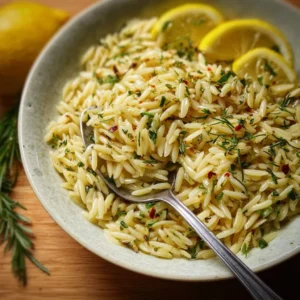
Why these steps matter: boiling in broth adds depth; cooking to al dente prevents a mushy finish; and tossing warm pasta with oil and lemon helps flavors meld. Visual cues are simple — the orzo should be pearly and separate, not clumped, and the herbs should sparkle against the pale yellow of the pasta.
Serving Suggestions & Storage Tips
Serving ideas and presentation
- Serve warm as a simple side with roasted vegetables, grilled chicken (for a non-pork option), or a lemony fish fillet.
- Turn it into a light main by stirring in chickpeas or white beans, halved cherry tomatoes, and a sprinkle of crumbled feta (optional if you enjoy cheese).
- For a picnic, chill the orzo and pack it in a shallow container so the herbs stay vibrant; garnish with extra lemon wedges and a drizzle of olive oil just before serving.
Pairings and accompaniments
- Proteins: grilled lemon-herb chicken, roasted salmon, or pan-seared tofu all pair beautifully.
- Vegetables: oven-roasted asparagus, charred zucchini, or a crisp Greek salad complement the orzo’s brightness.
- Bread: warm pita or crusty sourdough make nice vehicles for scooping.
Creative serving variations
- Mediterranean orzo salad: add halved Kalamata olives, diced cucumber, cherry tomatoes, and crumbled feta for a fuller salad vibe.
- Creamy lemon orzo: fold in 2–3 tablespoons of Greek yogurt for a creamy version; add yogurt at the end to prevent curdling.
- Herbed orzo pilaf: stir in toasted pine nuts and sautéed shallot for a nuttier, more complex side.
Storage and reheating
- Refrigerator: Store in an airtight container for up to 3–4 days. The herbs will mellow over time but the orzo holds up well.
- Freezing: I don’t recommend freezing this lemon-herb orzo. The herbs and lemon character degrade, and texture suffers.
- Reheating: For best results, reheat gently on the stovetop with a splash of water or olive oil over low heat, stirring frequently. If microwaving, add a teaspoon of water and heat in 20–30 second bursts, stirring in between to prevent dryness.
Make-ahead tips
- You can cook the orzo and prep the herbs a day ahead, then toss just before serving to keep the herbs bright.
- If you plan to serve chilled, mix the orzo with lemon and oil while still slightly warm, then cool quickly in the fridge. Add extra fresh herbs right before serving.
Helpful Notes & Variations
Ingredient swaps and substitutions
- Orzo alternatives: small pasta shapes like acini di pepe or small shells work in a pinch if you don’t have orzo. Adjust cooking times accordingly.
- Oil swaps: avocado oil can be used, but olive oil gives the classic Mediterranean flavor.
- No lemon? Use 1–2 tablespoons white wine vinegar or apple cider vinegar as a substitute, then taste and adjust.
Dietary adaptations
- Vegan: This recipe is naturally vegan when you skip any optional feta additions.
- Gluten-free: Use a gluten-free orzo or a small gluten-free pasta shaped like rice; watch cooking times and texture.
- Lower-sodium: Use water instead of broth and add salt sparingly, letting fresh lemon and herbs provide most of the flavor.
Flavor enhancements or add-ins
- Add toasted pine nuts or slivered almonds for crunch.
- Fold in sun-dried tomatoes for a sweet, savory contrast.
- Stir in roasted red peppers, artichoke hearts, or steamed peas for seasonal variety.
Common mistakes to avoid
- Overcooking the orzo: it goes from perfect to mush quickly. Start checking package times a couple minutes early.
- Adding herbs too early: if you add fresh herbs to steaming-hot pasta and let them sit, they’ll wilt and lose their brightness. Toss quickly and serve.
- Skimping on salt: salt is the secret that wakes up the lemon and herbs. Taste as you go.
Pro tips from years of cooking
- Zest before juicing your lemon so you don’t accidentally zest the bitter pith.
- If you want the lemon flavor to be more aromatic, add a strip of lemon peel to the cooking water and remove it before tossing — this imparts subtle citrus notes.
- For a silky sheen, finish with a tiny extra drizzle of olive oil and a quick toss right before serving.
Conclusion
Greek Orzo with Lemon and Herbs is an easy, dependable recipe that brightens any meal with minimal effort. It captures the best of Mediterranean flavors — lemony brightness, fragrant herbs, and silky olive oil — while being approachable for cooks of all levels. Whether you need a quick side for roasted vegetables, a light lunch, or a dish to bring to a potluck, this orzo satisfies with comfort and sparkle. If you enjoy exploring lemon-forward recipes, you might also appreciate inspiration from this Greek Orzo with Lemon and Herbs – Sprinkles and Sprouts post, or try the bright take on a lemon herb pasta in this Lemon Herb Orzo | Well and Full article for more variations. For another simple and zesty one-pot approach to lemon orzo, check out this practical guide to Lemon Orzo (Creamy Zesty One Pot) – Cooking With Ayeh. If you try it, I’d love to hear how you served yours — leave a comment, rate the recipe, and share a photo so we can celebrate your kitchen win together!
Frequently Asked Questions
Can I make Greek Orzo with Lemon and Herbs ahead of time?
Yes. Greek Orzo with Lemon and Herbs can be prepared in advance and actually tastes even better after resting, as the lemon and herbs have time to blend. Store it chilled and refresh before serving.
How should I store leftovers and how long do they last?
Store leftovers in an airtight container in the refrigerator for up to three days. Stir before serving, as the orzo may absorb some of the dressing over time.
What is the best way to reheat or serve this recipe after storage?
This dish is best served cold or at room temperature. If reheating is needed, warm gently and add a splash of olive oil or lemon juice to loosen the texture.
Can I adjust or substitute ingredients to fit my preferences?
Absolutely. You can swap herbs, adjust the lemon level, or add vegetables like cucumber or spinach. Dairy-free feta-style alternatives can also be used if needed.
Do you have tips to ensure the best texture and flavor every time?
Cook the orzo just until tender, rinse briefly to stop cooking, and add fresh herbs at the end. Taste and adjust seasoning before serving for balanced flavor.
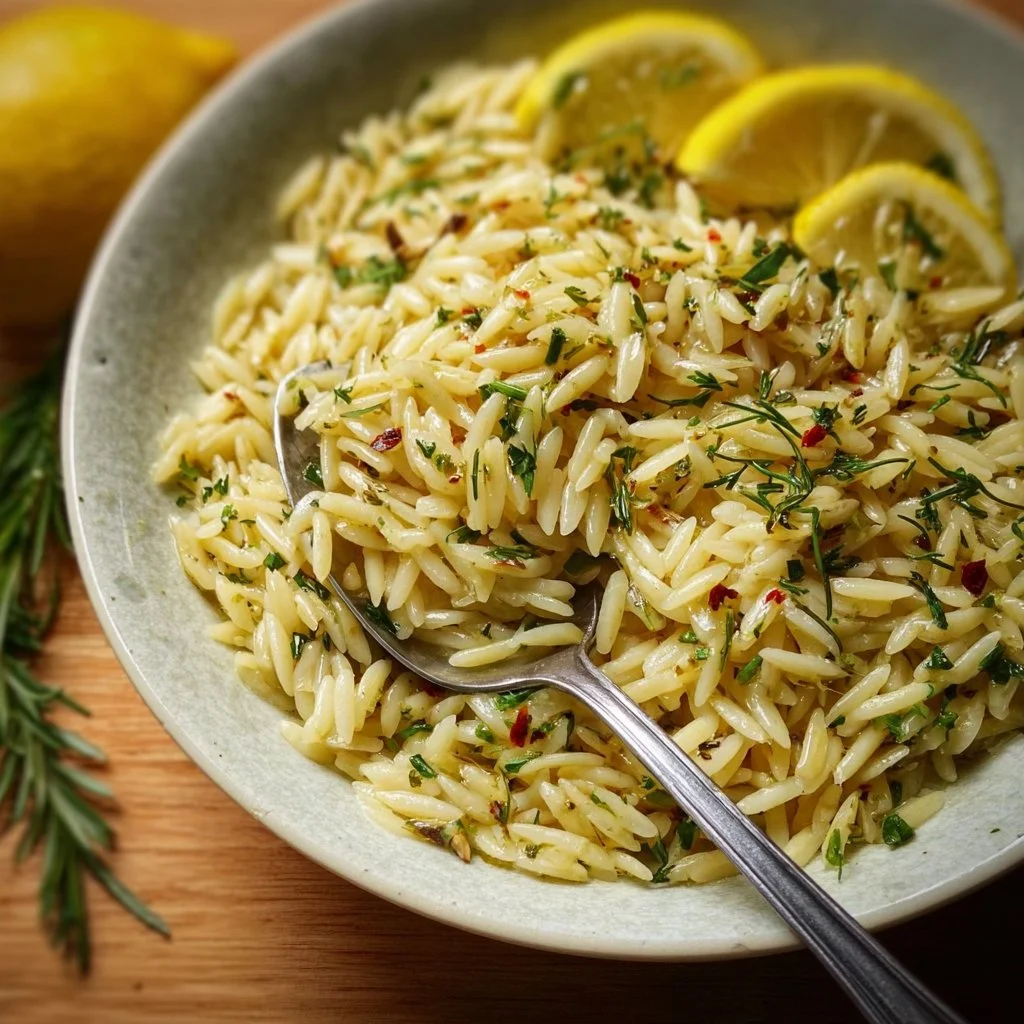
Greek Orzo with Lemon and Herbs
Ingredients
Method
- Measure the orzo, zest and juice the lemon, and finely chop the parsley and dill.
- Having everything ready makes the finish quick and prevents overcooking the orzo.
- Bring the water or vegetable broth to a rolling boil in a medium pot.
- Add the orzo to the boiling liquid and cook according to package instructions until al dente.
- Drain the orzo and return it to the warm pot or a large mixing bowl.
- Add olive oil, lemon juice, and lemon zest to the hot orzo, then season with salt and pepper.
- Stir in the chopped parsley and dill until evenly distributed.
- Taste and adjust final seasoning; serve warm as a side dish or a light lunch.