There’s something so comforting about a recipe pinned and re-pinned until it becomes a kitchen legend — enter "Pin by Recipe by Lily on dinner and dessert recipes in 2026 | Healthy recipes, Greek recipes, Chicken recipes." This Greek-inspired chicken bowl is a seasonal favorite that celebrates bright spring lemons, tender chicken, crisp cucumbers, and herb-forward tzatziki, making it perfect for lighter dinners or weekend meal prep. If you love from-scratch cooking and want to bring a little Mediterranean sunshine to your table, this dish is worth trying — it’s simple, healthy, and flexible enough to match your pantry. For a quick technique refresher for perfectly cooked breasts, I like the clarity of Ina Garten-style chicken breasts methods when I’m in a rush.
Why this recipe works (seasonal appeal & main ingredients)
This recipe shines in spring and summer when citrus, tomatoes, and fresh herbs are at their best. The main ingredients — boneless chicken, lemon, garlic, cucumber, and oregano — combine to create a dish that’s high in protein, balanced with healthy fats, and full of vibrant, fresh flavors. It’s also an adaptable recipe: use thighs if you prefer richer meat, swap bulgur for quinoa to keep it gluten-free, or add a handful of roasted chickpeas for extra texture.
Ingredients & Equipment
Ingredients
- 1 1/2 pounds boneless, skinless chicken breasts (or thighs for more flavor)
- 3 tablespoons extra-virgin olive oil
- 2 tablespoons fresh lemon juice (about 1 lemon)
- 1 teaspoon lemon zest
- 3 garlic cloves, minced
- 1 tablespoon dried oregano (or 1 tablespoon fresh, chopped)
- 1/2 teaspoon sea salt (adjust to taste)
- 1/2 teaspoon freshly ground black pepper
- 1 cup cherry tomatoes, halved
- 1 medium cucumber, diced (seeded if desired)
- 1/2 small red onion, thinly sliced
- 1/2 cup crumbled feta cheese
- 1 cup cooked quinoa, bulgur, or brown rice
- 1/2 cup plain Greek yogurt (for tzatziki)
- 1/2 cup grated cucumber (for tzatziki)
- 1 teaspoon white wine vinegar or red wine vinegar
- 1 tablespoon chopped fresh dill or mint (optional)
- Optional toppings: Kalamata olives, toasted pine nuts, chopped parsley
Notes on ingredients
- Choose fresh lemons for best brightness; bottled lemon juice works in a pinch but loses aromatics.
- If you want this to be extra-high-protein and hearty, add a can of rinsed chickpeas — great for texture and plant-based protein.
- For lower sodium, reduce salt and use low-sodium feta or skip it.
Equipment
- Large mixing bowl
- Whisk or fork
- Cutting board and sharp knife
- Baking tray or cast-iron skillet
- Meat thermometer (helpful, recommended)
- Small bowl or jar for dressing/tzatziki
- Optional: blender or immersion blender if you prefer a super-smooth tzatziki (see helpful idea below)
Helpful tools and notes
- A meat thermometer takes the guesswork out of cooking chicken — target 165°F (74°C) for breasts, or 170°F (77°C) for thighs.
- A blender or small food processor speeds up the tzatziki and gives a creamy texture; if using, check out Ninja Creami high-protein recipes for ideas on blending creamy dressings and yogurt-based sauces.
- A sheet pan is great for cooking both the chicken and quick-roasted tomatoes at once for easy cleanup.
Step-by-Step Instructions (with tips)
H3: Marinade & Prep
- In a large mixing bowl, whisk together olive oil, lemon juice, lemon zest, minced garlic, oregano, salt, and pepper. Taste and adjust — it should be bright and slightly salty so it seasons the chicken.
- Add the chicken breasts to the bowl and coat thoroughly. Marinate at room temperature for 15–20 minutes or in the fridge for up to 4 hours. Tip: if you’re short on time, even 10 minutes adds a nice lift; for the deepest flavor, marinate overnight.
H3: Make the tzatziki
3. Grate half a cucumber into a small bowl and squeeze out excess moisture with a clean towel or paper towel.
4. Combine grated cucumber with Greek yogurt, 1 minced garlic clove, vinegar, a pinch of salt, and chopped dill or mint. Stir until smooth. For a creamier tzatziki, pulse in a blender for 10–15 seconds. Tip: if the tzatziki is too thick, thin with a teaspoon of water or lemon juice.
H3: Cook the chicken (two main variations)
5. Oven-roasted (recommended for even cooking):
- Preheat oven to 400°F (200°C).
- Place marinated chicken on a lightly oiled baking tray or in a cast-iron skillet. Roast for 18–22 minutes depending on thickness, until the internal temperature reaches 165°F (74°C). Let rest 5 minutes before slicing.
- Tip: Add halved cherry tomatoes to the tray 10 minutes before the end of roasting for a burst of roasted sweetness.
- Stovetop/seared (faster, more caramelization):
- Heat a tablespoon of olive oil over medium-high heat in a skillet. Sear chicken 4–6 minutes per side depending on thickness until golden and cooked through to 165°F (74°C). Reduce heat if the exterior browns too quickly.
- Tip: For extra flavor, baste with the leftover marinade while cooking, but discard any marinade that touched raw chicken.
H3: Alternative proteins & variations
7. Thighs vs breasts: swap breasts for bone-in thighs (increase cook time) or try a variation inspired by spicy honey garlic chicken thighs if you like a sweeter, sticky glaze — just adjust marinade sugar content to avoid burning.
8. Vegetarian option: skip chicken and roast chickpeas with smoked paprika and cumin for 20–25 minutes at 400°F until crispy. These add protein and crunch if you prefer a plant-based bowl.
H3: Assemble the bowls
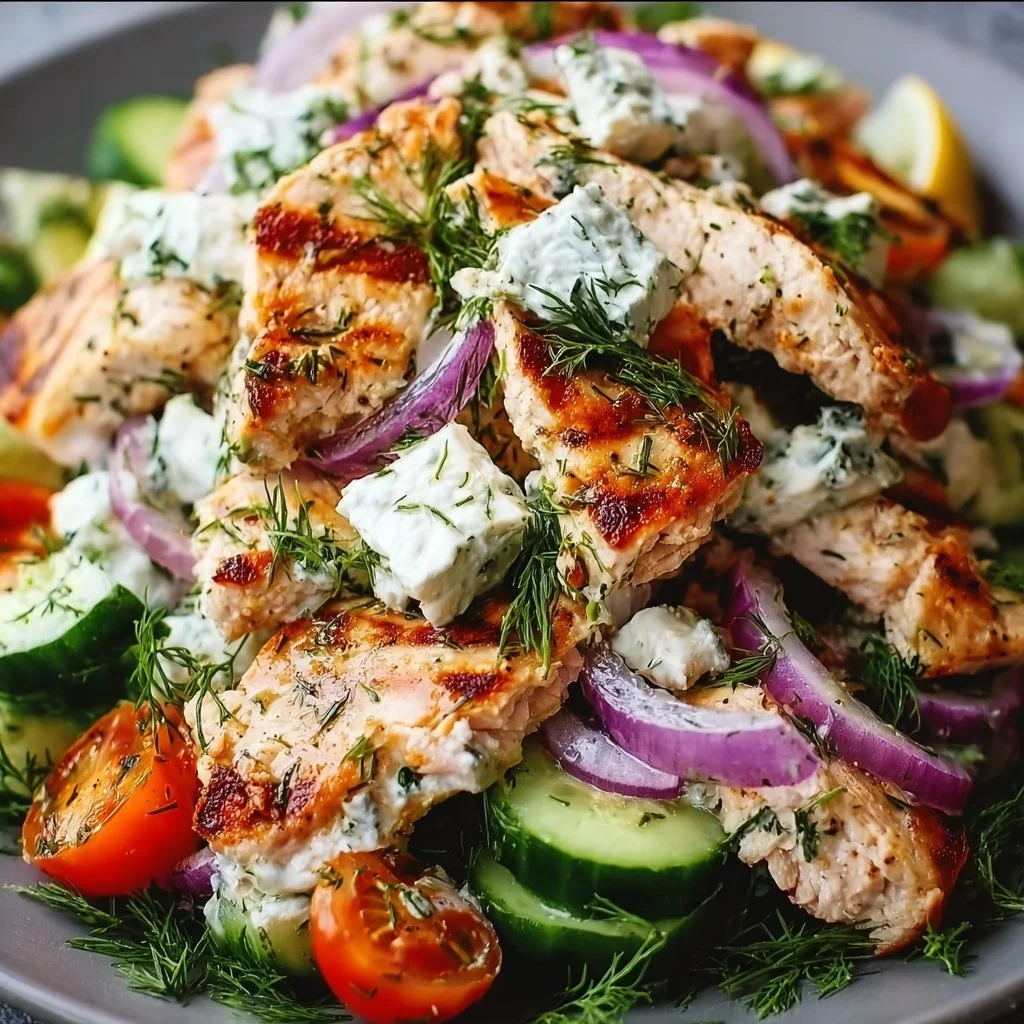
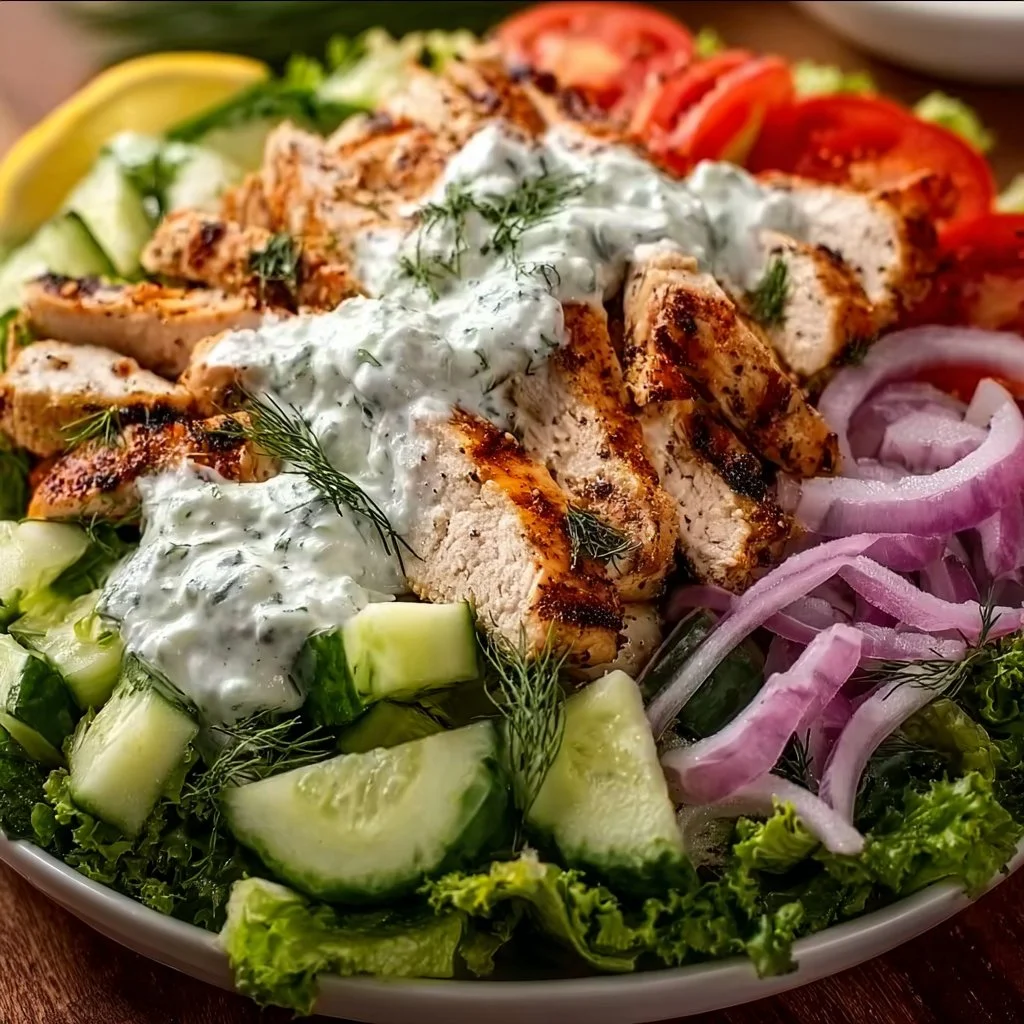
9. Fluff cooked quinoa or grain and divide into bowls. Arrange sliced chicken on top, then add cucumber, cherry tomatoes, red onion, olives, and feta.
10. Drizzle tzatziki over the bowl and finish with a squeeze of lemon and a sprinkle of chopped parsley or toasted pine nuts.
Tips for flavor balance
- Salt strategically: season the grains lightly before assembly and taste the tzatziki; a little extra salt brings out flavors.
- Acid is key: lemon juice brightens everything — add a small extra squeeze before serving if the bowl tastes flat.
- Texture contrast: add crunchy elements like raw cucumber, toasted seeds, or baked pita chips for contrast.
Storage, Freezing & Make-Ahead Tips
Short-term storage
- Refrigerate cooked components separately for best texture. Chicken and grains will keep well in airtight containers for 3–4 days. Tzatziki lasts 3 days (because yogurt and grated cucumber release water over time).
- When storing, keep fresh toppings (tomato, raw onion, herbs) separate to avoid sogginess.
Freezing
- Cooked chicken freezes well for up to 3 months. Slice and store in a freezer-safe container or bag with a little olive oil to prevent drying. Thaw in the refrigerator overnight and reheat gently to avoid overcooking.
- Tzatziki should not be frozen — yogurt changes texture when frozen and thawed. Make a simple lemon-yogurt dressing instead if you need a freezer-friendly sauce.
Make-ahead tips
- Marinate chicken up to 24 hours in advance for deeper flavor. If you plan to marinate longer than 4–6 hours, reduce the lemon and salt slightly to prevent the meat from becoming overly firm from the acid.
- Cook a double batch of grains at the start of the week and portion into meal containers. Add fresh cucumber and herbs when ready to eat for a quick weekday dinner.
- If you want a quick weeknight bowl, roast the chicken and a tray of vegetables (tomatoes, bell peppers, red onion) together; mix and match with different grains.
Portioning advice
- Plan about 4–6 ounces of cooked chicken per adult serving, 1/2 to 1 cup of cooked grain, and 1/4 cup of tzatziki per bowl. Adjust based on appetite and whether the bowl is the main dish or part of a spread.
How to Use / Serve This Dish
Serving ideas
- Serve this Greek chicken bowl as a main course with a side of warm pita or crusty bread to mop up tzatziki.
- Turn it into a salad by serving the chicken over mixed greens instead of grains; omit the grains for a lighter meal.
- Make it a picnic or portable lunch by layering grains, chicken, and vegetables in a mason jar; keep tzatziki in a separate small container until serving.
Pairings
- Light wines like a crisp Assyrtiko or a Sauvignon Blanc complement the lemon and herbs.
- For non-alcoholic options, try sparkling water with lemon and cucumber slices or a minty iced tea.
- For dessert, seasonal berries or a lemon olive oil cake carry the citrus theme and keep the meal feeling fresh — if you’re craving something fruity and simple, pairing with light strawberry summer treats makes a lovely finish.
Creative variations
- Bowl-style gyro: warm pita and assemble gyro-style, drizzle tzatziki and sprinkle with sumac.
- Mediterranean grain bowl: swap quinoa for farro or freekeh for chewiness and a nutty flavor.
- Spicy twist: add a harissa or chili oil drizzle for heat and color contrast.
FAQ
Q: Can I use frozen chicken?
A: Yes — thaw chicken completely in the refrigerator before marinating and cooking. If you’re short on time, you can poach frozen chicken gently, but it will take longer and may be less flavorful than marinated, roasted or seared chicken.
Q: What’s the best substitute for Greek yogurt in tzatziki?
A: Plain full-fat yogurt keeps the creamiest texture. If you’re dairy-free, try unsweetened coconut yogurt or a cashew-based yogurt and add a splash of lemon for tang, though the flavor will shift away from classic tzatziki.
Q: How long will leftovers keep?
A: Store cooked chicken and grains separately in airtight containers in the fridge for 3–4 days. Tzatziki is best within 2–3 days. If you assemble everything together, expect 1–2 days before the fresh vegetables begin to wilt.
Q: Can I make this low-carb or keto?
A: Absolutely — replace grains with extra greens or cauliflower rice, skip the pita, and keep the tzatziki full-fat. Use chicken thighs if you prefer higher fat content for keto.
Conclusion
This comforting, seasonal take on a Greek chicken bowl from "Pin by Recipe by Lily on dinner and dessert recipes in 2026 | Healthy recipes, Greek recipes, Chicken recipes" is a celebration of bright citrus, fresh herbs, and simple, satisfying cooking. Whether you’re meal-prepping for the week or pulling together a relaxed weekend dinner, the recipe’s flexibility — from roasting vs. searing to swapping grains or adding chickpeas — helps it fit whatever you have on hand. For more inspiration on adding chickpeas to bowls or swapping in plant-based protein options, see this roundup of 62 recipes made with canned chickpeas. If you’re looking for another hearty, protein-forward Greek bowl idea, this high protein Greek chicken bowl recipe offers great technique and serving ideas. Give this recipe a try, tweak it to your taste, and please share how it turns out — I love hearing how a pinned recipe becomes your go-to comfort meal.
Greek Chicken Bowl
Ingredients
Method
- In a large mixing bowl, whisk together olive oil, lemon juice, lemon zest, minced garlic, oregano, salt, and pepper. Taste and adjust for seasoning.
- Add the chicken breasts to the bowl and coat thoroughly. Marinate at room temperature for 15–20 minutes or in the fridge for up to 4 hours.
- Grate half a cucumber into a small bowl and squeeze out excess moisture.
- Combine grated cucumber with Greek yogurt, 1 minced garlic clove, vinegar, a pinch of salt, and chopped dill or mint. Stir until smooth.
- For oven-roasted chicken, preheat the oven to 400°F (200°C). Place marinated chicken on a lightly oiled baking tray and roast for 18–22 minutes until the internal temperature reaches 165°F (74°C). Let rest before slicing.
- For stovetop, heat a tablespoon of olive oil over medium-high heat in a skillet. Sear chicken 4–6 minutes per side until cooked through.
- Fluff cooked quinoa or grain and divide into bowls. Arrange sliced chicken on top, then add cucumber, cherry tomatoes, red onion, olives, and feta.
- Drizzle tzatziki over the bowl and finish with a squeeze of lemon and a sprinkle of parsley or toasted pine nuts.