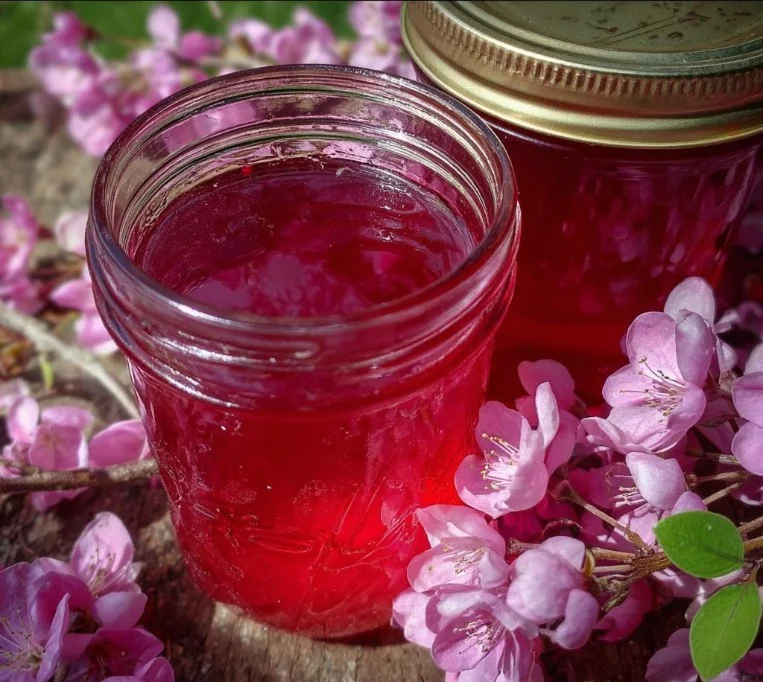
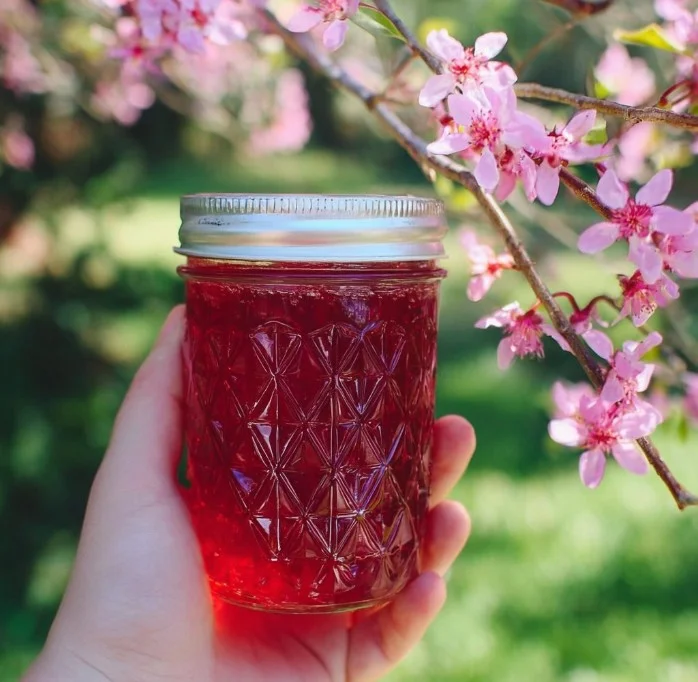
There’s something magical about spring flavors — that brief window when trees and bushes are blooming and the kitchen fills with floral notes. Redbud Jelly (& Syrup) captures that fleeting season with jars of translucent pink spread that taste of blossoms and sunshine. Made from the delicate petals of redbud trees, this jelly is a charming, from-scratch preserve that turns a walk under flowering branches into a breakfast treat. If you love edible flowers, small-batch canning, or simply want a conversation-starting condiment, this easy redbud recipe is worth trying. It’s seasonal, pretty, and surprisingly versatile — perfect for gifting or savoring all spring long.
Ingredients & Equipment
Ingredients
- 4 cups redbud flower petals (cleaned and de-stemmed)
- 4 cups water
- 2 Tbsp. lemon juice
- 1 to 4 cup sugar (amount varies depending on pectin used, see notes)
- 1 box powdered pectin (1.75 oz. pectin or 6 Tbsp, Regular or Low Sugar, see notes)
Notes:
- The sugar amount depends on whether you use regular pectin (usually requires more sugar) or low-sugar pectin. Check the package directions; many regular pectin recipes call for about 4 cups sugar, while low-sugar pectin can work with much less (1–2 cups). If you want a tabletop jelly that gels reliably, follow the pectin package for best results.
- Only use redbud flowers from trees you know have not been sprayed with pesticides. Taste a small petal raw first to ensure it’s not bitter (some varieties can be).
Helpful Tools & Equipment
- Quart-size jar (for steeping)
- Saucepan or jam pot (heavy-bottomed is best)
- Fine mesh strainer and/or cheesecloth (for clear liquid)
- Ladle and funnel (for filling jars)
- 4–6 small jelly jars with lids (or one larger jar)
- Canning tools if processing (jar lifter, large stockpot for a water bath)
- Heat-resistant spatula or wooden spoon
- Candy thermometer (optional, for syrup version)
- Baking tray and oven (optional — see roasting variation)
Small tools like measuring cups, a kitchen towel for wiping rims, and a timer will make the day easier.
Step-by-Step Instructions (with tips)
-
Prepare the flowers: Gently pick or harvest redbud blossoms from healthy trees that haven’t been sprayed. Remove any green stems or browned petals. Rinse briefly if needed and pat dry. Place the clean, de-stemmed redbud flower blossoms into a quart-size jar.
-
Heat the water: Bring 4 cups of water to a boil using a microwave or stovetop. Carefully pour the boiling water into the jar containing the redbud flowers.
-
Add lemon juice: Add the 2 Tbsp. lemon juice to the flower/water mixture to encourage a color change while the tea is steeping. The acid helps brighten the petals’ pink color and aids flavor balance.
-
Steep: Allow the flowers and water to steep for 24 hours, creating a redbud tea that should be a bright pink color when fully steeped. For a deeper color, you can steep slightly longer (up to 48 hours) in the refrigerator. Tip: Steeping at room temperature concentrates flavor faster; refrigerate once you’ve reached your desired color if you leave it longer.
-
Pre-measure sugar: While the tea steeps, pre-measure the sugar and set it aside. This keeps the cooking step efficient.
-
Strain the tea: Use a fine strainer to capture the flower petals, or pour the tea through cheesecloth into a saucepan or jam pot. Squeeze the cheesecloth or press the petals in the strainer to release as much liquid as possible. Tip: A clearer jelly comes from gentle pressing, not aggressive squeezing that can cloud the liquid.
-
Bring to a boil: Turn the burner to high heat and bring the mixture to a boil.
-
Add pectin: Slowly add the powdered pectin, stirring to dissolve the powder completely. No lumps! Keep stirring so the pectin doesn’t stick to the bottom.
-
Boil for one minute: Return the mixture to a boil and allow it to boil for one minute to activate the pectin.
-
Add sugar: Continuing to stir, slowly add the pre-measured sugar to the mixture. Stir constantly to dissolve the sugar.
-
Final boil: Again, bring the mixture back to a rolling boil, stirring while boiling for 1–2 minutes. Follow your pectin package instructions for the exact boil time; some require just one minute, others advise two.
-
Jar the jelly: Ladle or pour the jelly into prepared jelly jars, leaving ¼” headspace, and wipe the rims of the jars with a clean cloth.
-
Seal: Affix the 2-part canning lid, and either proceed with the canning process (recommended if you want shelf stability) or leave the jars to cool and set up for 24 hours.
-
Store: Store canned jelly in a cool, dry place for up to 18 months. Uncanned jelly can be stored in the refrigerator for up to 1 month or in the freezer for 6 months. For all jelly, refrigerate once opened.
Variations & Tips:
- Roasting/Concentrating Flavor: For a deeper, almost caramelized floral note, spread petals on a baking tray and roast very briefly at a low temperature (about 200°F/95°C) for 10–15 minutes before steeping. Roasting will darken the color and intensify flavor.
- Cold vs. Hot Steeping: Cold-steeping (pouring room-temp water over petals and refrigerating 24–48 hours) produces a softer, fresher floral flavor and sometimes a clearer tea. Hot steeping (pouring boiling water as in the base recipe) extracts color and flavor more quickly.
- Syrup Option: To make a syrup instead of jelly, skip the pectin. Simmer the strained tea with sugar (start with 1 cup sugar to 4 cups tea and adjust) until the liquid reduces by about half and coats the back of a spoon. Use a thermometer: syrup is usually finished around 220–225°F. Syrup keeps in the fridge about one month.
- Adjusting Sweetness: Taste the steeped tea before adding sugar. Some batches may have stronger floral notes and need less sugar. If using low-sugar pectin, reduce sugar per the box directions.
- Foam Control: Skim foam with a spoon during boiling for a clearer jelly. Add a pat of butter (traditional) can help reduce foam, though it’s optional.
Storage, Freezing & Make-Ahead Tips
- Shelf-stable Canning: If you choose to hot-water-bath can your jelly, process sealed jars according to USDA or your local extension’s recommended times for jellies (commonly around 5–10 minutes depending on jar size and altitude). Always adjust processing for altitude and follow safe canning practices. Properly processed jars will seal and store unopened for up to 18 months in a cool, dark place.
- Refrigeration: Uncanned jelly lasts up to 1 month in the refrigerator. Keep jars tightly sealed and label with the date.
- Freezing: Jelly and syrup both freeze well. Leave headspace in jars or use freezer-safe containers. Jelly will keep up to 6 months in the freezer. Thaw in the refrigerator before using.
- Portioning: For small households, use half-pint (8 oz) or 4 oz jelly jars to avoid waste. Syrup can be frozen in ice cube trays to portion for cocktails or single-serve drizzle.
- Make-ahead: You can steep petals up to 48 hours before cooking if refrigerated. Also, prepare a concentrated redbud tea and freeze in ice cube trays; thaw and cook into small batches of jelly as needed.
- Labeling: Always label jars with the recipe name and date. If you plan to give jars as gifts, include a note that the jelly is made from redbud blossoms and contains pectin (and a best-by date).
How to Use / Serve This Dish
Redbud Jelly (& Syrup) is charmingly versatile.
- On toast: Slather on warm buttered toast, English muffins, or scones for a floral breakfast treat.
- Cheese board: Pair with goat cheese, brie, or ricotta on a cheese board — the floral sweetness complements tangy cheeses beautifully.
- Glaze: Use the syrup as a glaze for roasted carrots, ham, or grilled pork. Warm the syrup slightly and brush over meats during the last minutes of cooking.
- Desserts: Drizzle syrup over panna cotta, vanilla ice cream, or lemon cake. Spoon jelly into thumbprint cookies or use as a filling for tarts.
- Beverages: Stir a spoonful of syrup into sparkling water, iced tea, or cocktails (try it with gin and tonic or a floral spritz).
- Savory-sweet pairing: Serve jelly with roast chicken or smear a little on pork sliders for a spring twist.
- Gifts: Small jars of homemade redbud jelly make lovely seasonal gifts — tie with twine and a sprig of dried flower for presentation.
Flavor suggestions:
- Add a strip of lemon zest while steeping for an extra citrus lift.
- Stir in a teaspoon of thyme or rosemary during the final boil for an herbal edge that pairs well with savory dishes.
- Mix a small amount of lavender or violet petals into the steep if you enjoy a layered floral profile, but add sparingly to avoid bitterness.
FAQ
Q: Are redbud flowers safe to eat?
A: Yes — the petals of eastern redbud (Cercis canadensis) and many related species are edible and used traditionally in salads and preserves. Only eat flowers you can positively identify and that haven’t been treated with pesticides. If you’re new to foraging, consult a local expert.
Q: Can I use liquid pectin or no pectin at all?
A: You can use liquid pectin, but adjust the recipe per the manufacturer’s instructions — liquid pectin is typically added at a different step. If you skip pectin entirely, you’ll end up with a syrup rather than a firm jelly unless you cook the mixture down extensively to concentrate natural pectin from added fruit (like apple) or use a different gelling method.
Q: What if my jelly doesn’t set?
A: If the jelly is still runny after it cools, it may need more gelling action. You can re-cook the batch and add more pectin following the package’s directions for re-cooking failed jam/jelly. Make sure your measurements of pectin and sugar were accurate and that the mixture reached the recommended boil.
Q: Can I substitute honey or a sugar substitute?
A: Honey or sugar substitutes don’t always work well with pectin; pectin needs a certain balance of sugar and acid to set properly. If you want a less-sweet spread, use low-sugar pectin and reduce sugar per the pectin instructions. For syrup, honey can be used for flavor, but honey will change the flavor profile and shelf life, and it won’t gel with pectin the same way.
Conclusion
Redbud Jelly (& Syrup) is one of those spring projects that turns a neighborly walk into a jar of sunshine — delicate pink, floral, and utterly seasonal. Whether you’re making a classic set jelly with pectin or a spoonable syrup to brighten cocktails and desserts, the process is simple, comforting, and satisfying. This recipe celebrates foraging, small-batch canning, and the little rituals of home cooking that make spring feel special. If you want to explore more techniques or variations, Creative Canning offers a lovely take on redbud jelly that complements this recipe, and Harvesting Nature has a helpful how-to guide for foraging and preparation. Try a batch this season, and if you love it, share a jar with a friend — it’s the kind of recipe that creates memories and starts conversations.
For an additional method and notes, see Redbud Jelly (& Syrup) – Creative Canning and a step-by-step guide at How to Make Redbud Jelly – Harvesting Nature.
Redbud Jelly (& Syrup)
Ingredients
Method
- Gently pick redbud blossoms from healthy trees, remove green stems and any browned petals, rinse and pat dry. Place into a quart-size jar.
- Bring 4 cups of water to a boil and pour it into the jar over the redbud flowers.
- Add 2 Tbsp. lemon juice to the mixture. This brightens the petals' pink color.
- Allow the flowers and water to steep for 24 hours (up to 48 hours for deeper color).
- Use a fine strainer to capture the petals and pour the tea into a saucepan.
- Bring the mixture to a boil over high heat.
- Slowly add the powdered pectin, stirring until dissolved, ensuring no lumps remain.
- Return to a boil and boil for one minute to activate the pectin.
- Gradually add the pre-measured sugar while stirring until completely dissolved.
- Bring the mixture back to a rolling boil and boil for 1-2 minutes following your pectin package instructions.
- Ladle the jelly into prepared jars, leaving ¼ inch headspace, and wipe the rims.
- Seal with canning lids and either process in a water bath or allow to cool for 24 hours at room temperature.