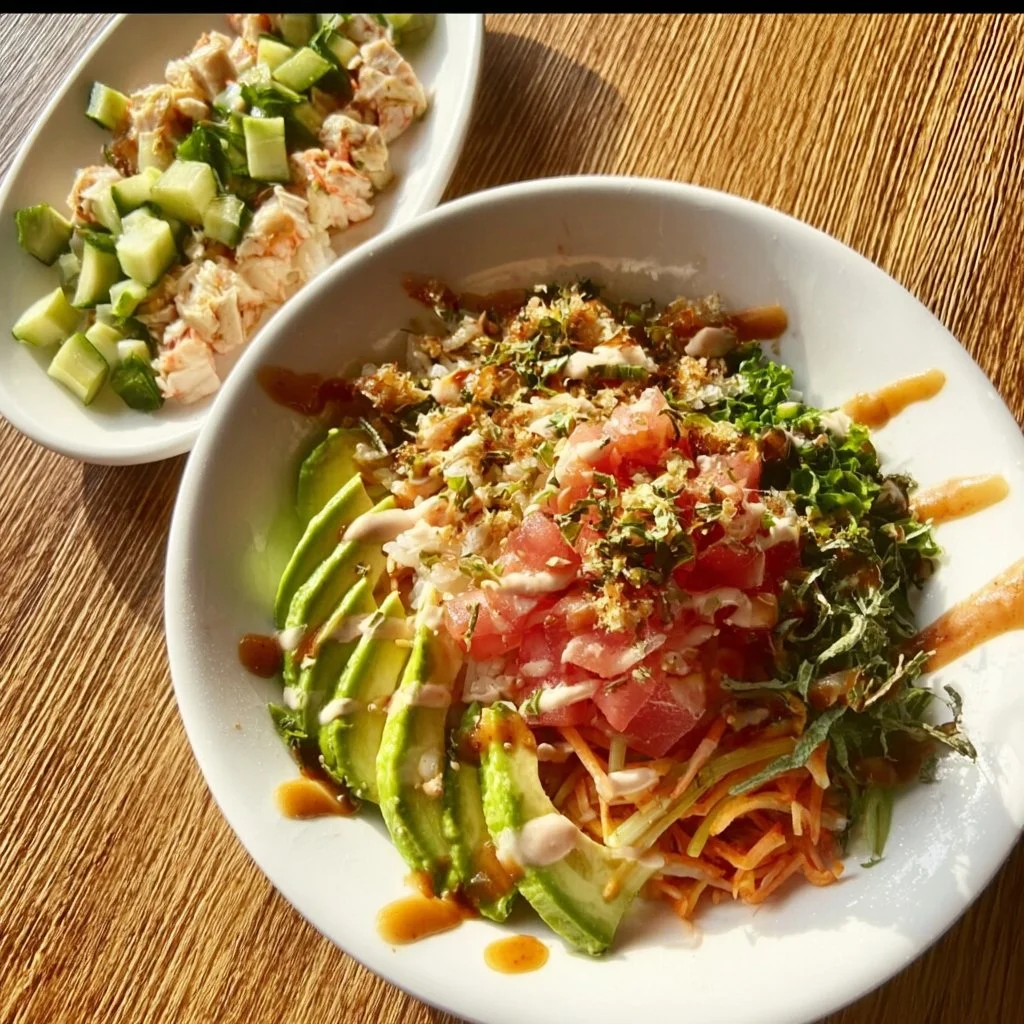
Ingredients
Method
Preparation of Grain
- Rinse 1 cup quinoa under cold water. In a medium saucepan, combine quinoa with 2 cups water and a pinch of salt. Bring to a boil, reduce to a simmer, cover, and cook 12–15 minutes until water is absorbed. Remove from heat and let rest for 5 minutes, then fluff with a fork.
- Variation: Use brown rice or farro — adjust cooking time and water ratio per package instructions.
Vegetable Preparation
- For bright, tender veg: blanch asparagus and sugar snap peas in boiling salted water for 1–2 minutes, then shock in an ice bath to keep color and crunch. Drain and pat dry.
- Roasting alternative: Toss asparagus and peas with 1 tablespoon olive oil, salt, and pepper, and roast at 425°F (220°C) for 8–12 minutes for a sweeter flavor.
- Tip: Blanching preserves a crisp-tender texture; roasting deepens flavor.
Cooking the Seafood
- Pat salmon dry and season with salt and pepper. Drizzle 1 tablespoon olive oil over the fillets.
- For salmon: Oven-roast at 400°F (200°C) for 10–14 minutes depending on thickness, checking for 125–130°F for medium doneness.
- For shrimp: toss with olive oil, salt, pepper, and a squeeze of lemon; sauté 1–2 minutes per side until opaque.
- Tip: Let fish rest for 2–3 minutes after cooking to retain juices.
Making the Vinaigrette
- In a small bowl or jar, whisk together 1/4 cup olive oil, 2 tablespoons lemon juice, Dijon, minced garlic, chopped dill, salt, and pepper. Taste and adjust acidity as needed.
- Optional: Add 1 teaspoon honey or maple syrup for sweetness.
Assembling the Bowls
- Divide warm quinoa among four bowls. Arrange vegetables, and sliced avocado around the salmon or shrimp.
- Drizzle vinaigrette over the bowl and sprinkle optional toppings.
Notes
Use wild-caught salmon for flavor and sustainability. For a low-carb version, swap the grain for cauliflower rice. Store components in airtight containers for up to 3 days. Cooked salmon can be frozen for up to 2 months.